Sukta 81
Mantras
Frequently Asked Questions
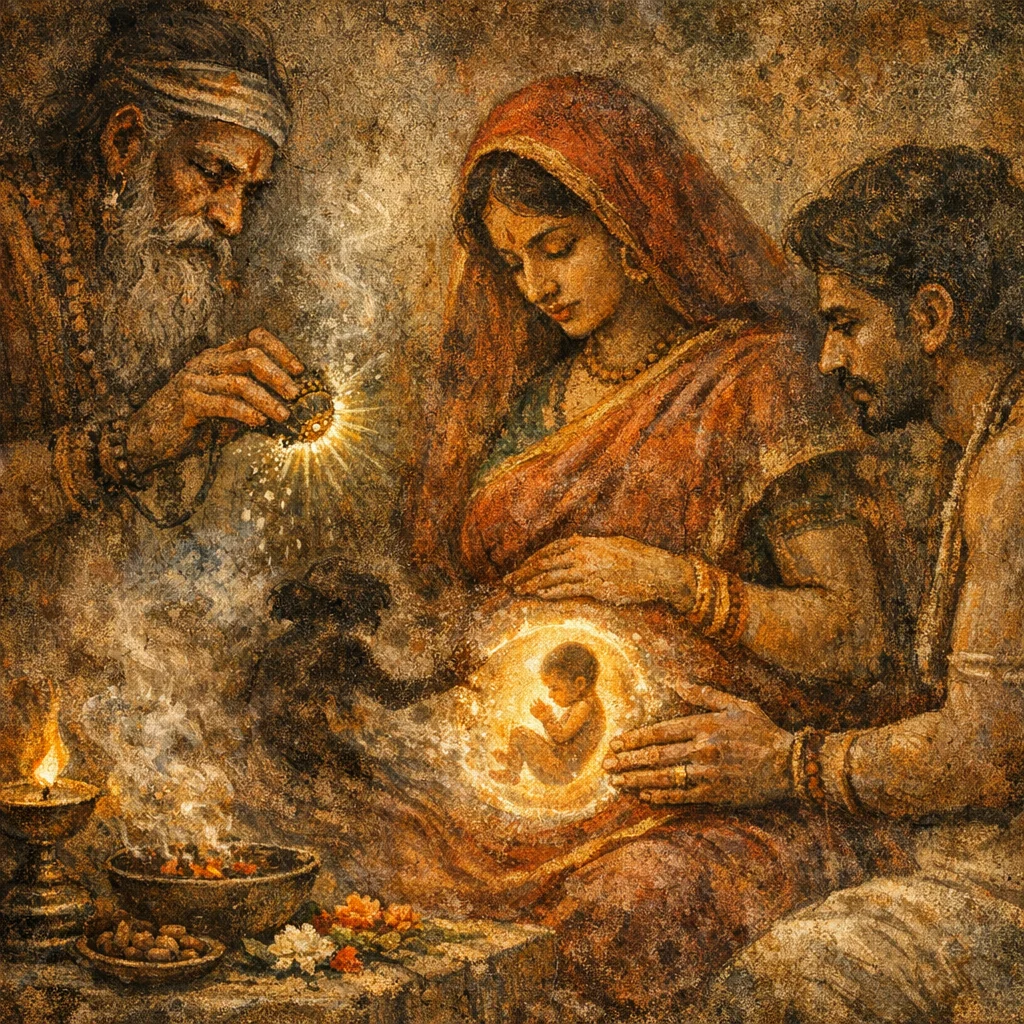
It is used for garbhādhāna and putrakāmyā—supporting conception, protecting the womb, and ensuring safe implantation and development of the embryo.
The hymn centers on Parihasta (the encircling protective ‘hand’), and seals the rite with Aditi’s safeguarding power and Tvaṣṭṛ’s role in forming and binding the embryo properly.
No specific herb is named in these verses. The practice is primarily mantra-based, though a simple protective cord/amulet or consecrated water may be used to symbolize the protective enclosure.