Sukta 78
Rishi: Atharvanic tradition (to be confirmed from anukramaṇī).
Devata: Pauṣṭika powers of increase; implicitly the efficacy of havis and household prosperity (no single named deity in this verse).
Chandas: Mixed/Anuṣṭubh-like (to be confirmed by full hymn metrical scan).
Mantras
Mantra 1
दम्पत्यो रयिप्राप्तये प्रार्थना। तेन भूतेन हविषायमा प्यायतां पुनः । जायां यामस्मा आवाक्षुस्तां रसेनाभि वर्धताम्
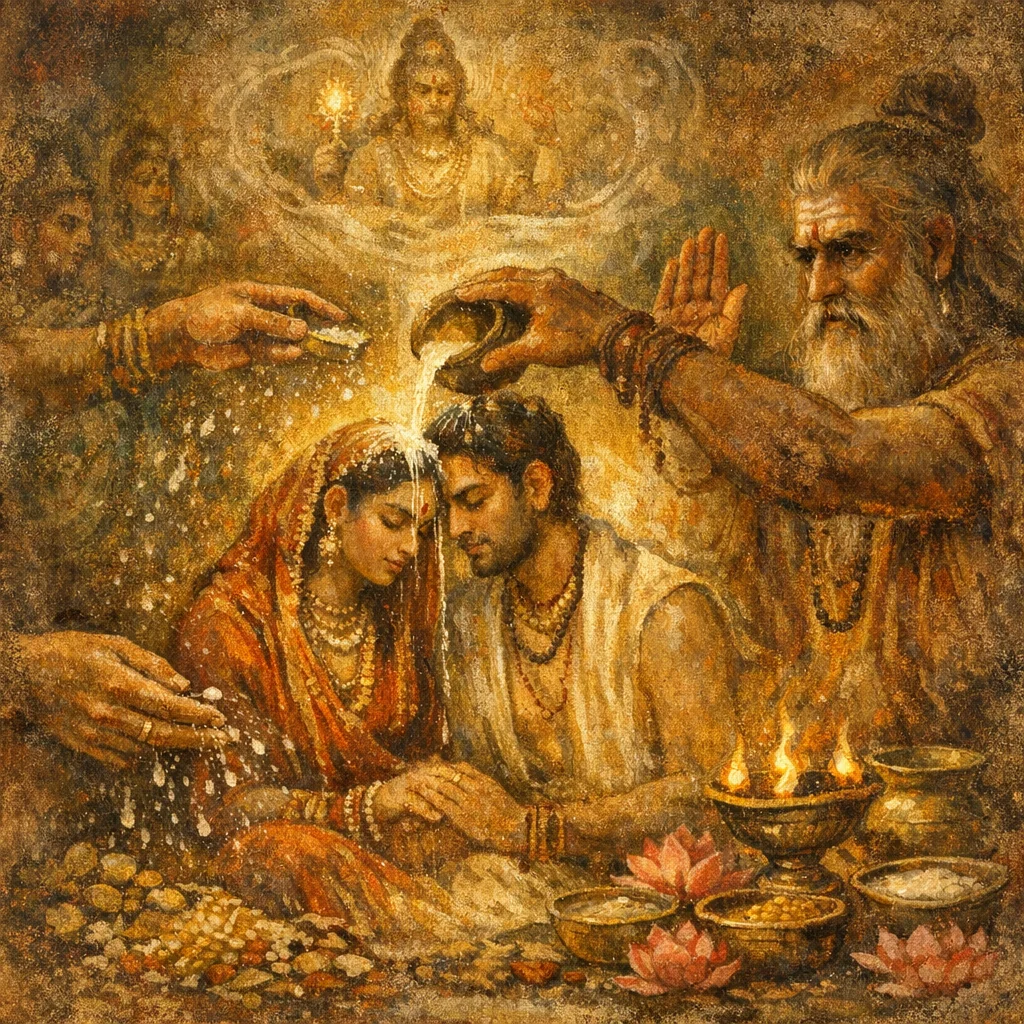
A prayer for husband and wife, for the winning of wealth. With that effective oblation let these twain wax full again. The wife whom they have brought hither for him—let her, with sap and essence, increase abundantly.
Mantra 2
अभि वर्धतां पयसाभि राष्ट्रेण वर्धताम्। रय्या सहस्रवर्चसेमौ स्तामनुपक्षितौ
Let them increase with milk; let them increase with dominion. With wealth, with thousandfold splendour—may these two abide undiminished.
Mantra 3
त्वष्टा जायामजनयत् त्वष्टास्यै त्वां पतिम्। त्वष्टा सहस्रमायूंषि दीर्घमायुः कृणोतु वाम्
Tvaṣṭṛ begat the wife; Tvaṣṭṛ, for her, begat thee as husband. Tvaṣṭṛ—may he appoint for you both a thousand life-terms, may he make long life.
Frequently Asked Questions
It is recited to help a husband and wife thrive together—gaining nourishment, wealth, stable standing in society, and sustained (non-diminishing) prosperity, along with long life.
Milk and ‘sap’ are Vedic images for nourishment and life-force. Here they symbolize bodily thriving, fertility-like vitality, and the steady replenishment of household prosperity.
Tvaṣṭṛ is the divine fashioner/artisan. The hymn invokes him to affirm that the marital bond is rightly ‘formed’ and to request that he appoint long life and enduring vitality for both spouses.