Sukta 65
Rishi: Atharvanic/Angirasic milieu (enemy-crushing charm complex; specific r̥ṣi attribution varies)
Devata: Indra-like repelling power / Parāśara (as personified expulsion)
Chandas: Jagatī/Triṣṭubh-like (requires metrical verification)
Mantras
Mantra 1
शत्रुनाशनम्। अव मन्युरवायताव बाहू मनोयुजा । पराशर त्वं तेषां पराञ्चं शुष्ममर्दयाधा नो रयिमा कृधि
Down let their wrath sink down; down let their arms, mind-yoked, be lowered. Smite thou them off: crush their strength, turned backward; and then for us do thou bring wealth to be.
Mantra 2
निर्हस्तेभ्यो नैर्हस्तं यं देवाः शरुमस्यथ । वृश्चामि शत्रूणां बाहूननेन हविषाहम्
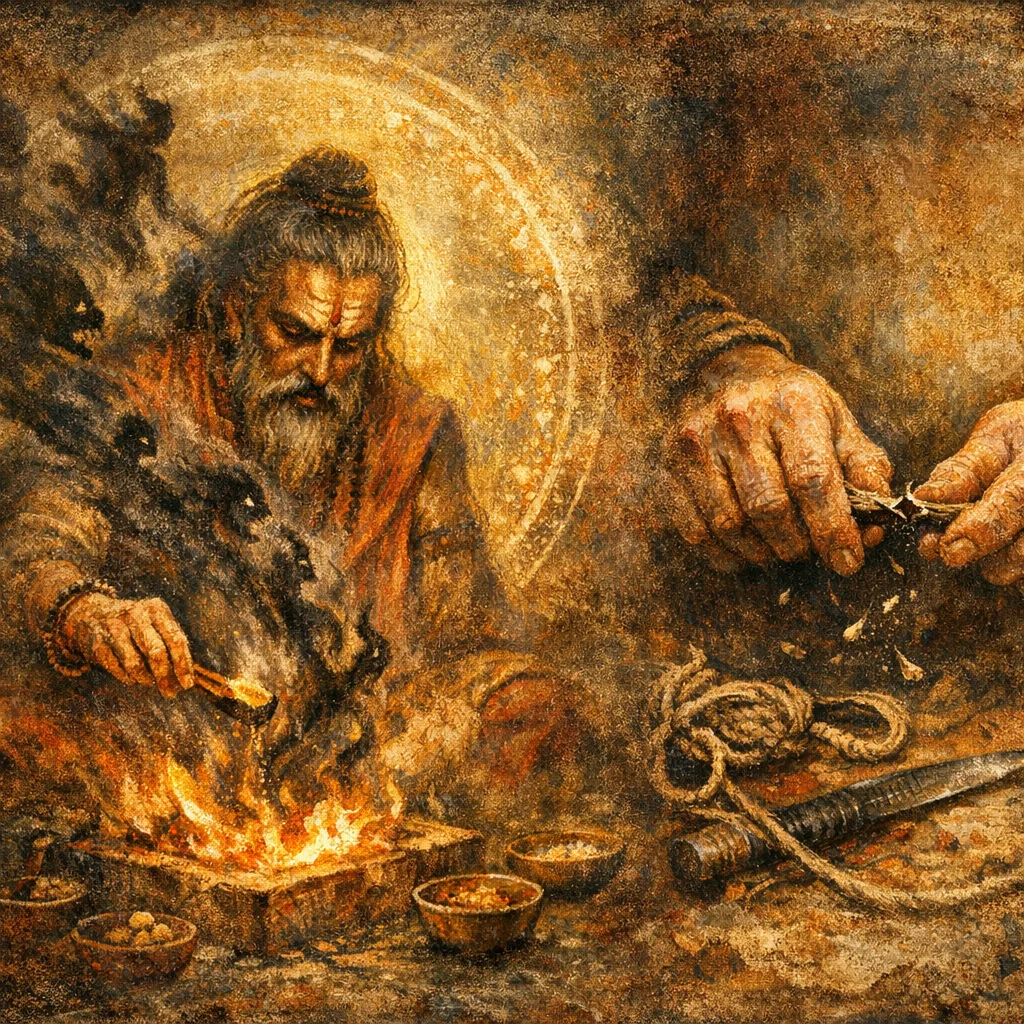
From the handed do ye make the handless—ye Gods—when ye cast the missile. I cut away the enemies’ arms with this oblation, even I.
Mantra 3
इन्द्रश्चकार प्रथमं नैर्हस्तमसुरेभ्यः । जयन्तु सत्वानो मम स्थिरेणेन्द्रेण मेदिना
Indra first made the Asuras handless. Let my champions conquer, by Indra steadfast, by Indra rich in strengthening might.
Frequently Asked Questions
It is a ritual way of saying the opponent’s ability to strike is removed—arms, weapons, and agency are magically neutralized so they cannot act effectively.
Indra supplies the authoritative warrior precedent (he first disarmed the Asuras), while Parāśara functions as the expulsive force that drives the enemy away and crushes their strength in the present rite.
Its primary setting is martial or hostile confrontation, but Atharvan tradition also applies such repelling/disabling charms to any situation where an adversary’s aggression and capacity to harm must be checked.