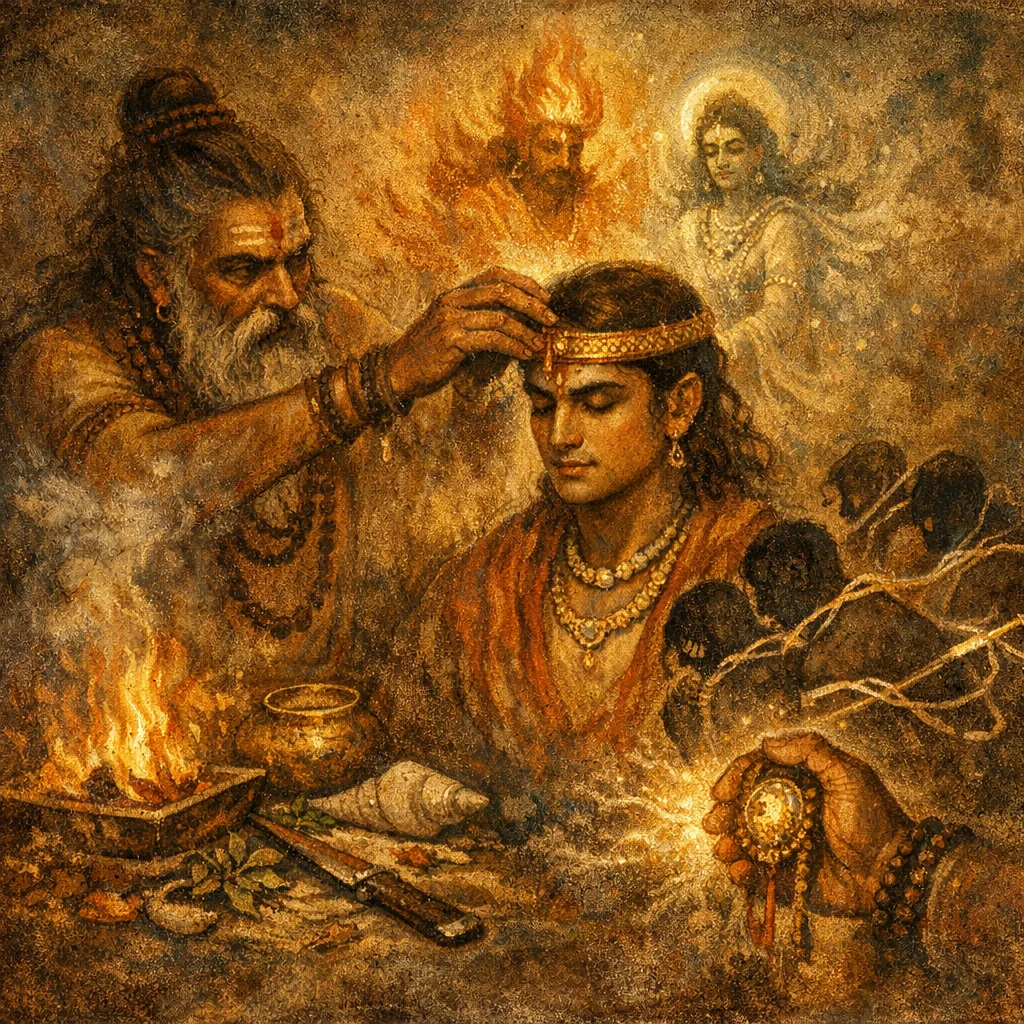
Sukta 54
Rishi: Atharvanic/Angirasa tradition (as typical for rāṣṭra- and kṣatra-formulas in AV 6; exact r̥ṣi assignment depends on Anukramaṇī).
Devata: Agni-Soma (dual)
Chandas: Anuṣṭubh (probable; AV 6 commonly uses anuṣṭubh—confirm by syllable count in critical edition)
Mantras
Mantra 1
अमित्रदम्भनम्। इदं तद् युज उत्तरमिन्द्रं शुम्भाम्यष्टये । अस्य क्षत्रं श्रियं महीं वृष्टिरिव वर्धया तृणम्
The humbling of the foe. This—yea, that superior harnessing—I set Indra in splendour for aid. Increase for him his kingly power, his great prosperity, as rain (makes grow) the grass.
Mantra 2
अस्मै क्षत्रमग्नीषोमावस्मै धारयतं रयिम्। इमं राष्ट्रस्याभीवर्गे कृणुतं युज उत्तरम्
For him uphold ye royal might, O Agni-Soma; for him sustain ye wealth. In this realm’s on-rush and encounter make ye the yoked ally the upper, the victorious.
Mantra 3
सबन्धुश्चासबन्धुश्च यो अस्मां अभिदासति । सर्वं तं रन्धयासि मे यजमानाय सुन्वते
Whether with kindred or without kindred, whoso assaileth us in hate—him wholly dost thou bring to submission for me, for the sacrificer who presseth.
Frequently Asked Questions
It is used to strengthen a ruler or patron’s sovereignty (kṣatra), secure prosperity (rayi/śrī), and ensure superiority in confrontations while forcing hostile opponents into submission.
Agni–Soma function as the paired sacrificial powers that legitimize and sustain rule: they ‘hold up’ royal might and wealth and help the patron prevail in the realm’s encounters.
The verses themselves do not require substances; it can be performed as recitation alone. Some traditions may add a simple protective cord or charm as a symbolic support of kṣatra.