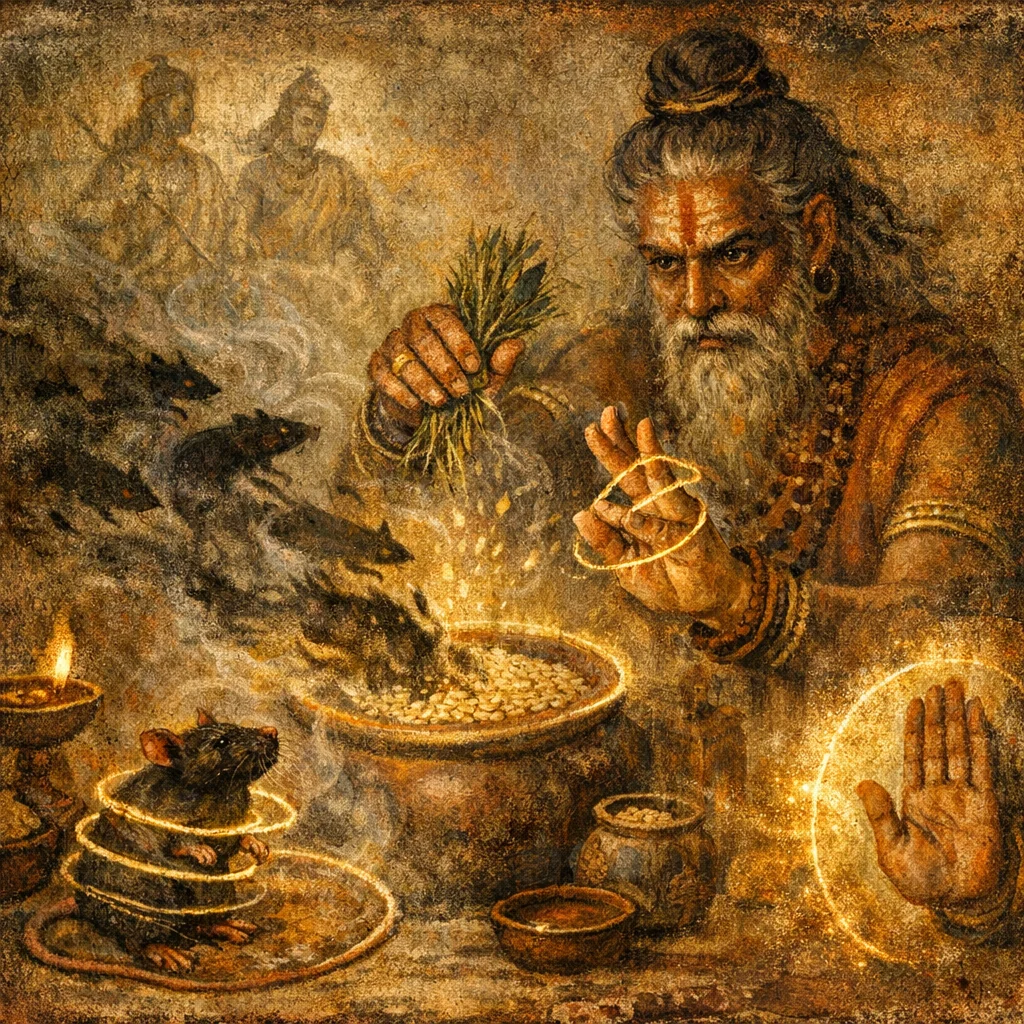
Sukta 50
Rishi: Atharvanic tradition (rṣi not specified in the provided excerpt)
Devata: Aśvinau (the Aśvins)
Chandas: Likely Anuṣṭubh (imperative-rich, compact; requires full pada-count confirmation)
Mantras
Mantra 1
अभययाचना। हतं तर्दं समङ्कमाखुमश्विना छिन्तं शिरो अपि पृष्टीः शृणीतम्। यवान्नेददानपि नह्यतं मुखमथाभयं कृणुतं धान्याऽय
Slay the Tarda, the burrower, the rat, O Aśvins; cut off the head, and shatter also the back. Let him not so much as eat the barley; bind fast his mouth: then make ye safety for our grain.
Mantra 2
तर्द है पतङ्ग है जभ्य हा उपक्वस । ब्रह्मेवासंस्थितं हविरनदन्त इमान् यवानहिंसन्तो अपोदित
Tarda—away! Patanga—away! Jabhya—begone! Upakvasa—avaunt! Like brahman set firm is the oblation: bite not these barleys, harm them not; depart ye hence.
Mantra 3
तर्दापते वघापते तृष्टजम्भा आ शृणोत मे । य आरण्या व्यऽद्वरा ये के च स्थ व्यऽद्वरास्तान्त्सर्वान् जम्भयामसि
O lord of Tarda, lord of destruction, ye sharp-jawed, hear me hither. What forest-bred burrowers there be, whatever burrowers ye are—those all we crush, we break their jaws.
Frequently Asked Questions
It is a storehouse-protection charm against rats and other burrowing, grain-eating pests, aimed especially at safeguarding barley and stored cereals.
The Aśvins are swift helpers who remove immediate dangers; here they are asked to create “abhaya” (safety) for the household’s food supply by destroying and disabling the pests.
Traditionally, one recites the three mantras at the granary/threshold while touching a small amount of barley, performing expulsion gestures outward and a symbolic ‘binding’ to prevent the pests from biting the grain.