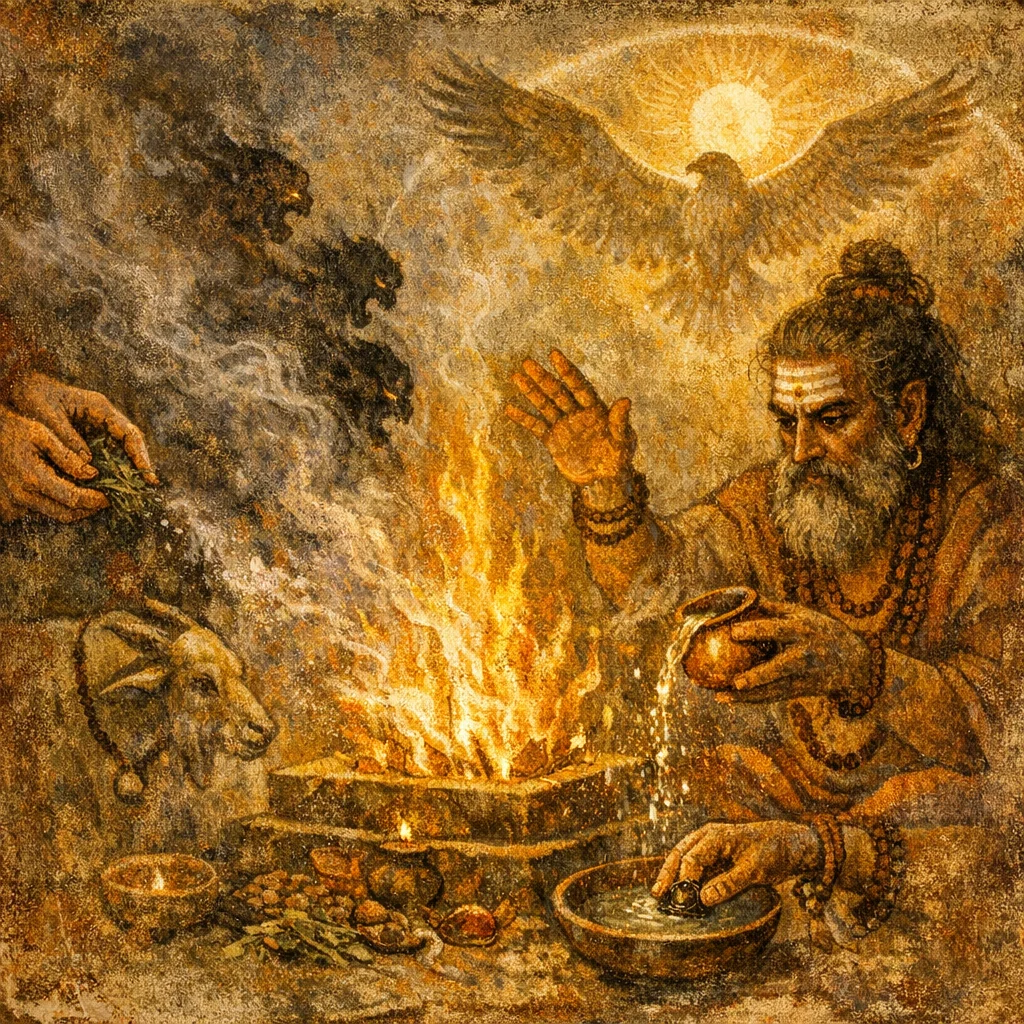
Sukta 49
Rishi: Not specified in excerpt (Agni-stava unit)
Devata: Agni
Chandas: Anuṣṭubh-like (not fully secure from single verse excerpt)
Mantras
Mantra 1
अग्निस्तवः। नहि ते अग्ने तन्वः क्रूरमानंश मर्त्यः । कपिर्बभस्ति तेजनं स्वं जरायु गौरिव
For no mortal, O Agni, hath reached the cruel (harm) against thy body. The tawny one flashes forth his own keen splendour, as a cow (casts) the afterbirth.
Mantra 2
मेष इव वै सं च वि चोर्वऽच्यसे यदुत्तरद्रावुपरश्च खादतः । शीर्ष्णा शिरोऽप्ससाप्सो अर्दयन्नंशून् बभस्ति हरितेभिरासभिः
Like a ram, verily, thou art dashed together and driven apart, when, fleeing upward, thou gnawest from above. With the head he smites the head; with the waters—ye Waters—crushing (thee), he tramples thy filaments with tawny jaws.
Mantra 3
सुपर्णा वाचमक्रतोप द्यव्याखरे कृष्णा इषिरा अनर्तिषुः । नि यन्नियन्त्युपरस्य निष्कृतिं पुरू रेतो दधिरे सूर्यश्रितः
The fair-winged made speech; upon the heavenly hollow the black, the swift, bestirred themselves in dance. When they lead down the upper one’s outlet, much seed they have deposited, resting upon the Sun.
Frequently Asked Questions
It is used for protection and purification—asserting Agni’s invulnerability and using his heat to drive out harm, pollution, and clinging disease-like influences.
Waters represent cleansing and crushing removal of what clings, while Vāc represents the mantric control that directs the harmful agency to an ‘exit’ (niṣkṛti).
The core materials are a clean fire and clean water. Optional supports include a boundary marker (doorway/cord) for the ‘exit’ and a small use of ash or ghee, depending on tradition.