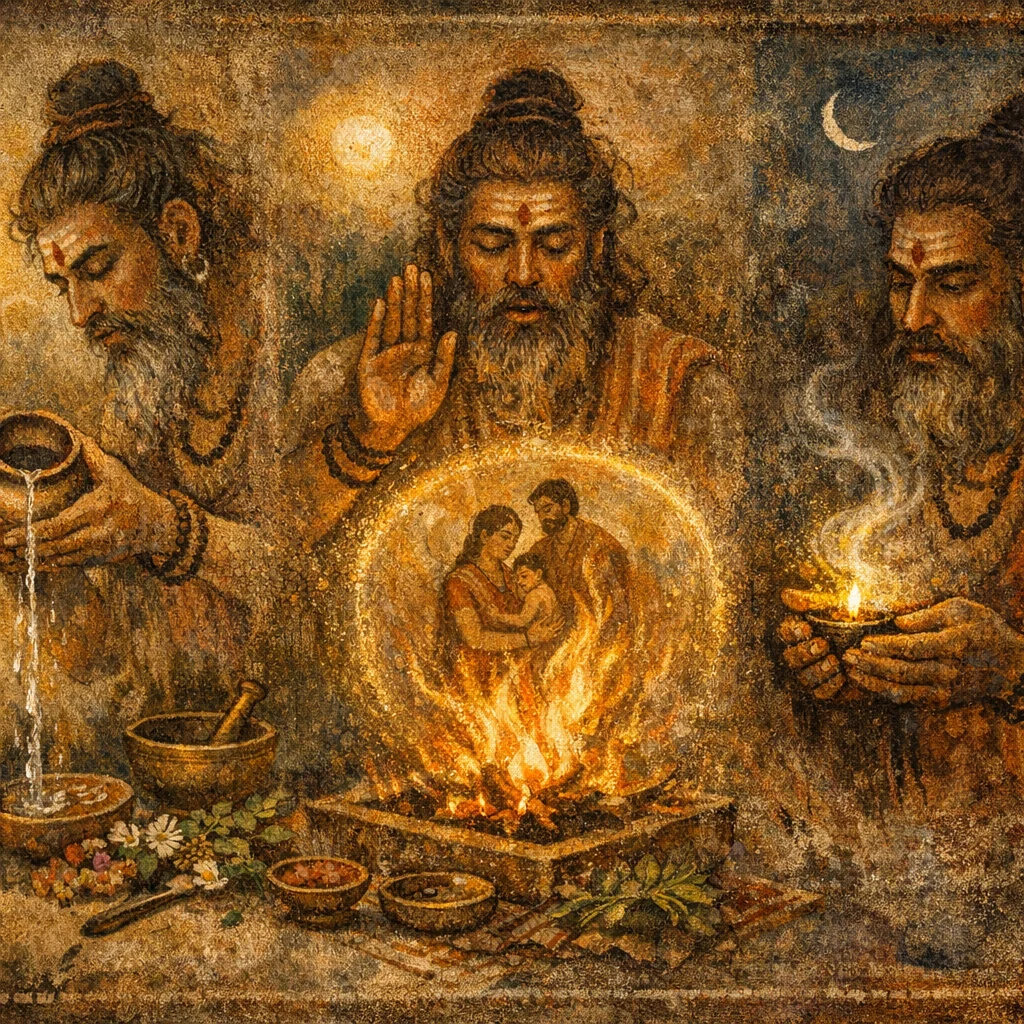
Sukta 47
Rishi: Kavi-/priestly lineage (attributed in sense to inspired ritualists; specific r̥ṣi not explicit in the given excerpt)
Devata: Ṛta / Sv-iṣṭi (efficacious correctness and successful offering), with implicit priestly powers (Saudhvanas)
Chandas: Triṣṭubh-like cadence (mixed/prose-verse Atharvanic style; not securely determinable from excerpt alone)
Mantras
Mantra 1
दीर्घायुः प्राप्तिः। अग्निः प्रातःसवने पात्वस्मान् वैश्वानरो विश्वकृद् विश्वशंभूः । स नः पावको द्रविणे दधात्वायुष्मन्तः सहभक्षाः स्याम
May Agni at the morning pressing guard us—Vaiśvānara, the All-maker, the All-auspicious. May that Purifier bestow on us wealth; may we be long-lived, sharing food in fellowship.
Mantra 2
विश्वे देवा मरुत इन्द्रो अस्मानस्मिन् द्वितीये सवने न जह्युः । आयुष्मन्तः प्रियमेषां वदन्तो वयं देवानां सुमतौ स्याम
May all the Gods, the Maruts, and Indra not forsake us in this second pressing. Long-lived, speaking what is dear to them, may we abide in the Gods’ good favor.
Mantra 3
इदं तृतीयं सवनं कवीनामृतेन ये चमसमैरयन्त । ते सौधन्वनाः स्वऽरानशानाः स्विऽष्टिं नो अभि वस्यो नयन्तु
This is the third pressing of the seers: with Order they set the cup in motion. May those Saudhvanas, having won the sacred tones, lead us unto well-offered sacrifice, unto the better good.
Frequently Asked Questions
It asks that the gods protect the sacrificer through all three pressings and that the offering become sv-iṣṭi—properly completed—yielding long life, wealth, and well-being.
Because each savana is a distinct ritual ‘turn’ in the day; the hymn distributes protection across them—Agni for the morning, the All-gods with Indra and Maruts for the second, and Ṛta/sv-iṣṭi for the third completion.
Svara are the sacred chant tones/accents. The hymn treats mastery of these tones as a real ritual power: correct voiced performance aligned with Ṛta is what leads the rite to sv-iṣṭi and ‘better good’.