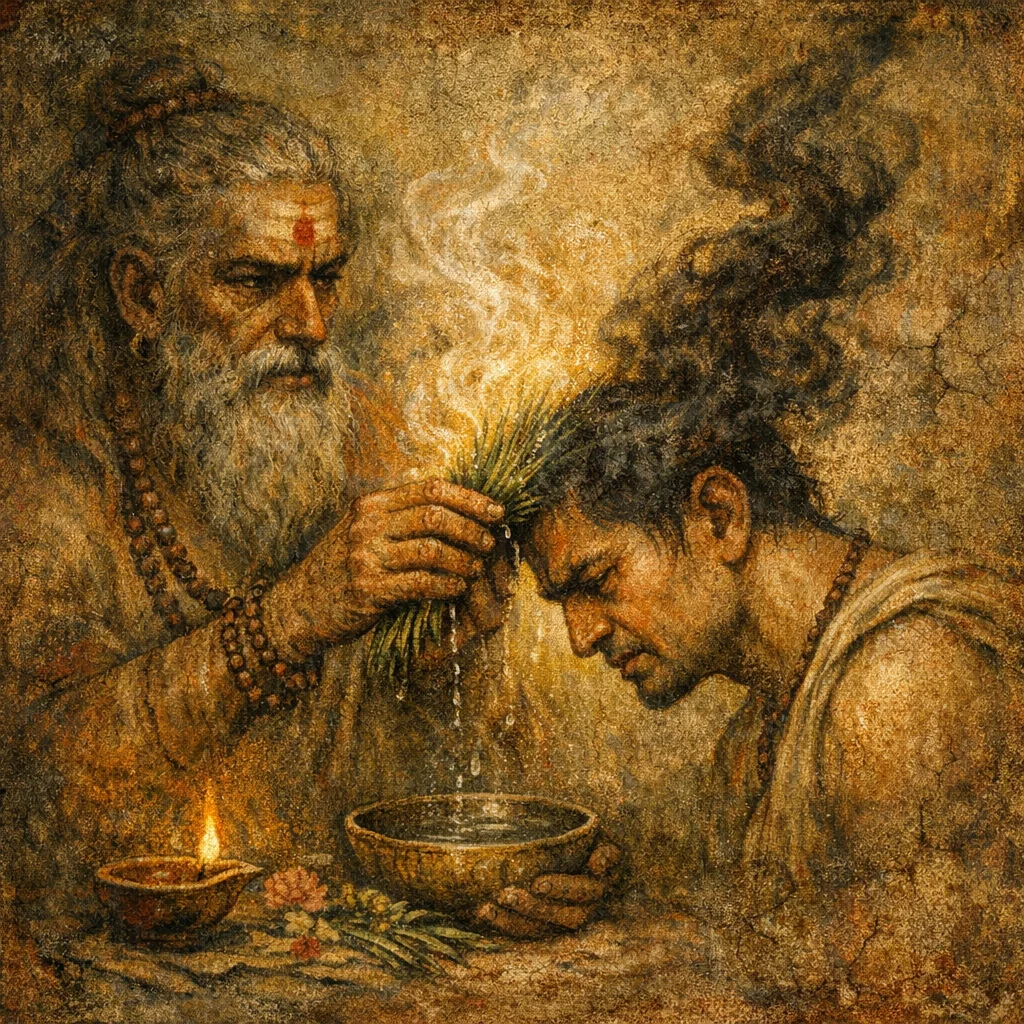
Sukta 43
Rishi: Atharvanic tradition (unspecified here)
Devata: Darbha as empowered remedy; Manyu as the affliction addressed
Chandas: Anuṣṭubh (probable)
Mantras
Mantra 1
मन्युशमनम्। अयं दर्भो विमन्युकः स्वाय चारणाय च । मन्योर्विमन्युकस्यायं मन्युशमन उच्यते
This darbha-grass is anger-quelling, for a man’s own behoof and for his going forth; this, as the remover of wrath, is called the pacifier of anger.
Mantra 2
अयं यो भूरिमूलः समुद्रमवतिष्ठति । दर्भः पृथिव्या उत्थितो मन्युशमन उच्यते
This which is many-rooted and stands fast upon the sea—this darbha, sprung from Earth, is called the pacifier of anger.
Mantra 3
वि ते हनव्यां शरणिं वि ते मुख्यां नयामसि । यथावशो न वादिषो मम चित्तमुपायसि
Away we lead thy jaw’s missile, away thy chiefest weapon; so shalt thou, powerless, not speak against me, and unto my will thy mind shall draw near.
Frequently Asked Questions
To calm anger (manyu) and prevent quarrels—either within oneself or coming from others—especially when one must move among people or face a tense encounter.
Darbha is treated as a ritually potent plant: earth-born and deeply rooted, it symbolizes steadiness and is invoked as a practical carrier of calming power that ‘removes wrath.’
Both. The first two mantras emphasize pacification and stability, while the third explicitly ‘leads away’ the opponent’s verbal weapons, aiming to stop hostile speech and secure compliance.