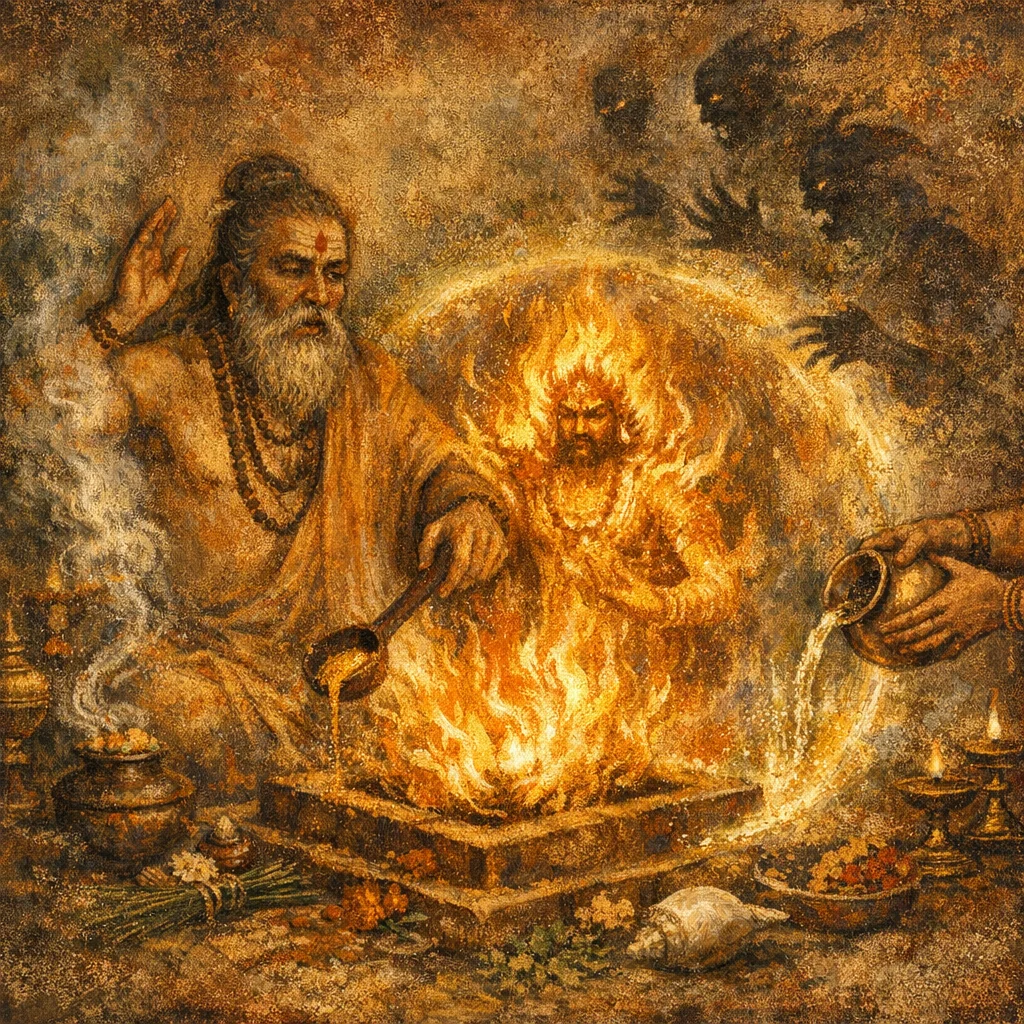
Sukta 35
Rishi: Atharvanic tradition (Agni/Vaiśvānara hymn)
Devata: Vaiśvānara Agni
Chandas: Anuṣṭubh (probable)
Mantras
Mantra 1
वैश्वानरः। वैश्वानरो न ऊतय आ प्र यातु परावतः । अग्निर्नः सुष्टुतीरुप
Vaiśvānara—let Vaiśvānara come hither, forward, for our succour, even from afar: let Agni draw near unto our well-fashioned praises.
Mantra 2
वैश्वानरो न आगमदिमं यज्ञं सजूरुप । अग्निरुक्थेष्वंहसु
Vaiśvānara hath come to us, in concord, unto this sacrifice; Agni is present in the ukthas, in time of strait and trouble.
Mantra 3
वैश्वानरोऽङ्गिरसां स्तोममुक्थं च चाक्लृपत्। ऐषु द्युम्नं स्वऽर्यमत्
Vaiśvānara for the Aṅgirases hath duly ordered both stoma and uktha; in these he hath set splendour—he hath won the heavenly light, and Aryaman’s favour.
Frequently Asked Questions
Vaiśvānara is Agni as the shared, communal fire—present in the household and sacrifice—who comes when called and makes the rite effective and safe.
Aṃhas refers to distress, constriction, or misfortune. The hymn states that Agni is present in the uktha (recitation) precisely in such trouble, functioning as protection and remedy.
They represent correctly structured praise—chant and recitation. The sukta credits Vaiśvānara with ordering them properly, and from that right order arise splendour (dyumna), heavenly light (svaḥ), and social stability through Aryaman’s favour.