Sukta 32
Rishi: Atharvanic tradition (often transmitted under Atharvan/Angiras rubric for rakṣohā hymns)
Devata: Agni (as rakṣohā, demon-burner)
Chandas: Anuṣṭubh (predominant in AV apotropaic stanzas; this verse conforms to anuṣṭubh-like cadence)
Mantras
Mantra 1
यातुधानक्षयणम्। अन्तर्दावे जुहुता स्वे३तद् यातुधानक्षयणं घृतेन । आराद् रक्षांसि प्रति दह त्वमग्ने न नो गृहाणामुप तीतपासि
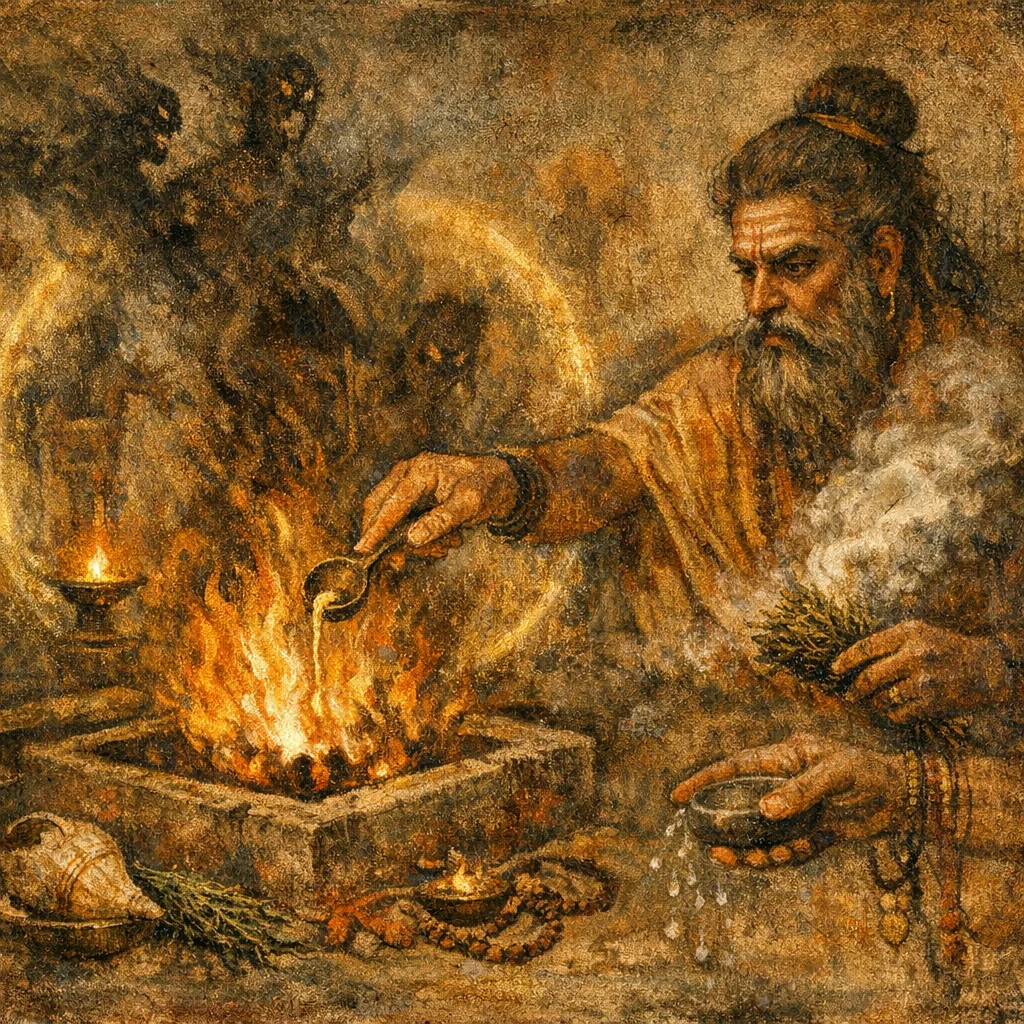
Within the kindled fire make ye oblation, in your own place—this is the yātudhāna-waster—with ghee. From far away burn back the Rākṣasas, O Agni; let them not come nigh to scorch and harry our houses.
Mantra 2
रुद्रो वो ग्रीवा अशरैत् पिशाचाः पृष्टीर्वोऽपि शृणातु यातुधानाः । वीरुद् वो विश्वतोवीर्या यमेन समजीगमत्
May Rudra smite your necks, O Piśācas; may he also crush your backs, O Yātudhānas. The all-potent creeper-plant, with Yama, hath wholly borne you off.
Mantra 3
अभयं मित्रावरुणाविहास्तु नोऽर्चिषात्त्रिणो नुदतं प्रतीचः । मा ज्ञातारं मा प्रतिष्ठां विदन्त मिथो विघ्नाना उप यन्तु मृत्युम्
Let fearlessness be ours here, O Mitra-Varuṇa; with your flame drive back the devourers, thrust them rearward. Let them not find our kinsman, let them not find our firm standing; thwarting one another, let the hinderers go unto Death.
Frequently Asked Questions
It is used to protect a household by burning back and expelling hostile beings (rākṣasas, yātudhānas, piśācas), establishing fearlessness and preventing intrusion or harassment.
Because Agni is the immediate household protector; the ghee oblation ritually “arms” the flame so it can repel and scorch threats from a distance and keep them from nearing the home.
Mitra–Varuṇa enforce order, boundaries, and safety so attackers cannot find kin or the household’s foundation, while Yama represents final removal—sending the threats away to the realm of death/awayness.