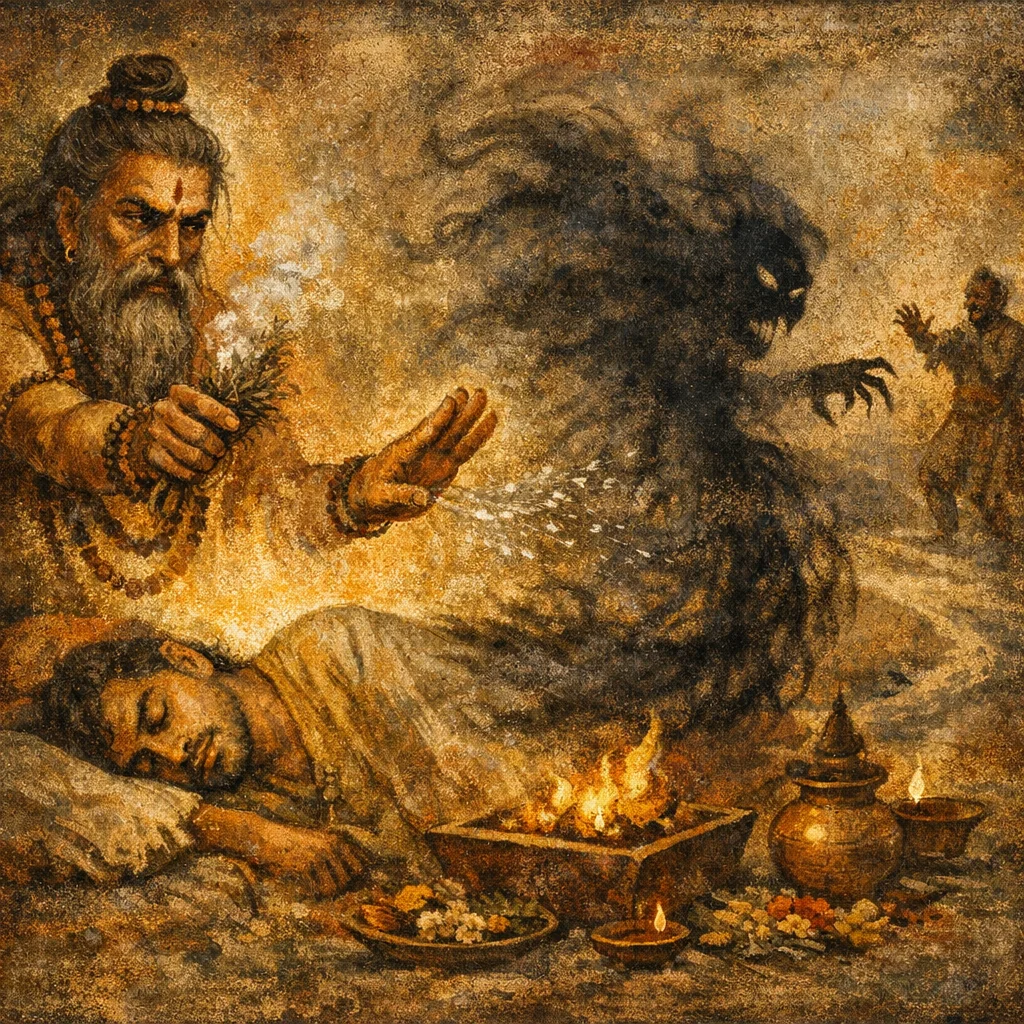
Sukta 26
Rishi: Atharvanic tradition (not specified in excerpt)
Devata: Pāpmán (personified evil/disease) as the addressed power; the mantra functions coercively
Chandas: Mixed/Anuṣṭubh-like (Atharvanic prose-title + verse)
Mantras
Mantra 1
पाप्मनाशनम्। अव मा पाप्मन्त्सृज वशी सन् मृडयासि नः । आ मा भद्रस्य लोके पाप्मन् धेह्यविह्रुतम्
A destroyer of Pāpmán. Away—release me, O Pāpmán; being brought under control, be gracious unto us. Set me, O Pāpmán, in the world of the благest good—unharmed, unravished.
Mantra 2
यो नः पाप्मन् न जहासि तमु त्वा जहिमो वयम्। पथामनु व्यावर्तनेऽन्यं पाप्मानु पद्यताम्
What Pāpmán leaveth us not— that thee, forsooth, we drive away. Along the path, at the turning-aside, let Pāpmán follow after another.
Mantra 3
अन्यत्रास्मन्न्युऽच्यतु सहस्राक्षो अमर्त्यः । यं द्वेषाम तमृच्छतु यमु द्विष्मस्तमिज्जहि
Elsewhere than from us let the thousand-eyed Immortal be made to set it down. Let it go to him whom we hate; him whom indeed we hate—him, even him, do thou smite.
Frequently Asked Questions
In Atharvanic usage, Pāpmán is a personified harmful force that can appear as illness, misfortune, pollution, or malign influence. The hymn treats it as something that can be commanded to release and depart.
The “path/turning-point” imagery is a ritual technology for expulsion: harm is sent out of the patient’s sphere and diverted at a liminal place so it does not return, symbolically switching it onto another course.
Its primary aim is healing and protection (removing Pāpmán and restoring auspiciousness). The third verse can be used in an abhicāra mode by redirecting the remaining harm toward an enemy under the agency of the thousand‑eyed Immortal (Indra).