Sukta 24
Rishi: Atharvanic tradition (anonymous healing unit)
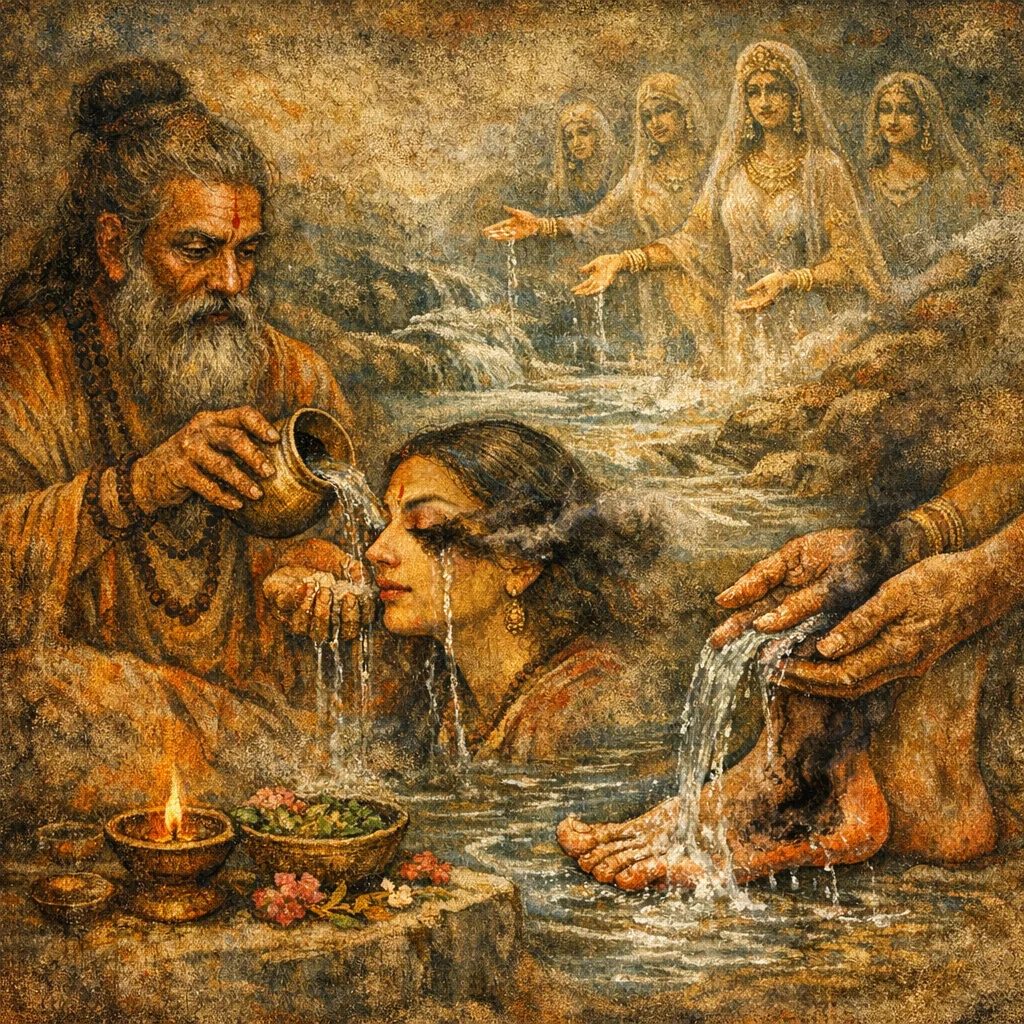
Devata: Āpas (Waters) as Devīs
Chandas: Mixed/loosely Anuṣṭubh (Atharvanic prose-verse tendency; pāda lengths may vary)
Mantras
Mantra 1
अपां भैषज्यम्। हिमवतः प्र स्रवन्ति सिन्धौ समह सङ्गमः । आपो ह मह्यं तद् देवीर्ददन् हृद्द्योतभेषजम्
The Waters’ remedy: from Himavant they stream forth; in Sindhu is their gathered meeting. Let the Waters, the Goddesses, give me that— the heart-illumining medicine.
Mantra 2
यन्मे अक्ष्योरादिद्योत पार्ष्ण्योः प्रपदोश्च यत्। आपस्तत् सर्वं निष्करन् भिषजां सुभिषक्तमाः
Whatsoever in my eyes hath burned and flashed, or in my heels, or in the foreparts of my feet—let the Waters, most excellent of healers among physicians, carry all that forth.
Mantra 3
सिन्धुपत्नीः सिन्धुराज्ञीः सर्वा या नद्य१स्थन । दत्त नस्तस्य भेषजं तेना वो भुनजामहै
Ye rivers all, whose lord is Sindhu, whose sovereign is Sindhu, as ye stand in your several seats—give us of that its remedy; with that gift of yours may we partake and profit.
Frequently Asked Questions
That sacred water—especially water from a river meeting-point—can be ritually awakened as bhaiṣajya (medicine) and can carry disease or burning pain out of the body.
It maps a sacred flow: waters arise from the Himavant and gather in Sindhu, symbolizing concentrated potency—ideal for consecration as a strong, ‘gathered’ remedy.
Traditionally by reciting it over clean water and then washing or sprinkling the affected areas (notably eyes and feet), while intending the waters to remove the burning/irritation and restore inner calm.