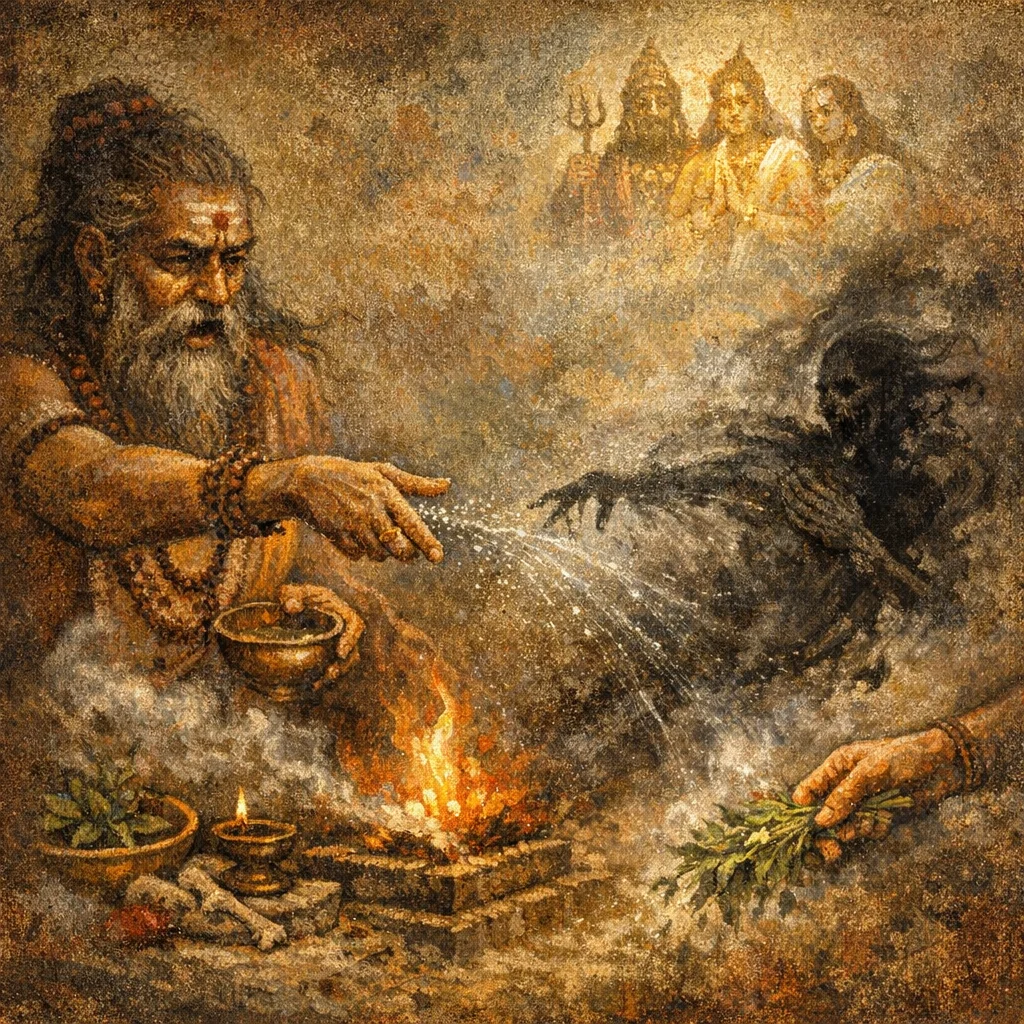
Sukta 20
Rishi: To be resolved via Anukramaṇī for AVŚ 6.20 (not provided in excerpt).
Devata: Takman (Fever), with yakṣma as the targeted affliction.
Chandas: Triṣṭubh/Jagatī-like expansion (requires metrical verification; the verse is longer than standard Anuṣṭubh).
Mantras
Mantra 1
यक्ष्मनाशनम्। अग्नेरिवास्य दहत एति शुष्मिण उतेव मत्तो विलपन्नपायति । अन्यमस्मदिच्छतु कं चिदव्रतस्तपुर्वधाय नमो अस्तु तक्मने
A destroyer of wasting sickness. As fire, burning, it goeth forth from him, from the vehement one; and as from a drunken man, wailing, it withdraweth. Let it seek another than us—some one, be he who he may, a vowless man—for the fever-heat to smite. Homage be unto Takman.
Mantra 2
नमो रुद्राय नमो अस्तु तक्मने नमो राज्ञे वरुणाय त्विषीमते । नमो दिवे नमः पृथिव्यै नम ओषधीभ्यः
Homage to Rudra; homage be to Fever; homage to the King, to Varuṇa of mighty splendour. Homage to Heaven, homage to Earth, homage to the Plants.
Mantra 3
अयं यो अभिशोचयिष्णुर्विश्वा रूपाणि हरिता कृणोषि । तस्मै तेऽरुणाय बभ्रवे नमः कृणोमि वन्याय तक्मने
This Fever, who, burning, makest all forms to be yellow-hued—unto thee, the ruddy, the brown, I make obeisance: homage to the wild-born Fever.
Frequently Asked Questions
It addresses takman (fever) together with yakṣma (wasting/consumptive sickness), aiming to drive the affliction out and prevent its return.
That line reflects a common Atharvanic “turning away/transfer” strategy: the disease is commanded to leave the patient and be redirected away from the ritually ordered household.
The hymn offers homage to the plants as empowered healers; it sacralizes herbal treatment by placing it under cosmic protection (Heaven–Earth) and divine oversight (Rudra/Varuṇa).