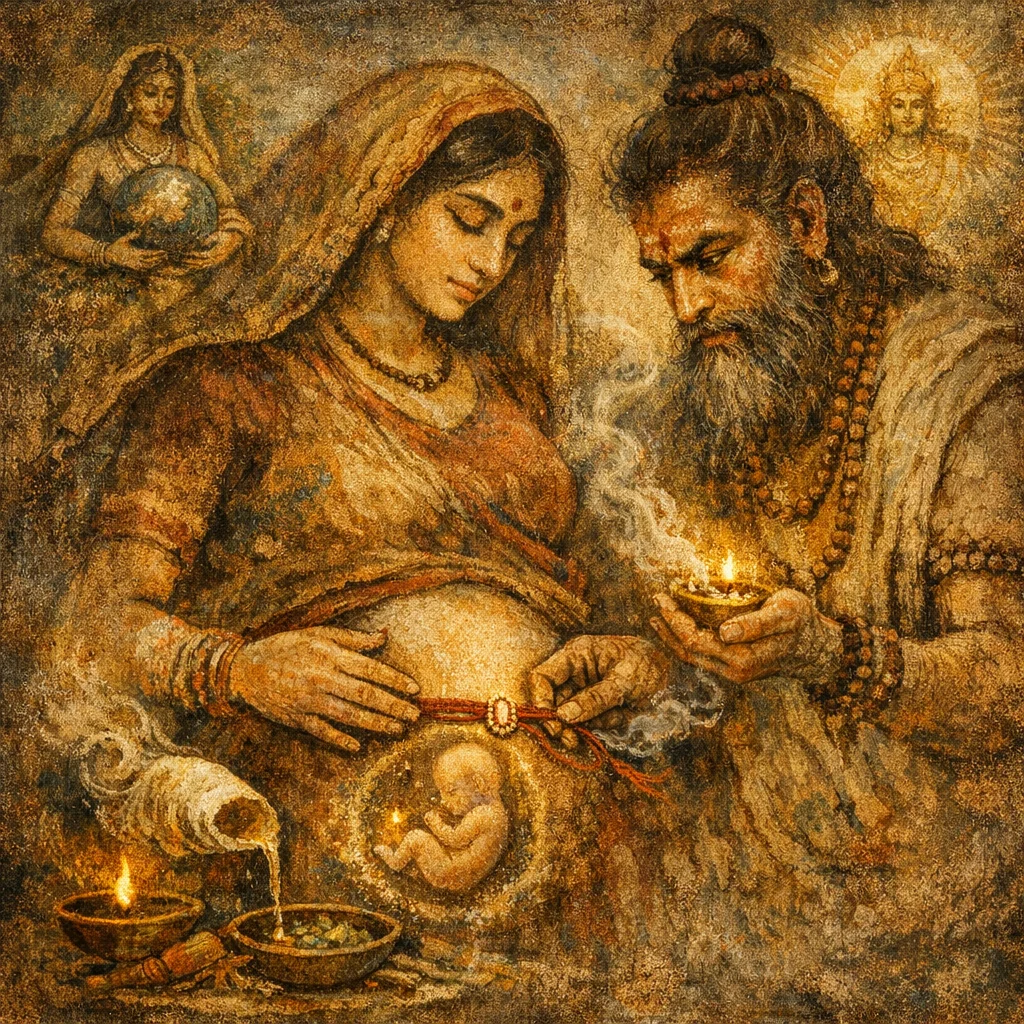
Sukta 17
Rishi: Atharvanic
Devata: Pṛthivī (Earth) as stabilizing model; Garbha (embryo) as protected object
Chandas: Anuṣṭubh
Mantras
Mantra 1
गर्भदृंहणम्। यथेयं पृथिवी मही भूतानां गर्भमादधे। एवा ते ध्रियतां गर्भो अनु सूतुं सवितवे
As this great Earth beareth the embryo of all beings, even so let thy embryo be held fast, in due course until the bringing-forth, for successful begetting.
Mantra 2
यथेयं पृथिवी मही दाधारेमान् वनस्पतीन्। एवा ते ध्रियतां गर्भो अनु सूतुं सवितवे
As this great Earth hath firmly borne these lords of the forest, so may thy embryo be held fast, in due course unto the bringing-forth, for Savitar’s quickening.
Mantra 3
यथेयं पृथिवी मही दाधार पर्वतान् गिरीन्। एवा ते ध्रियतां गर्भो अनु सूतुं सवितवे
As this great Earth hath borne the mountains and the hills, so may thy embryo be held fast, in due course unto the bringing-forth, for Savitar’s quickening.
Mantra 4
यथेयं पृथिवी मही दाधार विष्ठितं जगत्। एवा ते ध्रियतां गर्भो अनु सूतुं सवितवे
As this great Earth hath borne the world set firm, so may thy embryo be held fast, in due course unto the bringing-forth, for Savitar’s quickening.
Frequently Asked Questions
To keep the pregnancy stable—‘holding’ the fetus firmly in the womb until the proper time of birth, preventing premature loss.
Earth is the strongest model of steadiness: she bears beings, mountains, and the whole firm-set world. The hymn transfers that same stabilizing power to the embryo.
Not explicitly. Its main ‘substance’ is symbolic Earth and the act of recitation; in practice, a simple protective cord or amulet may be used alongside the mantra.