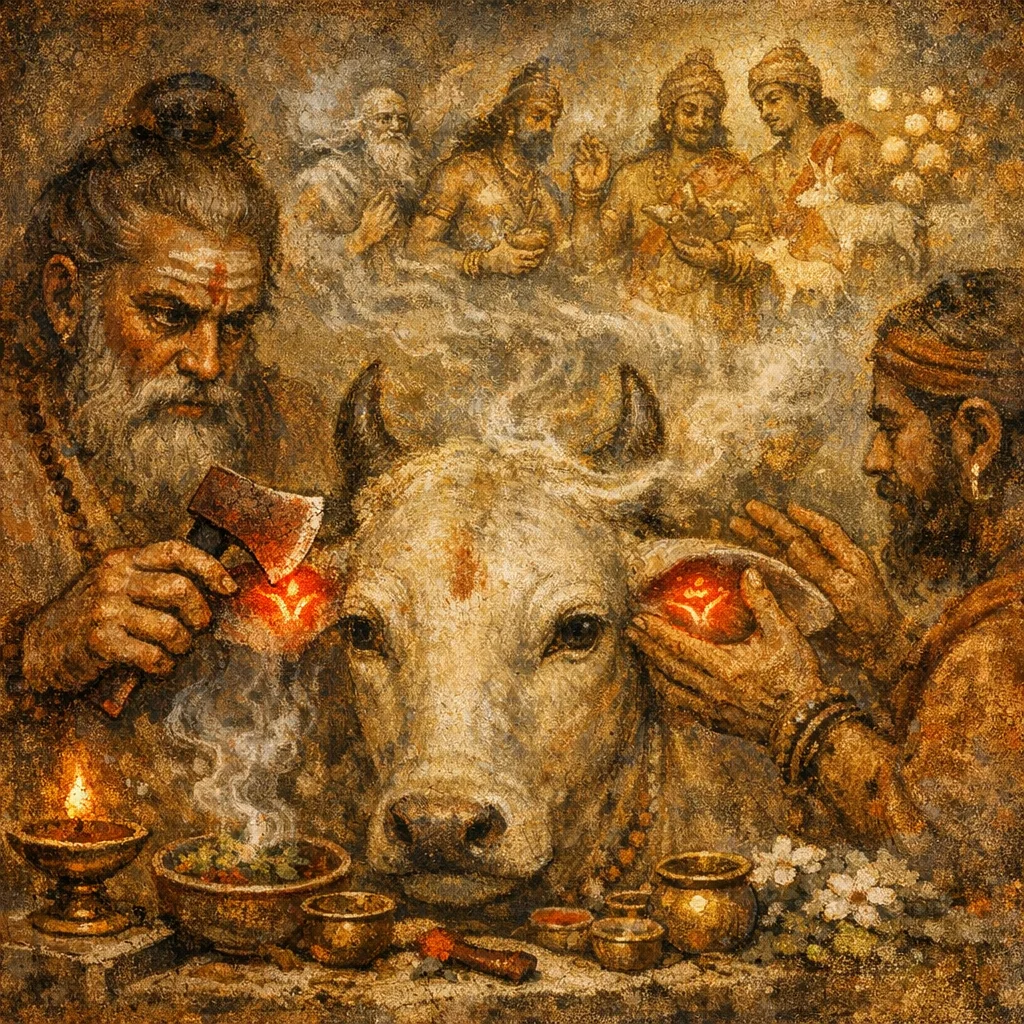
Sukta 141
Rishi: Atharvanic tradition
Devata: Vāyu, Tvaṣṭṛ, Indra, Rudra (cluster invoked for purification, formation, sanction, healing)
Chandas: Mixed/Anuṣṭubh-like cadence (as transmitted in AV domestic charms; exact metrical classification varies by pada division)
Mantras
Mantra 1
गोकर्णयोर्लक्ष्यकरणम्। वायुरेनाः समाकरत् त्वष्टा पोषाय ध्रियताम्। इन्द्र आभ्यो अधि ब्रवद् रुद्रो भूम्ने चिकित्सतु
For the cow’s ears, the making of a mark: Vāyu hath set the taint aright; let Tvaṣṭṛ hold it fast for thriving. Indra hath spoken over these; let Rudra, for abundance, apply his healing skill.
Mantra 2
लोहितेन स्वधितिना मिथुनं कर्णयोः कृधि । अकर्तामश्विना लक्ष्म तदस्तु प्रजया बहु
With the red-hued axe make thou a paired mark upon the ears. Let the Aśvins fashion the sign: so be it—abundant in progeny.
Mantra 3
यथा चक्रुर्देवासुरा यथा मनुष्याऽउत। एवा सहस्रपोषाय कृणुतं लक्ष्माश्विना
As the Gods and Asuras wrought it, as men also (have wrought it), even so, O Aśvins, make ye the mark for thousandfold thriving.
Frequently Asked Questions
It is recited when making an identifying ear-mark on cattle, to protect the animal, ensure clean healing, and turn the mark into a sign of prosperity for the herd.
Each contributes a specific function: Vāyu purifies any taint, Tvaṣṭṛ stabilizes the formed mark, Indra provides authoritative sanction, and Rudra with the Aśvins ensures healing, fertility, and increase.
It focuses more on sanctifying the procedure than listing herbs. The key ‘substance’ is the lakṣma (mark) made with the implement, with ‘lohita’ (red) as an auspicious operative detail, while healing is entrusted to Rudra and the Aśvins.