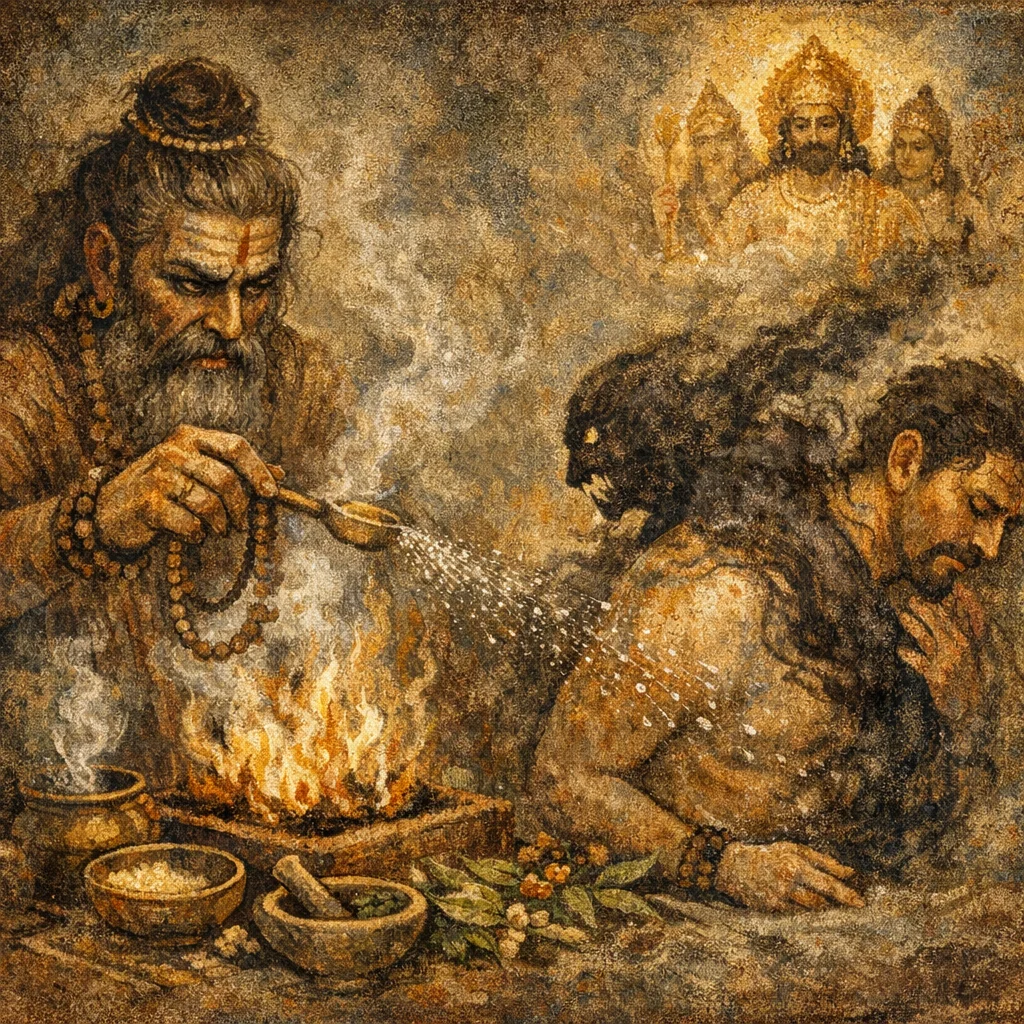
Sukta 114
Rishi: Atharvanic tradition (not specified in input)
Devata: Ādityāḥ / Devāḥ (as restorers of ṛta)
Chandas: Anuṣṭubh (probable; not metrically verified here)
Mantras
Mantra 1
उन्मोचनम्। यद् देवा देवहेडनं देवासश्चकृमा वयम्। आदित्यास्तस्मान्नो यूयमृतस्यर्तेन मुञ्चत
A Loosening. What god-offence, O Gods, we Gods have wrought—O Ādityas, from that do ye release us, by Order’s Order, by the power of ṛta.
Mantra 2
ऋतस्यर्तेनादित्या यजत्रा मुञ्चतेह नः । यज्ञं यद् यज्ञवाहसः शिक्षन्तो नोपशेकिम
By Order’s power, O Ādityas, ye worship-worthy, release us here—when, O bearers of the sacrifice, correcting us, we have not duly tended the sacrifice with fitting service.
Mantra 3
मेदस्वता यजमानाः स्रुचाज्यानि जुह्वतः । अकामा विश्वे वो देवाः शिक्षन्तो नोप शेकिम
Though rich in unction, we sacrificers, pouring ghee with the ladle, have not, O all ye Gods, duly served you—whether without right intent; therefore, correcting us, do ye release (the fault’s bond).
Frequently Asked Questions
It means “loosening” or “release”—a prayer to have the binding consequences of offence or ritual fault removed, so the worshipper returns to right order (ṛta).
Because the Ādityas are guardians of ṛta (truth/order). The hymn asks them to restore order lawfully—“by ṛta through ṛta”—and thus release the fault’s bond.
It explicitly includes mistakes in tending the sacrifice and even wrong or deficient intention. It functions as a practical prāyaścitta for omissions, procedural lapses, and inner misalignment during worship.