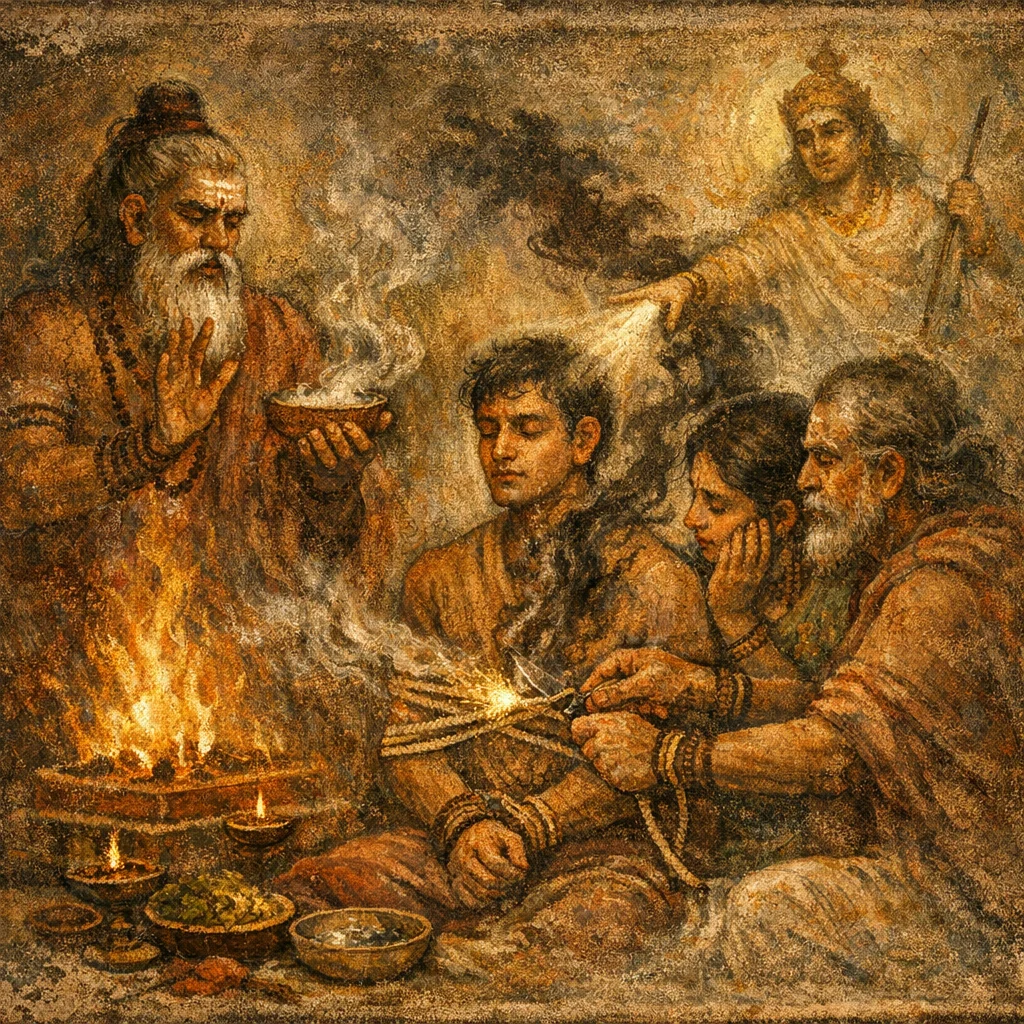
Sukta 112
Rishi: Atharvanic tradition (Anukramaṇī attribution for this hymn: Atharvan/Angiras-type; consult edition-specific Anukramaṇī for exact name).
Devata: Agni (as pāśa-mocaka, ‘looser of bonds’), with Viśve Devāḥ as sanctioning assembly
Chandas: Anuṣṭubh (predominant in AVŚ 6)
Mantras
Mantra 1
पाशमोचनम्। मा ज्येष्ठं वधीदयमग्न एषां मूलबर्हणात् परि पाह्येनम्। स ग्राह्याः पाशान् वि चृत प्रजानन् तुभ्यं देवा अनु जानन्तु विश्वे
Loose from the noose. Slay not the eldest: this man, O Agni, from their root-uprooting guard thou round about. As one who knoweth, sever thou the seizable nooses: for thee let all the Gods give sanction.
Mantra 2
उन्मुञ्च पाशांस्त्वमग्न एषां त्रयस्त्रिभिरुत्सिता येभिरासन्। स ग्राह्याः पाशान् वि चृत प्रजानन् पितापुत्रौ मातरं मुञ्च सर्वान्
Unloose thou forth the nooses of these men, O Agni—three, fastened on by three, wherewith they were. As one who knoweth, sever thou the seizing bonds: release the father and the son, release the mother, release them all.
Mantra 3
येभिः पाशैः परिवित्तो विबद्धोऽङ्गेअङ्ग आर्पित उत्सितश्च । वि ते मुच्यन्तं विमुचो हि सन्ति भ्रूणघ्नि पूषन् दुरितानि मृक्ष्व
With what nooses he is compassed round, bound fast, on every limb made fast and set thereon—while he is loosed, for loosers verily there are: O Pūṣan, slayer of the embryo, wipe thou away the evils.
Frequently Asked Questions
It is the ritual image for anything that constricts life—illness-seizure, curse, hostile magic, or sudden disabling constraint—treated as a bond that can be cut and removed.
They function as the authorizing divine assembly: the unbinding is not merely personal effort but a sanctioned release, strengthening the rite’s legitimacy and protection.
Light the household fire, use a small knotted cord as the bond-symbol, recite the three verses while untying and wiping/sprinkling with water, then remove and discard the cord away from the home to signify release.