Sukta 99
Rishi: Atharvanic transmission (anukramaṇī-dependent)
Devata: Indra
Chandas: Mixed; predominantly Triṣṭubh-style (varies by metrical analysis)
Mantras
Mantra 1
संग्रामजयः। अभि त्वेन्द्र वरिमतः पुरा त्वांहूरणाद्धुवे । ह्वयाम्युग्रं चेत्तारं पुरुणामानमेकजम्
For victory in the battle: unto thee, Indra, from the wide expanse—of old men have called thee—I invoke thee from distress. I call upon the fierce controller, of many names, the uniquely born.
Mantra 2
यो अद्य सेन्यो वधो जिघांसन् न उदीरते । इन्द्रस्य तत्र बाहू समन्तं परि दद्मः
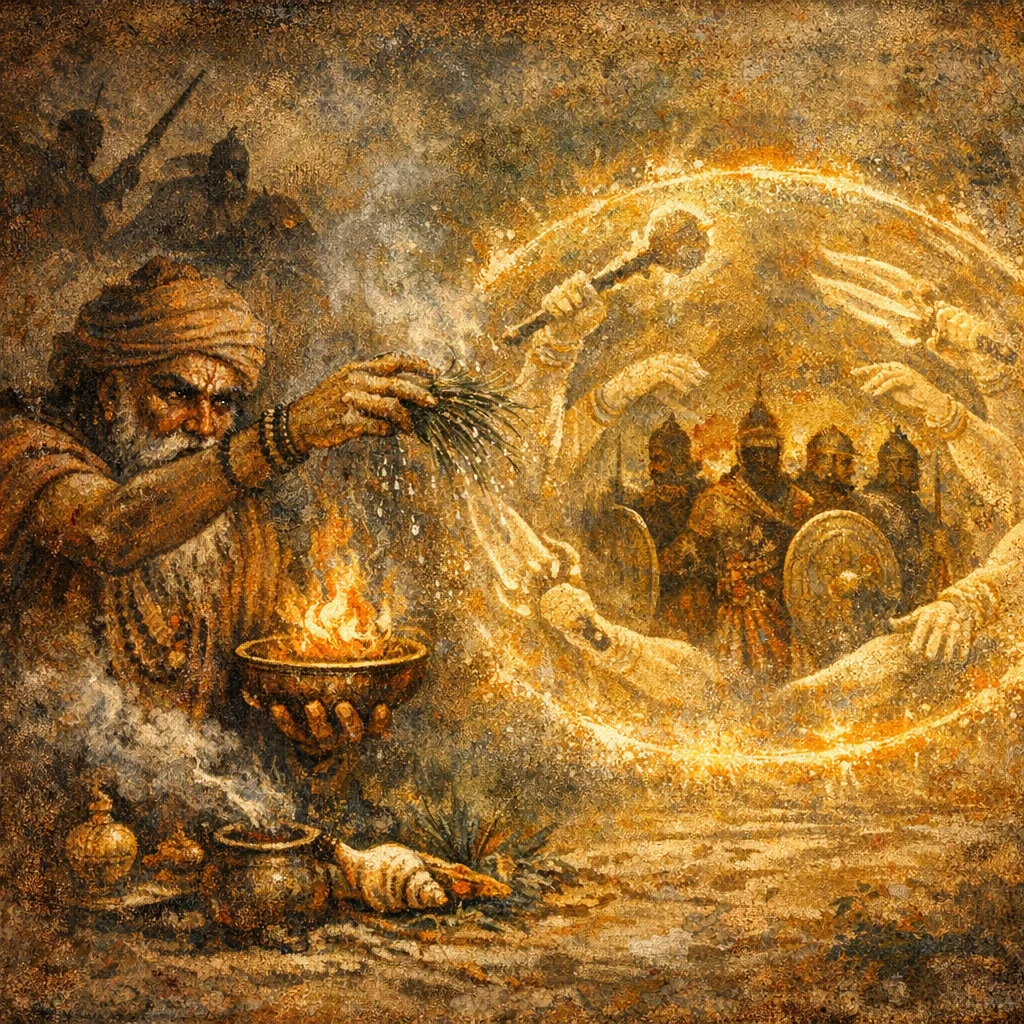
What warlike slaughter, fain to slay, is to-day uplifted against us—there we set, all round about, the arms of Indra.
Mantra 3
परि दद्म इन्द्रस्य बाहू समन्तं त्रातुस्त्रायतां नः । देव सवितः सोम राजन्त्सुमनसं मा कृणु स्वस्तये
We set around us, on every side, the arms of Indra the protector: let him protect us. O god Savitar, O Soma the King, make me of gracious mind, for welfare.
Frequently Asked Questions
It is used for protection and victory in battle—especially to avert an imminent lethal strike—by establishing Indra’s guarding presence on all sides.
“Arms” (bāhū) symbolize Indra’s active protection and strength; the mantra ritually constructs a surrounding enclosure so hostile force cannot penetrate.
No specific substances are prescribed in the verses. It can be performed through recitation with circling/quarter-marking gestures; optional water or a simple libation may be added if customary.