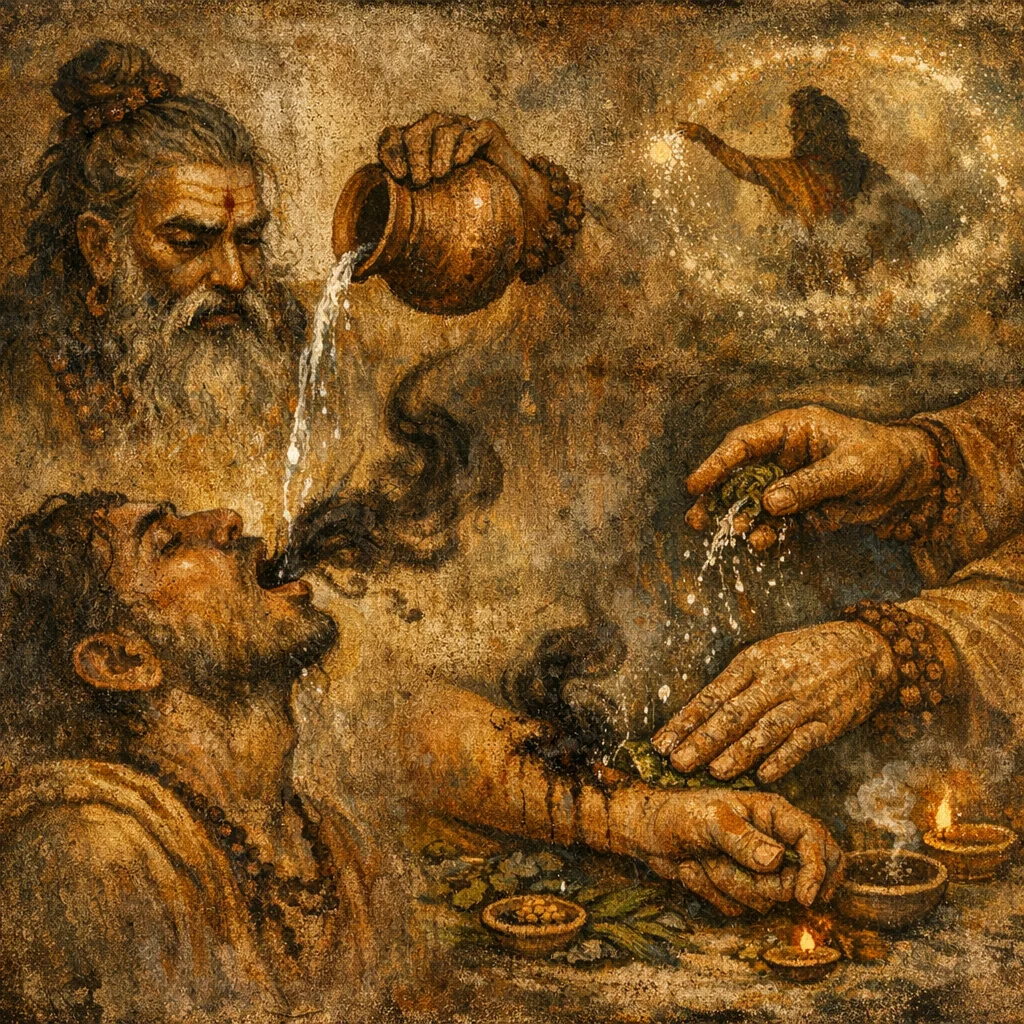
Sukta 100
Rishi: Atharvanic tradition (Anukramaṇī attribution varies; commonly Atharvan/Angiras-type seer for bhaiṣajya hymns)
Devata: Viṣadūṣaṇa (antidotal power) with cosmic donors (Sūrya, Dyauḥ, Pṛthivī, Sarasvatī)
Chandas: Anuṣṭubh (predominant in AV book 6 healing charms)
Mantras
Mantra 1
विषदूषणम्। देवा अदुः सूर्यो अदाद् द्यौरदात् पृथिव्यऽदात्। तिस्रः सरस्वतिरदुः सचित्ता विषदूषणम्
The Gods bestowed it; the Sun bestowed it; Heaven bestowed it; Earth bestowed it. The three Sarasvatīs, of one accord in counsel, bestowed the Poison-destroyer.
Mantra 2
यद् वो देवा उपजीका आसिञ्चन् धन्वन्युदकम्। तेन देवप्रसूतेनेदं दूषयता विषम्
What water, O Gods, the Upajīkās poured in upon the dry land—therewith, divinely impelled, do ye make this poison to be spoiled and powerless.
Mantra 3
असुराणां दुहितासि सा देवानामसि स्वसा । दिवस्पृथिव्याः संभूता सा चकर्थारसं विषम्
Thou art the Asuras’ daughter; thou art the Gods’ own sister. Sprung from Heaven and Earth, thou hast made the poison sapless, void of strength.
Frequently Asked Questions
It is the personified antidotal power—often enacted through consecrated water—that ‘spoils’ poison, making it unable to harm.
They function as cosmic donors and witnesses, establishing that the antidote is divinely bestowed and universally effective across all realms where poison can act.
Traditionally it is recited over clean water, then the water is poured or sprinkled on the afflicted place (and sometimes sipped), while the verses declare the poison to become sapless and inert.