Sukta 6
Rishi: Atharvanic tradition (often anonymous/Angiras-type in AV 6); specific r̥ṣi not stated in the provided excerpt.
Devata: Brahmaṇaspati (Bṛhaspati) as lord of brahman and subduer of hostile intent.
Chandas: Anuṣṭubh (probable; AV 6 commonly uses anuṣṭubh in such compact charms).
Mantras
Mantra 1
शत्रुनाशनम्। यो३स्मान् ब्रह्मणस्पतेऽदेवो अभिमन्यते । सर्वं तं रन्धयासि मे यजमानाय सुन्वते
Enemy-destruction. Whoso, O Lord of Prayer, godless, is wroth against us—him wholly do thou bring into subjection for me, for the sacrificer who presseth Soma.
Mantra 2
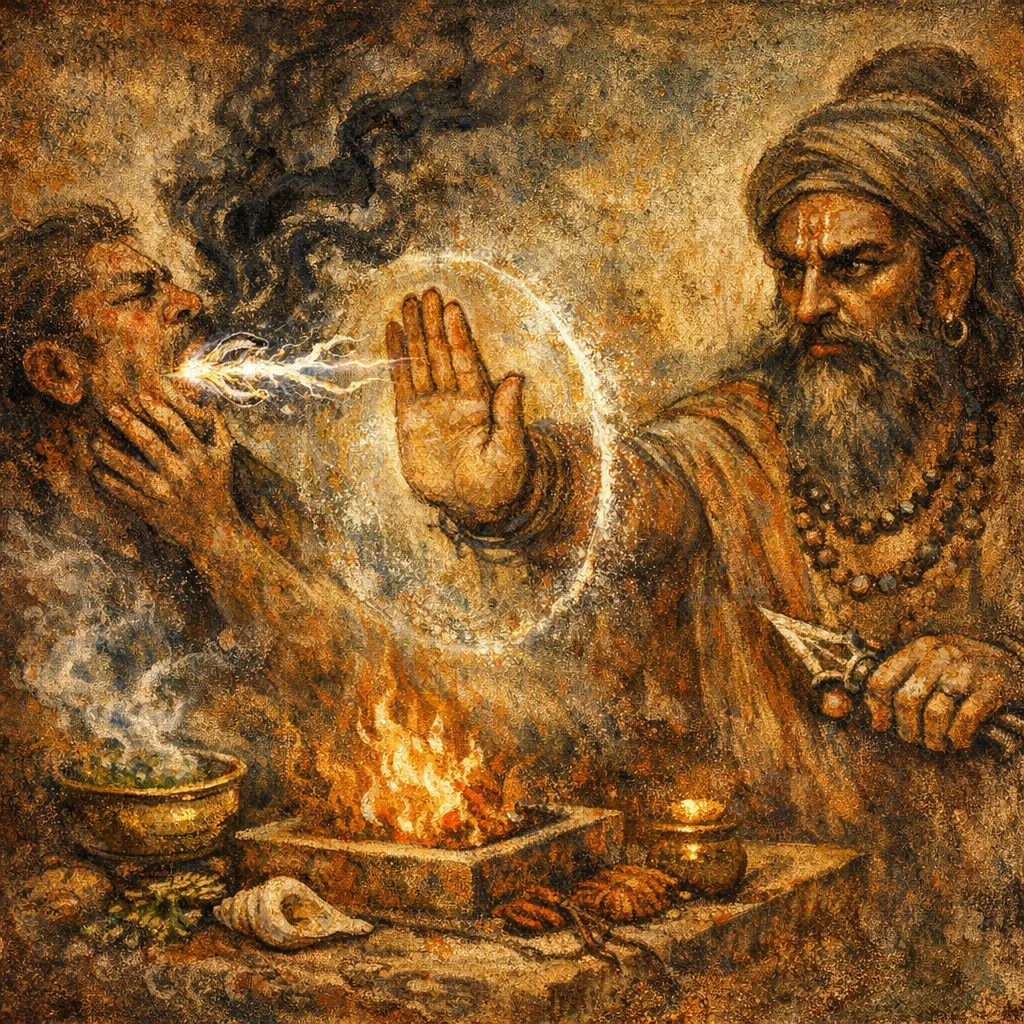
यो नः सोम सुशंसिनो दुःशंस आदिदेशति । वज्रेणास्य मुखे जहि स संपिष्टो अपायति
Whoso, O Soma, slanderer, denounceth us who are of good praise—smite him with the thunderbolt in the mouth: crushed utterly, he passeth away.
Mantra 3
यो नः सोमाभिदासति सनाभिर्यश्च निष्ट्यः । अप तस्य बलं तिर महीव द्यौर्वधत्मना
Whoso, O Soma, assaileth us, with his fellows, and whoso is the lurking foe—carry away his strength from him, by thy slaying might, as heaven (overbears) the mighty earth.
Frequently Asked Questions
It is used to protect a sacrificer or community by subduing hostile people, silencing slander/denunciation, and weakening both open and hidden attackers.
Brahmaṇaspati represents the binding authority of brahman (ritual speech) to bring enemies under control, while Soma represents consecrated power that punishes malicious speech and drains an aggressor’s strength.
The verses do not require substances; practitioners may optionally use a symbolic ‘vajra’ object (like a stone/pestle) to enact the ‘crushing’ imagery, especially in a Soma-rite setting.