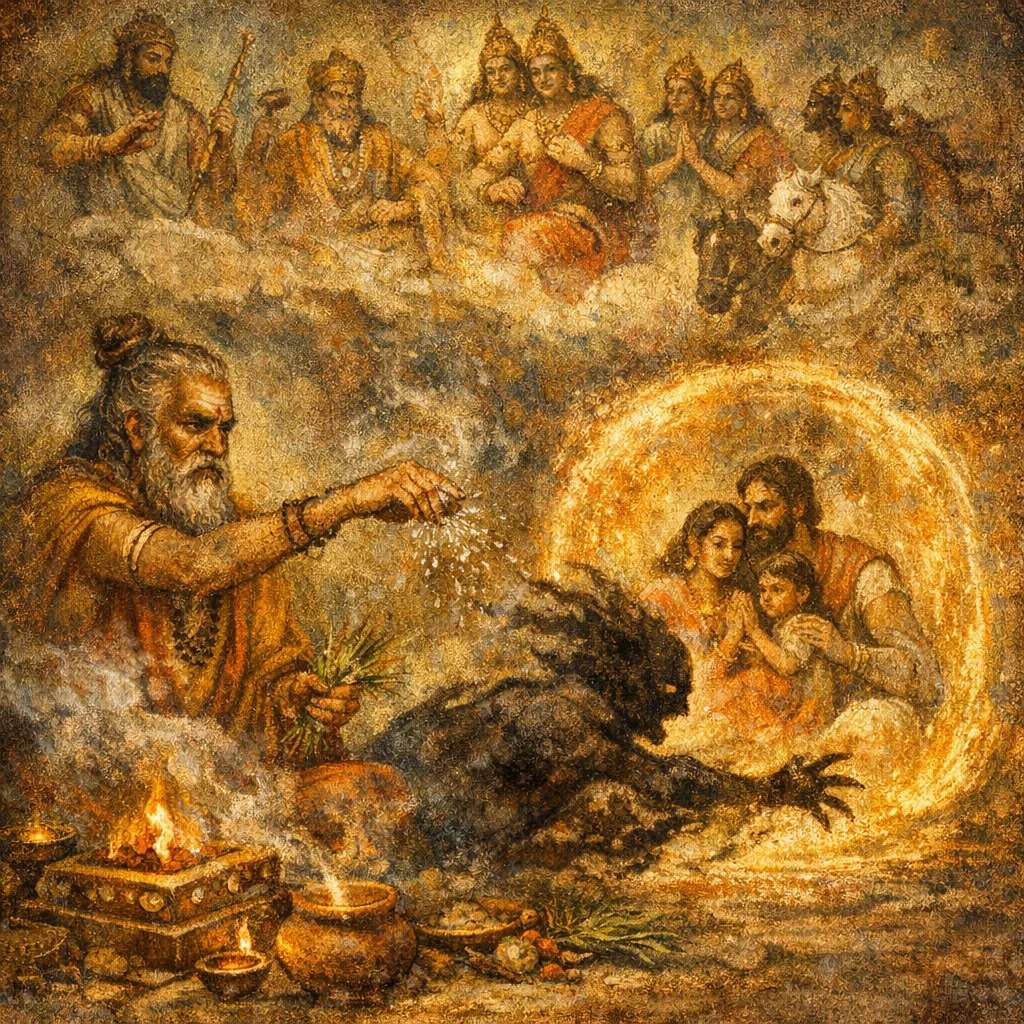
Sukta 4
Rishi: Atharvanic tradition (anonymous/collective in many AV protective verses)
Devata: Ādityas (Aṁśa, Bhaga, Varuṇa, Mitra, Aryaman, Aditi) and the Maruts
Chandas: Anuṣṭubh (probable; AV book 6 commonly uses anuṣṭubh in short apotropaic stanzas)
Mantras
Mantra 1
त्वष्टा मे दैव्यं वचः पर्जन्यो ब्रह्मणस्पतिः । पुत्रैर्भ्रातृभिरदितिर्नु पातु नो दुष्टरं त्रायमाणं सहः
Tvaṣṭṛ (grant) for me the divine utterance; Parjanya (and) Brahmaṇaspati: let Aditi now protect us—with sons, with brothers—(with) saving might, hard to be overpassed.
Mantra 2
अंशो भगो वरुणो मित्रो अर्यमादितिः पान्तु मरुतः । अप तस्य द्वेषो गमेदभिह्रुतो यावयच्छत्रुमन्तितम्
May Aṁśa, Bhaga, Varuṇa, Mitra, Aryaman, Aditi, and the Maruts guard us. From him let hatred depart—hatred hurled against him; drive thou away the enemy that is nearest at hand.
Mantra 3
धिये समश्विना प्रावतं न उरुष्या ण उरुज्मन्नप्रयुछन्। द्यौ३ष्पितर्यावय दुच्छुना या
For our prayer, come ye together, O Aśvins; aid us forth, guard us with wide protection, O wide-might, unfailing. O Heaven, our Father, drive away the evil-omen that assails.
Frequently Asked Questions
It is used for protection—especially to push away hostility, projected hatred, and the closest immediate enemy, and to avert evil-omens affecting a person or household.
The hymn builds a ‘complete shield’: Tvaṣṭṛ and Brahmaṇaspati empower the mantra, the Ādityas enforce order and safety, the Maruts add forceful warding, and the Aśvins/Dyauḥ Pitṛ complete rescue and omen-removal.
No. The text itself does not require substances; it works primarily through recitation and intention. Some traditions may add clean water sprinkling or a protective thread as optional supports.