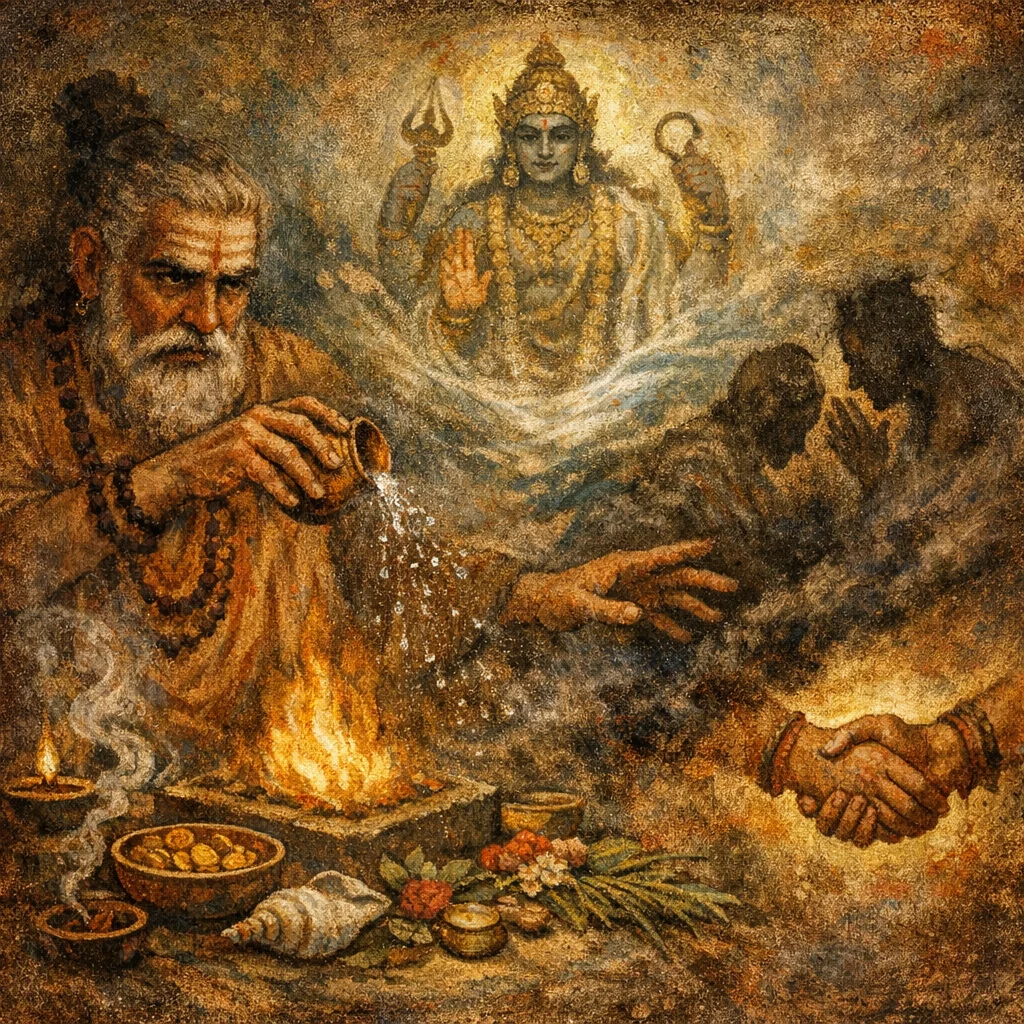
Sukta 11
Rishi: Not specified in the input (requires AV anukramaṇī consultation)
Devata: Varuṇa (Asura), with secondary allusions to ‘Father’ and ‘Hari’ as recipients/figures in the precedent
Chandas: As noted in the input header: associated with atiśakvarī/atyāṣṭi classifications (needs edition-specific mapping to this mantra).
Mantras
Mantra 1
संपत्कर्म। ६ पञ्चपदा अतिशक्वरी, ११ त्र्यवसाना षट्-पदा अत्यष्टिः। कथं महे असुरायाब्रवीरिह कथं पित्रे हरये त्वेषनृम्णः । पृश्निं वरुण दक्षिणां ददावान् पुनर्मघ त्वं मनसाचिकित्सीः
How spakest thou here unto the Great Asura? how unto the Father, unto Hari of vehement might? Varuṇa, having bestowed Pṛśni as the priestly fee, thou, O ever-bounteous, didst with mind discern the course.
Mantra 2
न कामेन पुनर्मघो भवामि सं चक्षे कं पृश्निमेतामुपाजे । केन नु त्वमथर्वन् काव्येन केन जातेनासि जातवेदाः
Not by desire alone, O ever-bounteous, do I attain: I clearly behold Ka; I approach this Pṛśni. By what, indeed, O Atharvan—by what poetic craft, by what birth—art thou Jātavedas?
Mantra 3
सत्यमहं गभीरः काव्येन सत्यं जातेनास्मि जातवेदाः । न मे दासो नार्यो महित्वा व्रतं मीमाय यदहं धरिष्ये
True am I, deep by poetic craft; truly by birth am I Jātavedas. Neither Dāsa nor Ārya, by greatness, hath measured out the vow which I shall maintain.
Mantra 4
न त्वदन्यः कवितरो न मेधया धीरतरो वरुण स्वधावन्। त्वं ता विश्वा भुवनानि वेत्थ स चिन्नु त्वज्जनो मायी बिभाय
None other than thee is more a seer, nor by intelligence more steadfast, O Varuṇa, rich in native might. Thou knowest all those worlds; and even the man of thine, a worker of illusion, is afraid.
Mantra 5
त्वं ह्य१ङ्ग वरुण स्वधावन् विश्वा वेत्थ जनिम सुप्रणीते । किं रजस एना परो अन्यदस्त्येना किं परेणावरममुर
For thou, I pray, O Varuṇa of native might, knowest all births, well-guided. What other thing is there beyond this region? and by this, what is the lower side beyond that yonder?
Mantra 6
एकं रजस एना परो अन्यदस्त्येना पर एकेन दुर्णशं चिदर्वाक्। तत् ते विद्वान् वरुण प्र ब्रवीम्यधोवचसः पणयो भवन्तु नीचैर्दासा उप सर्पन्तु भूमिम्
One region—beyond it by this is another; beyond it again by one more, hard to reach, even though on this side. Knowing this, O Varuṇa, I speak it forth to thee: let the Paṇis be of lowered speech; low let the Dāsas creep unto the ground.
Mantra 7
त्वं ह्य१ङ्ग वरुण ब्रवीषि पुनर्मघेष्ववद्यानि भूरि । मो षु पणींरभ्ये३तावतो भून्मा त्वा वोचन्नराधसं जनासः
For thou, I pray, O Varuṇa, dost declare again abundant faults amid the gifts. Press not the Paṇis further than this; lest the people call thee ‘unsuccessful in granting’.
Mantra 8
मा मा वोचन्नराधसं जनासः पुनस्ते पृश्निं जरितर्ददामि । स्तोत्रं मे विश्वमा याहि शचीभिरन्तर्विश्वासु मानुषीषु दिक्षु
Let not the people, let not the people call thee ‘no bestower’: again to thee, O singer, I give the speckled cow. Come hither to my whole praise with thy powers, within all the human quarters.
Mantra 9
आ ते स्तोत्राण्युद्यतानि यन्त्वन्तर्विश्वासु मानुषीषु दिक्षु। देहि नु मे यन्मे अदत्तो असि युज्यो मे सप्तपदः सखासि
Hither let thy praises, uplifted, come—within all the human quarters of the world. Now give thou me that which thou art given unto me: with me thou art a meet ally; a seven-stepped friend art thou.
Mantra 10
समा नौ बन्धुर्वरुण समा जा वेदाहं तद् यन्नावेषा समा जा। ददामि तद् यत् ते अदत्तो अस्मि युज्यस्ते सप्तपदः सखास्मि
Equal is our bond, O Varuṇa; equal our kinship: thou knowest that wherein I have not trespassed—equal our kinship. I give that which is thine, for I am given unto thee: fitly joined to thee, a seven-stepped friend am I.
Mantra 11
देवो देवाय गृणते वयोधा विप्रो विप्राय स्तुवते सुमेधाः । अजीजनो हि वरुण स्वधावन्नथर्वाणं पितरं देवबन्धुम्। तस्मा उ राधः कृणुहि सुप्रशस्तं सखा नो असि परमं च बन्धुः
The God, life-bestower, unto the God gives heed—to the inspired priest who lauds, the wise who praises. For thou, O Varuṇa, of thine own might didst beget Atharvan, the Father, the gods’ own kinsman. Therefore for him make bounty, well-renowned: thou art our friend, and our supreme bond.
Frequently Asked Questions
It is used to secure sampat—successful completion and beneficial outcome of a rite—along with bounty (rādhas), vitality (vayas), and stable divine favor from Varuṇa.
Pṛśnī symbolizes the dakṣiṇā (ritual fee/gift). The hymn teaches that prosperity and reputation are stabilized when praise is matched by a proper, renewed gift.
It is a request that people not call the patron/deity ‘non-bestowing’—i.e., that the rite not fail socially or materially. The verse reinforces generosity and ensures the outcome is publicly recognized as successful.