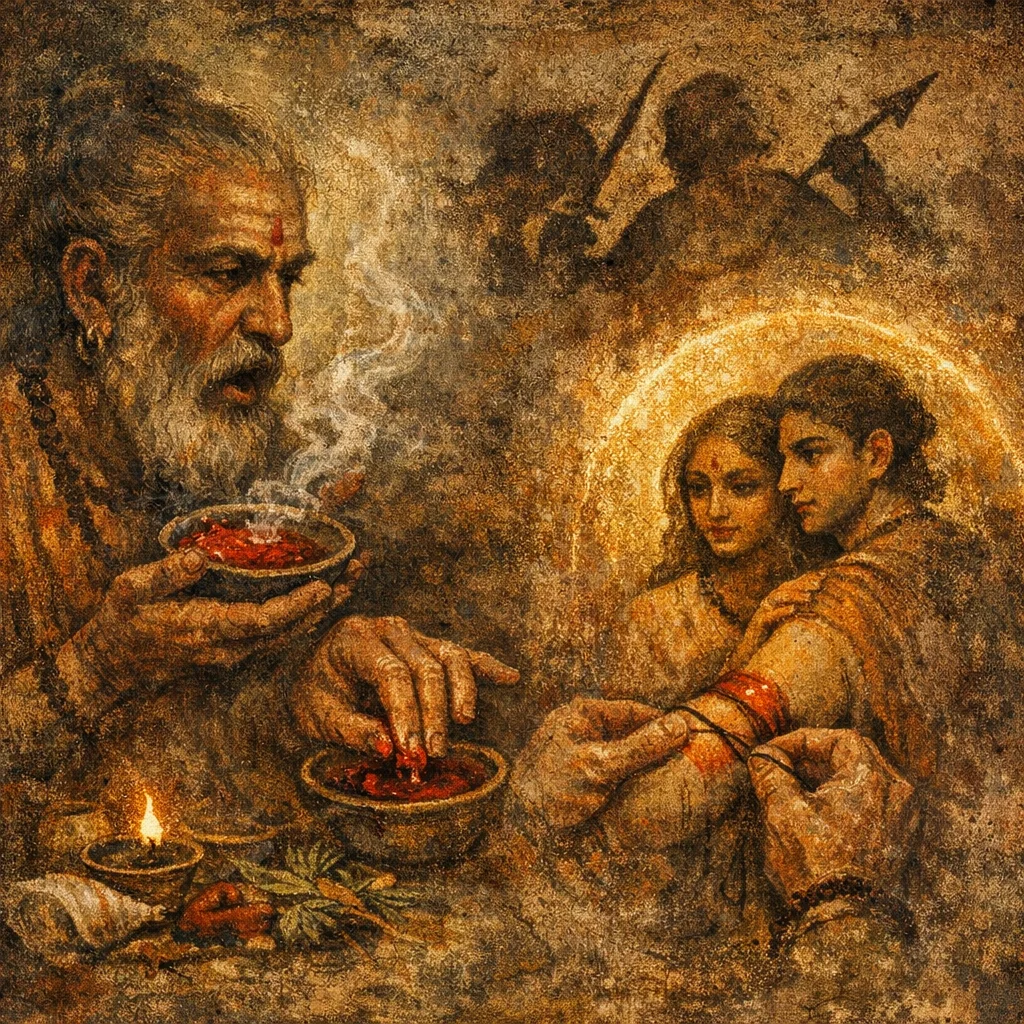
Sukta 5
Rishi: Atharvanic tradition (per Anukramaṇī for AV 5.5).
Devata: Lākṣā/Silācī (personified substance); associated with Rātrī, Nabhas, Aryaman.
Chandas: Anuṣṭubh.
Mantras
Mantra 1
लाक्षा रात्री माता नभः पितार्यमा ते पितामहः । सिलाची नाम वा असि सा देवानामसि स्वसा
Lac—Night is thy mother; the Sky thy father; Aryaman thy grandsire. By name thou art Silācī: thou art the Gods’ own sister.
Mantra 2
यस्त्वा पिबति जीवति त्रायसे पुरुषं त्वम्। भर्त्री हि शश्वतामसि जनानां च न्यञ्चनी
Whoso drinketh thee, he liveth: thou savest the man. For thou art the constant sustainer of the peoples, and a repeller that turneth (evil) downward.
Mantra 3
वृक्षंवृक्षमा रोहसि वृषण्यन्तीव कन्यला । जयन्ती प्रत्यातिष्ठन्ती स्परणी नाम वा असि
From tree to tree thou mountest, like a vigorous maiden-girl; conquering, standing forth in front, thou art indeed by name the Spareṇī.
Mantra 4
यद् दण्डेन यदिष्वा यद् वारुर्हरसा कृतम्। तस्य त्वमसि निष्कृतिः सेमं निष्कृधि पूरुषम्
What hath been wrought with staff, what with arrow, what by Varuṇa’s binding, with burning force—thereof thou art the release: do thou release this man.
Mantra 5
भद्रात् प्लक्षान्निस्तिष्ठस्यश्वत्थात् खदिराद्धवात्। भद्रान्न्यग्रोधात् पर्णात् सा न एह्यरुन्धति
From the auspicious plakṣa thou comest forth, from aśvattha, from khadira, from dhava; from the auspicious nyagrodha, from the leaf—come thou to us, O Arundhatī.
Mantra 6
हिरण्यवर्णे सुभगे सूर्यवर्णे वपुष्टमे । रुतं गछासि निष्कृते निष्कृतिर्नाम वा असि
O golden-hued, gracious, sun-hued, most excellent in form—thou goest unto ṛta, O Niṣkṛti: ‘Release’ indeed is thy name.
Mantra 7
हिरण्यवर्णे सुभगे शुष्मे लोमशवक्षने । अपामसि स्वसा लाक्षे वातो हात्मा बभूव ते
O golden-hued, auspicious, strong one, thou of the shaggy breast: thou art of the Waters, O sister Lākṣā; verily the Wind hath become thy very self.
Mantra 8
सिलाची नाम कानीनोऽजबभ्रु पिता तव । अश्वो यमस्य यः श्यावस्तस्य हास्नास्युक्षिता
Silācī by name—Kānīna; Ajababhru is thy sire. The dark horse that is Yama’s—verily with that one’s sinew art thou besprinkled.
Mantra 9
अश्वस्यास्नः संपतिता सा वृक्षां अभि सिष्यदे । सरा पतत्रिणी भूत्वा सा न एह्यरुन्धति
Fallen from the horse’s mouth, she settles upon the trees. Becoming winged, an essence, come hither unto us, O Arundhatī, the restrainer.
Frequently Asked Questions
Both: the hymn treats lac and silācī as personified sacred powers. By giving them divine kinship (Night, Sky, Aryaman), the material becomes ritually empowered to protect and heal.
Arundhatī functions as the restraining, fastening force of protection. The repeated invitation aims to localize that power so it ‘settles’ and ‘clings’ onto the amulet, knot, person, or home.
Typically by reciting over lac/silācī and a leaf/cord, then tying or sealing an amulet or protective knot. The goal is to bind auspicious protection in place and block affliction from entering or returning.