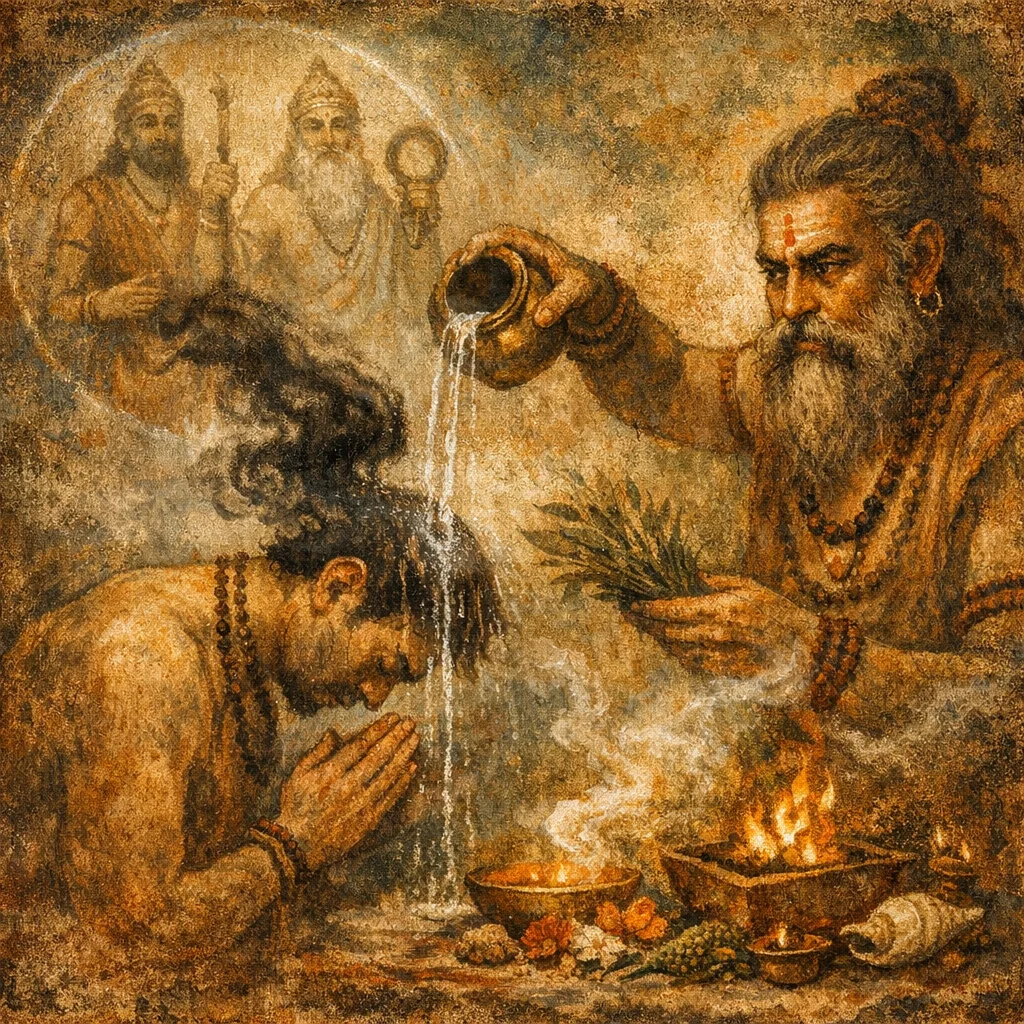
Sukta 29
Rishi: Atharvanic tradition; hymn-level attribution varies by anukramaṇī.
Devata: Mitra–Varuṇa
Chandas: Likely Triṣṭubh (requires full metrical verification).
Mantras
Mantra 1
पापमोचनम् । मन्वे वां मित्रावरुणावृतावृधौ सचेतसौ द्रुह्वणो यौ नुदेथे । प्र सत्यावानमवथो भरेषु तौ नो मुञ्चतमंहसः
I deem you, Mitra, Varuṇa, upholders of Order, of one accord, who drive away the treacherous. Ye aid the man of truth in struggles: from anguish and from sin release ye us.
Mantra 2
सचेतसौ द्रुह्वणो यौ नुदेथे प्र सत्यावानमवथो भरेषु । यौ गच्छथो नृचक्षसौ बभ्रुणा सुतं तौ नो मुञ्चतमंहसः
Concordant ye are, who thrust away the treacherous; ye succour the man of truth in struggles. Ye who go as watchers over men with Babhru to the pressed draught— from anguish and from sin release ye us.
Mantra 3
यावङ्गिरसमवथो यावगस्तिं मित्रावरुणा जमदग्निमत्रिम्। यौ कश्यपमवथो यौ वसिष्ठं तौ नो मुञ्चतमंहसः
Ye who aided Aṅgiras, ye who aided Agastya, O Mitra, Varuṇa, Jamadagni, Atri; ye who aided Kaśyapa, ye who aided Vasiṣṭha— from anguish and from sin release ye us.
Mantra 4
यौ श्यावाश्वमवथो वाध्र्यश्वं मित्रावरुणा पुरुमीढमत्रिम्। यौ विमदमवथः सप्तवध्रिं तौ नो मुञ्चतमंहसः
Ye who aided Śyāvāśva, aided Vādhryaśva, O Mitra, Varuṇa, Purumīḍha, Atri; ye who aided Vimada, aided Saptavadhri— from anguish and from sin release ye us.
Mantra 5
यो भरद्वाजमवथो यौ गविष्ठिरं विश्वामित्रं वरुण मित्र कुत्सम्। यौ कक्षीवन्तमवथः प्रोत कण्वं तौ नो मुञ्चतमंहसः
Ye Twain who succoured Bharadvāja, who did aid Gaviṣṭhira, Viśvāmitra, and Kutsa—O Varuṇa, O Mitra; who helped Kakṣīvant, and Prota, and Kaṇva—do ye release us from distress and sin.
Mantra 6
यौ मेधातिथिमवथो यौ त्रिशोकं मित्रावरुणावुशनां काव्यं यौ। यौ गोतममवथः प्रोत मुद्गलं तौ नो मुञ्चतमंहसः
Ye Twain who succoured Medhātithi, who helped Triśoka—O Mitra-Varuṇa—who aided Uśanā Kāvya; who helped Gotama, and Prota, and Mudgala: do ye release us from distress and sin.
Mantra 7
ययो रथः सत्यवर्त्मर्जुरश्मिर्मिथुया चरन्तमभियाति दूषयन्। स्तौमि मित्रावरुणौ नाथितो जोहवीमि तौ नो मुञ्चतमंहसः
Whose chariot holdeth true its course, with straightened reins, assaileth him who walketh falsely, smiting the corrupter—Mitra and Varuṇa I praise; in need I call on them: do ye release us from distress and sin.
Frequently Asked Questions
Aṃhas is a broad word for sin and the distress or constriction that follows it—misfortune, anxiety, or harm arising from wrongdoing, deceit, or hostile accusation.
Together they govern truth and covenant: Mitra stabilizes agreements and social trust, while Varuṇa enforces ṛta and can bind or release moral fault. Their joint power suits situations involving oaths, disputes, and purification.
No. The hymn is primarily a truth-and-release invocation. A simple practice uses clean water and sincere satya-saṅkalpa; optional offerings or a symbolic cord can reinforce the ‘unbinding’ intention.