Sukta 29
Rishi: Atharvanic tradition (hymn-family attribution uncertain in this excerpt)
Devata: Yama; Pitṛs (via svadhā)
Chandas: Mixed/irregular (AV narrative-prose-like metricality; not securely determinable from excerpt)
Mantras
Mantra 1
अविः। यद् राजानो विभजन्त इष्टापूर्तस्य षोडशं यमस्यामी सभासदः । अविस्तस्मात् प्र मुञ्चति दत्तः शितिपात् स्वधा
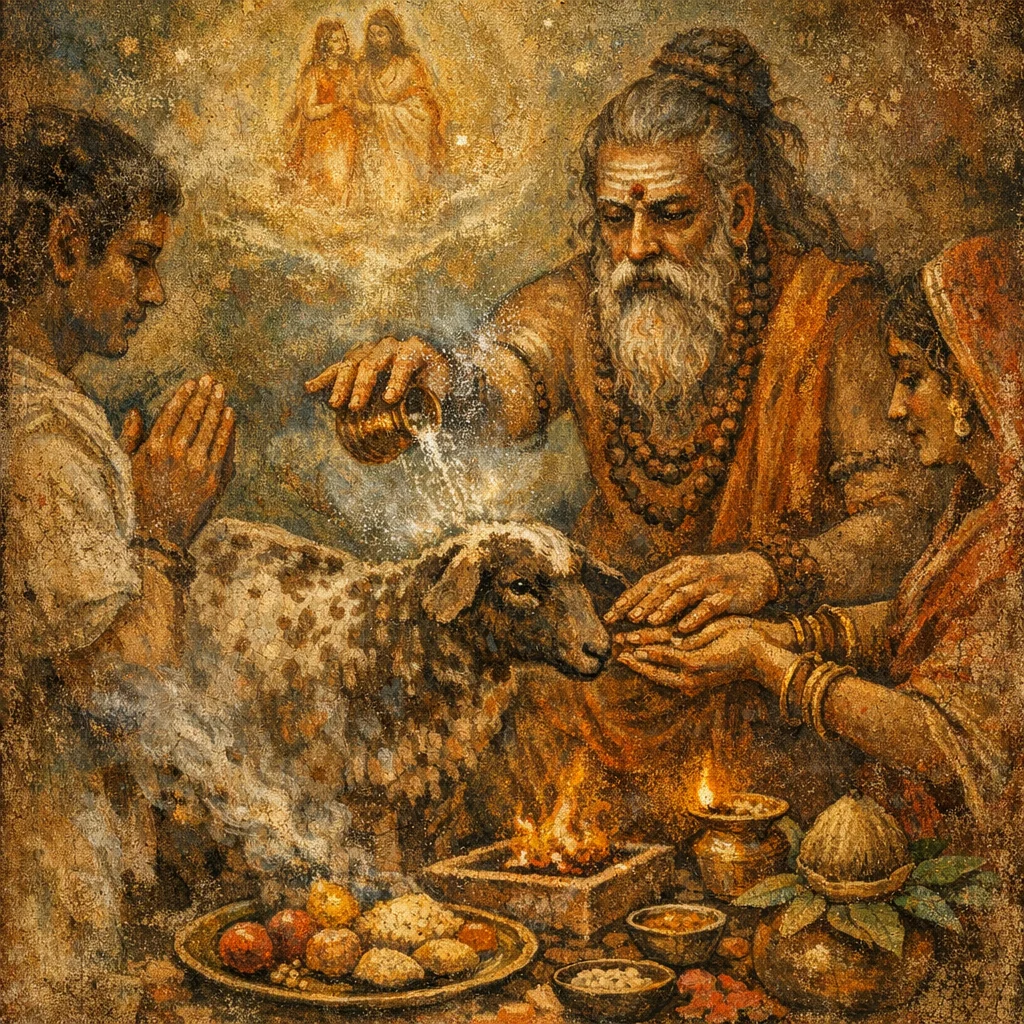
When the kings apportion the sixteenth share of merit—of sacrifice and pious work—for Yama, those assembly-sitters; from that doth the ewe, when given, release (a man): the white-footed—svadhā.
Mantra 2
सर्वान् कामान् पूरयत्याभवन् प्रभवन् भवन्। आकूतिप्रोऽविर्दत्तः शितिपान्नोप दस्यति
Fulfilling all desires—becoming, prevailing, abiding—the sheep, intention-impelled, when given, the white-footed, doth not assail (us).
Mantra 3
यो ददाति शितिपादमविं लोकेन संमितम्। स नाकमभ्यारोहति यत्र शुल्को न क्रियते अबलेन बलीयसे
Whoso bestoweth a white-footed ewe, of worth approved by common reckoning,—he mounteth unto heaven, where no exaction-fee is levied by the weak upon the stronger.
Mantra 4
पञ्चापूपं शितिपादमविं लोकेन संमितम्। प्रदातोप जीवति पितॄणां लोकेऽक्षितम्
A white-footed ewe, of worth approved by common reckoning, with five cakes therewith: the giver verily liveth on in the Fathers’ world, unperishing.
Mantra 5
पञ्चापूपं शितिपादमविं लोकेन संमितम्। प्रदातोप जीवति सूर्यामासयोरक्षितम्
A white-footed ewe, of worth approved by common reckoning, with five cakes therewith: the giver verily liveth on, imperishable, in the station of Sun and Moon.
Mantra 6
इरेव नोप दस्यति समुद्रइव पयो महत्। देवउसवासिनाविव शितिपान्नोप दस्यति
As Iḍā bestoweth nourishment, as ocean yieldeth mighty milk, so, like the divine Dawn-powers, the white-footed one bestoweth bounty upon us.
Mantra 7
क इदं कस्मा अदात् कामः कामायादात्। कामो दाता कामः प्रतिग्रहीता कामः समुद्रमा विवेश । कामेन त्वा प्रति गृह्णामि कामैतत् ते
Who gave this, and unto whom was it given? Desire gave it, for Desire’s own fulfilment. Desire is the giver, Desire the receiver; Desire hath entered into the Ocean. With Desire I accept thee: O Desire, this is for thee.
Mantra 8
भूमिष्ट्वा प्रति गृह्णात्वन्तरिक्षमिदं महत्। माहं प्राणेन मात्मना मा प्रजया प्रतिगृह्य वि राधिषि
May Earth receive thee back; may this vast Mid-air receive thee. Ruin me not—neither in breath, nor in mine own self, nor in my progeny—after thou hast taken me to thy keeping.
Frequently Asked Questions
It is used as a rakṣā hymn to avert or settle death’s claim by offering a formally constituted gift (notably a white-footed ewe, often with five cakes) and sealing it with svadhā and correct acceptance.
It presents death as having an allotted due; by giving that due in a regulated substitute form, the rite aims to satisfy the claim so the living person is ‘released’ from being taken.
It is a liturgical authorization for receiving a gift: by declaring Kāma (purposeful desire/will) as both giver and receiver, the transfer becomes ritually valid and oriented toward fulfilled aims and lasting merit.