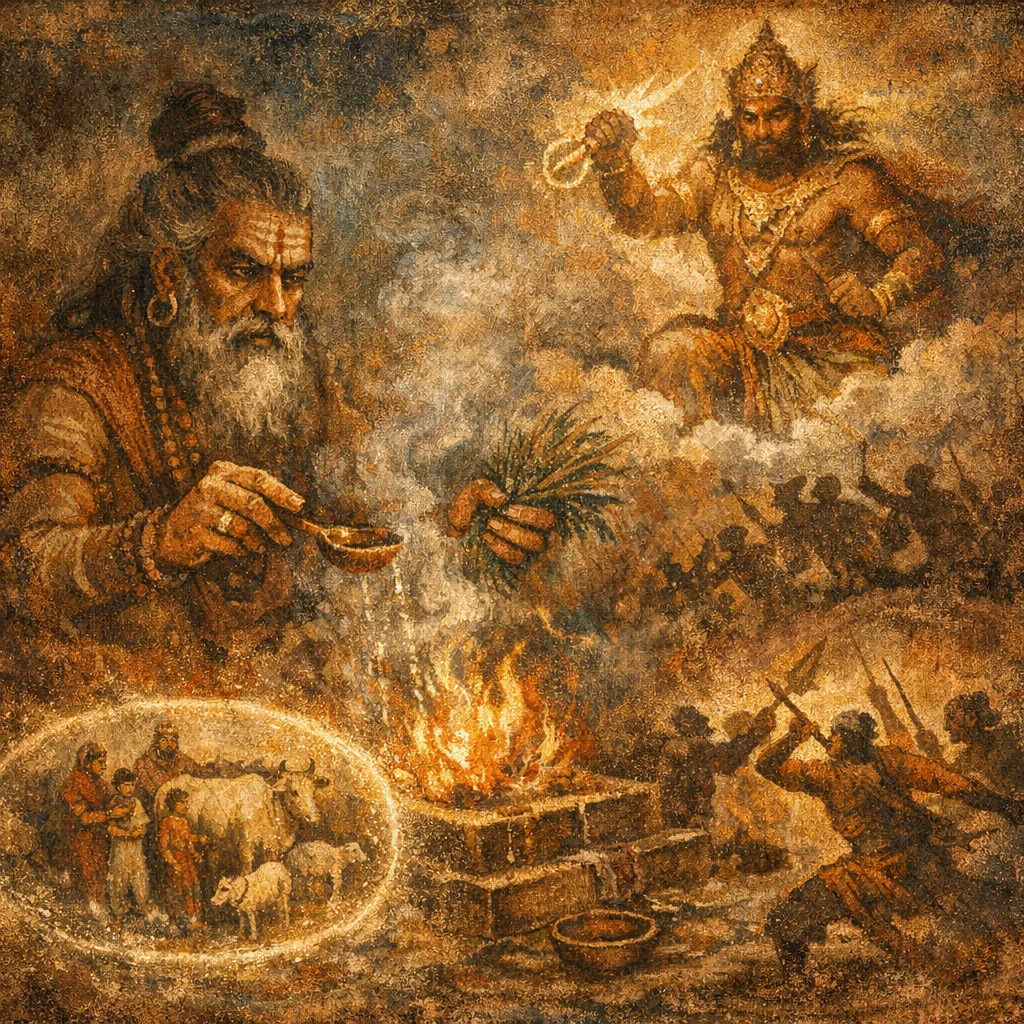
Sukta 72
Rishi: RV-derived Indra hymn tradition (Book 20 compilation; specific r̥ṣi depends on RV source-verse mapping).
Devata: Indra
Chandas: Triṣṭubh/Jagati complex (RV-style; exact metrical count requires pada scansion against RV original)
Mantras
Mantra 1
विश्वेषु हि त्वा सवनेषु तुञ्जते समानमेकं वृषमण्यवः पृथक् स्वः सनिष्यवः पृथक्। तं त्वा नावं न पर्षणिं शूषस्य धुरि धीमहि । इन्द्रं न यज्ञैश्चतयन्त आयव स्तोमेभिरिन्द्रमायवः
For in all the pressings they spur thee on—the self-same, the one Bull—each eager band apart, each seeker after heaven apart. Thee, like a boat, like a ferrying craft, we set upon the yoke-pole of might. As with sacrifices the Āyus-men rouse Indra, so with hymns of praise they rouse Indra.
Mantra 2
वि त्वा ततस्रे मिथुना अवस्यवो व्रजस्य साता गव्यस्य निःसृजः सक्षन्त इन्द्र निःसृजः । यद् गव्यन्ता द्वा जना स्व१र्यन्ता समूहसि । आविष्करिक्रद् वृषणं सचाभुवं वज्रमिन्द्र सचाभुवम्
Forth have they spread thee, in paired array, the seekers after aid—winners of the cattle-pen—releasers of kine: they prevail, O Indra, as releasers. When two peoples, seeking cattle, striving for the bright goal, thou bringest into encounter, then by thy might make manifest the Bull, the accompanying thunderbolt—O Indra, the accompanying bolt.
Mantra 3
उतो नो अस्या उषसो जुषेत ह्य१र्कस्य बोधि हविषो हवीमभिः स्वर्षाता हवीमभिः । यदिन्द्र हन्तवे मृघो वृषा वज्रिं चिकेतसि । आ मे अस्य वेधसो नवीयसो मन्म श्रुधि नवीयसः
And for us may he, of this Dawn, take pleasure; yea, awake to the hymn, to the oblation, with our invocations—thou winner of the bright world—with our invocations. When, O Indra, to smite the wild foe, Bull, bolt-bearer, thou art minded, then hear my newer formulation, this of the inspired ordainer—hear the newer.
Frequently Asked Questions
To rouse and ‘yoke’ Indra so he carries the practitioner safely through danger and rivalry, grants victory, and releases prosperity—especially cattle-wealth—by the power of the vajra.
It is a ritual image for harnessing divine force: Indra becomes the conveyance that ferries one across peril, and the dhur symbolizes disciplined, directed power rather than uncontrolled force.
At dawn (uṣas) with a simple oblation (havis), or near a soma-pressing context; practically, it is also used before contests, negotiations, or any situation requiring protection and winning.