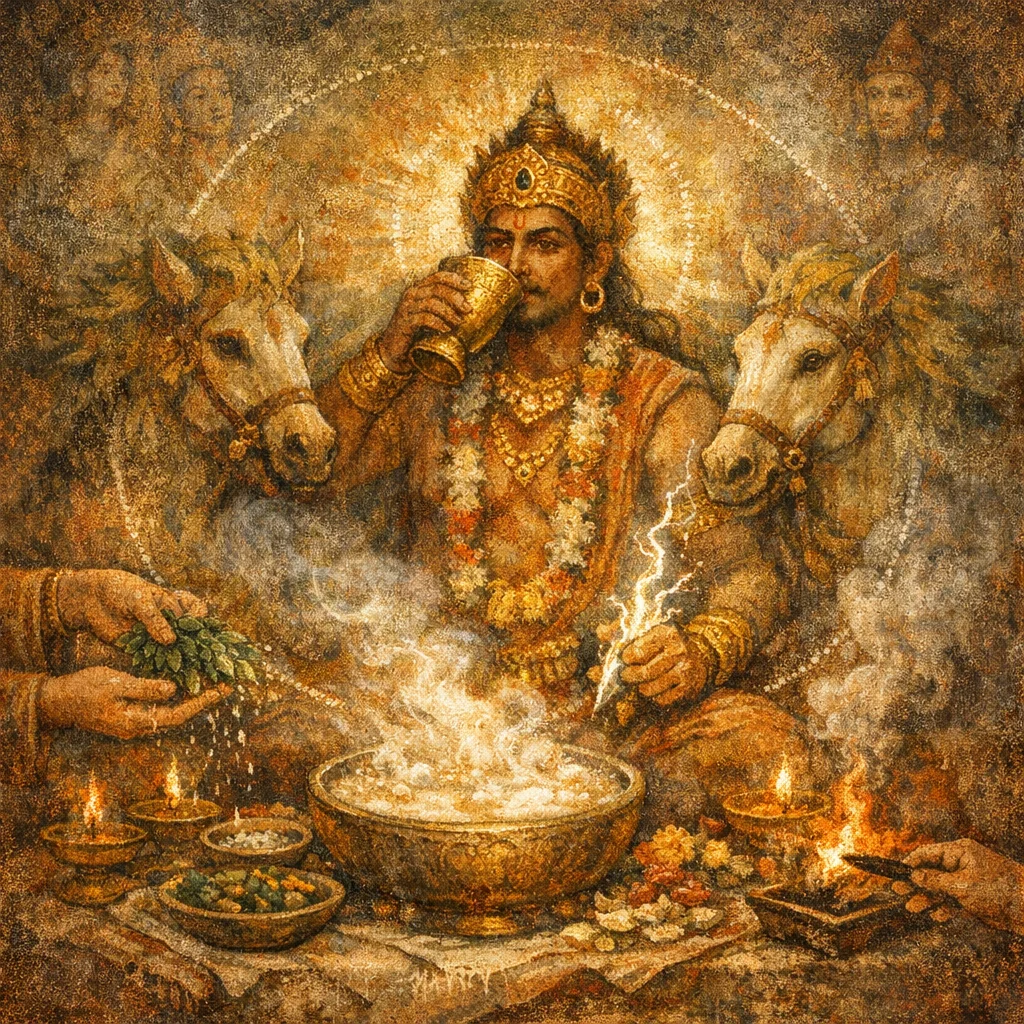
Sukta 31
Rishi: Traditionally RV-derived; in AV 20 the seer attributions follow Rigvedic parallels (Indra-stuti lineage).
Devata: Indra (with the Haris as his conveyance).
Chandas: Jagatī (11-syllable cadence typical of many Indra hymns; AV 20 largely mirrors RV meters).
Mantras
Mantra 1
ता वज्रिणं मन्दिनं स्तोम्यं मद इन्द्रं रथे वहतो हर्यता हरी । पुरूण्यस्मै सवनानि हर्यत इन्द्राय सोमा हरयो दधन्विरे
Those two bay Steeds, desirable, bear in the car the Thunder-armed Indra—gladdened, hymn-worthy—in the rapture. For him are many tawny Soma-pressings; for Indra the Soma-draughts, and the Bays, are set a-running.
Mantra 2
अरं कामाय हरयो दधन्विरे स्थिराय हिन्वन् हरयो हरी तुरा। अर्वद्भिर्यो हरिभिर्जोषमीयते सो अस्य कामं हरिवन्तमानशे
Duly, for the wish, the Bays are driven forth; urging toward firmness, the two swift Haris. He who with the coursers, with the Bays, draws near to favor—he wins the wish that rests with Indra, the Lord of Haris.
Mantra 3
हरिश्मशारुर्हरिकेश आयसस्तुरस्पेये यो हरिपा अवर्धत । अर्वद्भिर्यो हरिभिर्वाजिनीवसुरति विश्वा दुरिता पारिषद्धरी
Tawny-bearded, tawny-haired, of iron hardihood—he, the tawny-drinker, waxed strong in the Turaspeya. He who with steeds, with the Bays, is prize-wealthy—may the two Bearers carry us over all misfortunes.
Mantra 4
स्रुवेव यस्य हरिणी विपेततुः शिप्रे वाजाय हरिणी दविध्वतः । प्र यत् कृते चमसे मर्मृजद्धरी पीत्वा मदस्य हर्यतस्यान्धसः
Like ladles, whose two Tawny Ones flash forth; at his lips, for the prize, the Tawny pair quiver. When in the fashioned cup the two Bearers wipe it clean—having drunk the rapturous tawny juice.
Mantra 5
उत स्म सद्म हर्यतस्य पस्त्यो३रत्यो न वाजं हरिवां अचिक्रदत्। मही चिद्धि धिषणाहर्यदोजसा बृहद् वयो दधिषे हर्यतश्चिदा
Yea, verily, in the abode of the Tawny One, in the two homes, Harivant cried aloud for strength as a chariot-man for the prize. For great indeed is Inspiration with tawny vigor: broad vital power thou settest here—tawny, desirable—unto us.
Frequently Asked Questions
It is used to invoke Indra swiftly to the rite for victory-strength and to protect the worshipper by ‘carrying across’ misfortune (durita), while also establishing vitality in the home.
They are Indra’s conveyance and also symbolic rescuers: the hymn asks the ‘two bearers’ to transport the devotee over dangers, not just to bring Indra to the offering.
Traditionally the imagery is soma-centered, but in later practice a symbolic libation (milk/juice/water offered with intention) can stand in, because the hymn’s focus is Indra’s exhilarated power and protective arrival.