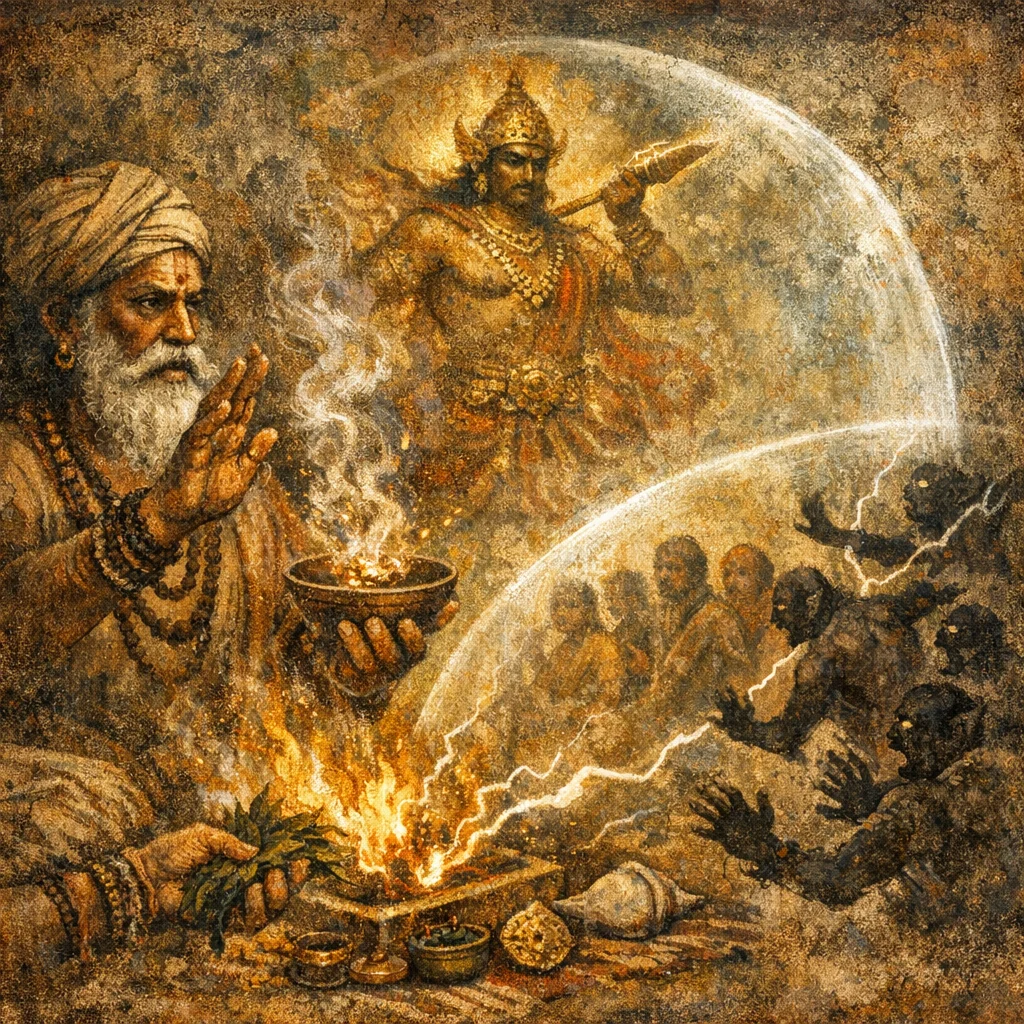
Sukta 29
Rishi: RV-derived (Indra-stotra tradition; in AV 20 often aligned with Rigvedic seers for the borrowed hymn)
Devata: Indra
Chandas: Anuṣṭubh (stanzaic)
Mantras
Mantra 1
त्वं हि स्तोमवर्धन इन्द्रास्युक्थवर्धनः । स्तोतॄणामुत भद्रकृत्
For thou, O Indra, art the increaser of the hymn of praise, the increaser of the solemn recitation; and thou, moreover, art the doer of good for them that laud thee.
Mantra 2
इन्द्रमित् केशिना हरी सोमपेयाय वक्षतः । उप यज्ञं सुराधसम्
Even Indra—let the two bay steeds with flowing manes convey the Soma-drinker hither, unto the sacrifice, the well-bounteous.
Mantra 3
अपां फेनेन नमुचेः शिर इन्द्रोदवर्तयः । विश्वा यदजय स्पृधः
With the foam of waters did Indra turn forth the head of Namuci, when he conquered all the hostile rivalries.
Mantra 4
मायाभिरुत्सिसृप्सत इन्द्र द्यामारुरुक्षतः । अव दस्यूंरधूनुथाः
With stratagems, O Indra, those that were creeping forth, those that would climb to heaven—thou didst shake the Dasyus downward and away.
Mantra 5
असुन्वामिन्द्र संसदं विषूचीं व्यनाशयः । सोमपा उत्तरो भवन्
The Soma-less, O Indra—their discordant assembly thou didst shatter asunder; thou, the Soma-drinker, becoming the higher and the victor.
Frequently Asked Questions
To make praise and recitation powerful (so the rite ‘works’) and to obtain Indra’s protection and victory over rivalries, threats, and factional opposition.
It recalls a famous precedent where Indra overcomes a difficult adversary using a liminal means (water-foam). In ritual use, it functions as a model for ending hostility and removing obstacles.
No. It is primarily a stotra (praise-hymn). If desired, a simple vessel of clean water (optionally foamed) can be used symbolically when reciting the Namuci verse.