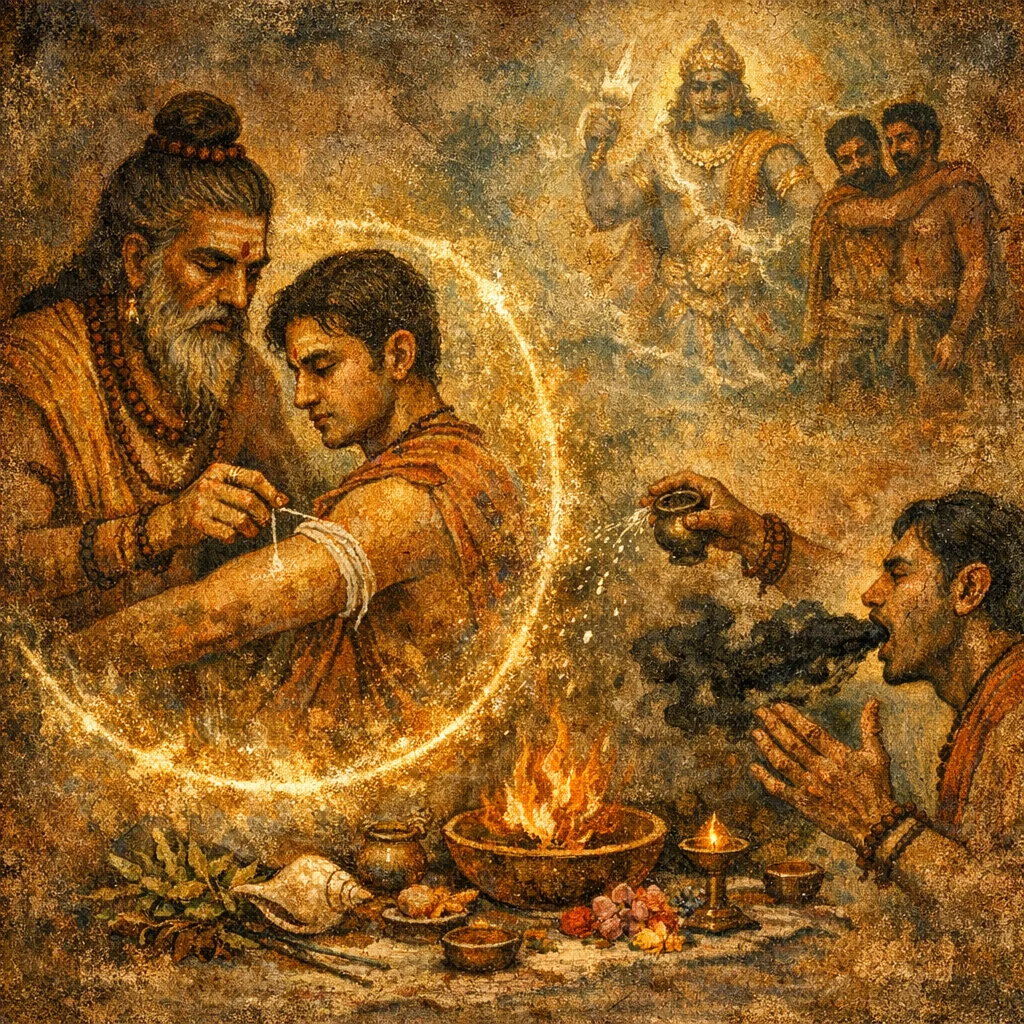
Sukta 18
Rishi: Kaṇva lineage (as self-identified in the verse; RV provenance)
Devata: Indra
Chandas: Anuṣṭubh (shorter RV-style pādas; as transmitted here)
Mantras
Mantra 1
वयमु त्वा तदितर्था इन्द्र त्वायन्तः सखायः । कण्वा उक्थेभिर्जरन्ते
We, even we, seeking that very end, O Indra—thy friends resorting unto thee—the Kaṇvas celebrate thee with solemn hymns.
Mantra 2
न घेमन्यदा पपन वज्रिन्नपसो नविष्टौ । तवेदु स्तोमं चिकेत
Not indeed at any other time, O Thunderer, have (men) reached thy mighty works as in this newest rite: do thou, for thy part, take heed of our praise.
Mantra 3
इच्छन्ति देवाः सुन्वन्तं न स्वप्नाय स्पृहयन्ति । यन्ति प्रमादमतन्द्राः
The gods desire the soma-presser; they long not for sleep. Unwearied, they go unto (him who avoids) negligence.
Mantra 4
वयमिन्द्र त्वायवोऽभि प्र णोनुमो वृषन्। विद्धि त्व१स्य नो वसो
We, Indra, who are thine, urge thee on, yea forward, O Bull: take thou knowledge of this, O bounteous Vasú, for our behoof.
Mantra 5
मा नो निदे च वक्तवेऽर्यो रन्धीरराव्णे । त्वे अपि क्रतुर्मम
Let not the Aryan foe bring us to reproach and evil speech, to the ill-willed niggard: in thee, indeed, is my purpose set.
Mantra 6
त्वं वर्मासि सप्रथः पुरोयोधश्च वृत्रहन्। त्वया प्रति ब्रुवे युजा
Thou art our armour, broad outspread, and our fore-fighter, O Vṛtra-slayer: with thee as yoked ally I speak in answer (to the foe).
Frequently Asked Questions
It calls Indra as an allied protector and champion—asking for prosperity (vasu), protection, and victory by presenting the reciters as Indra’s own friends in the Kaṇva tradition.
In Vedic stotra logic, identity and affiliation matter: naming the Kaṇva lineage and declaring loyalty strengthens the claim on Indra’s attention and help, as if renewing a pact of friendship.
No specific substances are prescribed in the text; it primarily works as a praise-hymn (stotra/uktha). In larger ritual settings, it may accompany offerings to Indra, but the recitation itself is the core act.