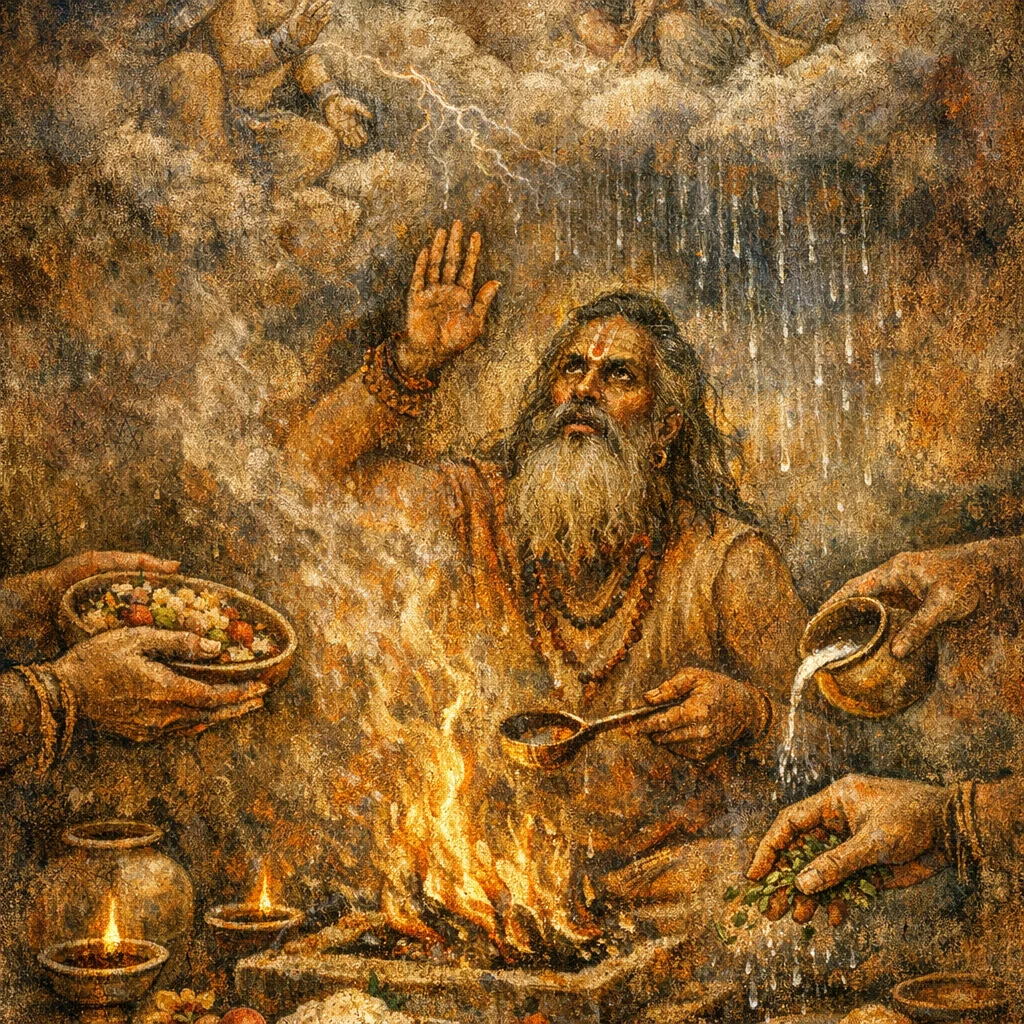
Sukta 138
Rishi: RV-derived; likely Kāṇva lineage for parts of this cluster (see 20.138.3); exact r̥ṣi for 20.138.1 requires anukramaṇī confirmation.
Devata: Indra (with Parjanya as simile)
Chandas: Likely Anuṣṭubh/Triṣṭubh depending on RV original; requires scan.
Mantras
Mantra 1
महाँ इन्द्रो य ओजसा पर्जन्यो वृष्टिमाँ इव । स्तोमैर्वत्सस्य वावृधे
Great is Indra, who in might is like Parjanya rich in rain: by praises he hath waxed, as doth the calf.
Mantra 2
प्रजामृतस्य पिप्रतः प्र यद्भरन्त वह्नयः । विप्रा ऋतस्य वाहसा
They fill the progeny of Order, when forth the bearers bring it: the inspired priests, by Order’s carrying-power.
Mantra 3
कण्वाः इन्द्रं यदक्रत स्तोमैर्यज्ञस्य साधनम्। जामि ब्रुवत आयुधम्
When the Kāṇvas made Indra, by praises, the accomplisher of the sacrifice, they spake of him as kinsman—(as) weapon.
Frequently Asked Questions
It is primarily paustika: to increase strength, vitality, and prosperity (including progeny) by empowering Indra through praise and aligning action with ṛta.
Parjanya is used as a simile: Indra’s might is compared to a rain-bearing power that nourishes and increases, emphasizing fertility and abundance as the hymn’s goal.
The hymn treats stoma (praise) as an effective force: by correct praise Indra is strengthened, and he then ‘accomplishes’ the sacrifice—bringing the patron’s rite and aims to completion and protection.