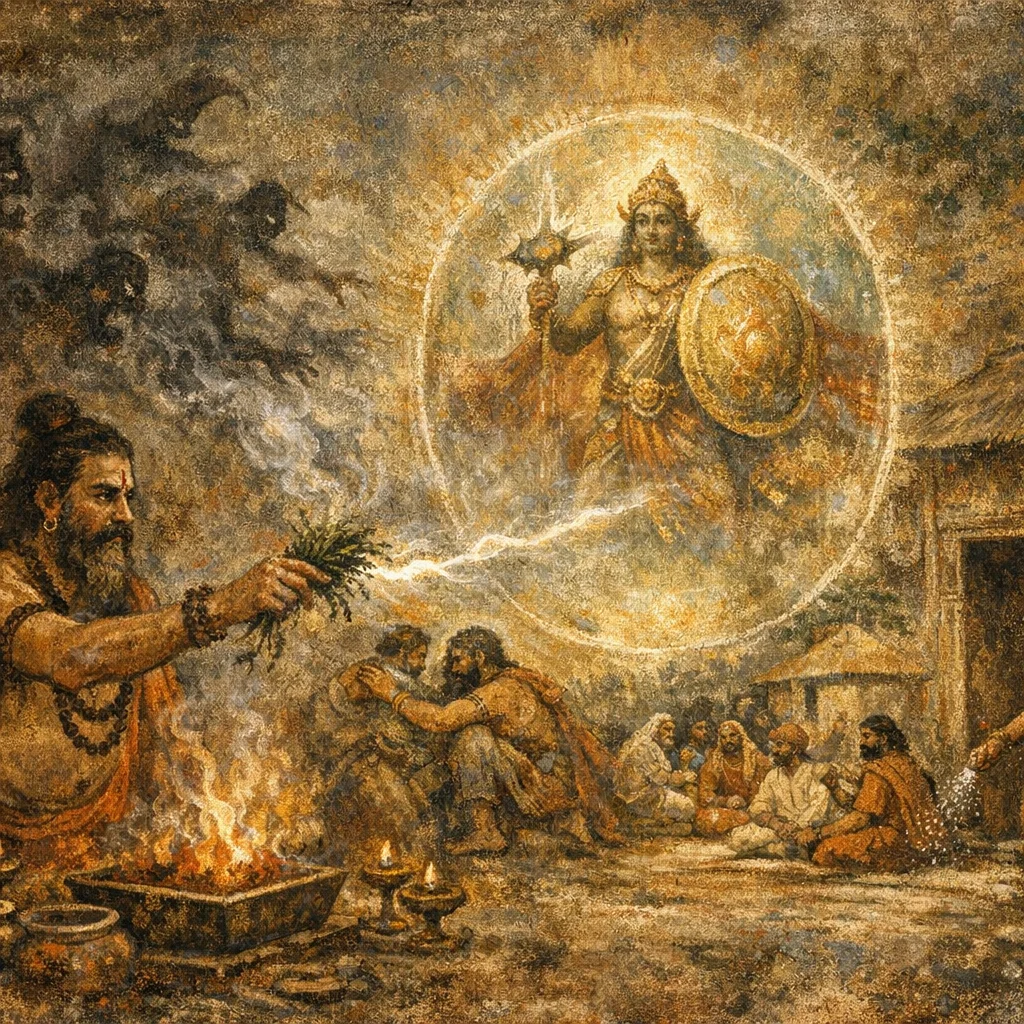
Sukta 105
Rishi: RV-derived (Indra hymn tradition; AV 20 is largely Rigvedic reprise—r̥ṣi as in RV source)
Devata: Indra (Vṛtrahan)
Chandas: Triṣṭubh (RV-style stotra meter)
Mantras
Mantra 1
त्वमिन्द्र प्रतूर्तिष्वभि विश्वा असि स्पृधः । अशस्तिहा जनिता विश्वतूरसि त्वं तूर्य तरुष्यतः
Thou, Indra, in the forward onsets art against all rivalries: slayer of reviling, begetter, all-conquering art thou; thou art the victor for the man who strains to win.
Mantra 2
अनु ते शुष्मं तुरयन्तमीयतुः क्षोणी शिशुं न मातरा । विश्वास्ते स्पृधः श्नथयन्त मन्यवे वृत्रं यदिन्द्र तूर्वसि
After thy rushing might the two sustaining Worlds speed, as two Mothers to a child. All rival hostilities of thine they crush for thy wrath, when, O Indra, thou prevailest over Vṛtra.
Mantra 3
इत ऊती वो अजरं प्रहेतारमप्रहितम्। आशुं जेतारं हेतारं रथीतममतूर्तं तुग्र्यावृधम्
Hence be for you an aid that ages not—an unrepelled impeller; the swift conqueror, the smiter, the best of charioteers, the unconquered, the increaser of Tugrya.
Mantra 4
यो राजा चर्षणीनां याता रथेभिरध्रिगुः । विश्वासां तरुता पृतनानां ज्येष्ठो यो वृत्रहा गृणे
He who is King of the peoples, who goes with chariots, unimpeded; the overcomer of all battles, the chief—he, the Vṛtra-slayer, do I hymn.
Mantra 5
इन्द्रं तं शुम्भ पुरुहन्मन्नवसे यस्य द्विता विधर्तरि । हस्ताय वज्रः प्रति धायि दर्शतो महो दिवे न सूर्यः
Adorn that Indra, the much-smiting, for our aid—whose bolt was set upon his hand in twofold wise, in the upholder; splendid to behold, great as the Sun in heaven.
Frequently Asked Questions
It is used to gain victory and protection: to crush rivalry, stop hostile speech or curses, and remove obstacles symbolized by Vṛtra.
Vṛtrahan means “slayer of Vṛtra,” the power of obstruction. The title signals Indra’s ability to break what blocks success—whether enemies, impediments, or hostile forces.
No. The hymn itself does not require herbs or amulets. It can be recited plainly; at most, practitioners may add clean water or a simple fire/lamp focus as supportive ritual context.