Sukta 18
Rishi: Atharvanic/Angirasa tradition (individual r̥ṣi not specified in the provided excerpt; to be resolved via Anukramaṇī data).
Devata: Mantra as operative power (brahman); implicitly Agni as carrier due to svāhā.
Chandas: Likely Anuṣṭubh or a short pragmatic formula; exact meter requires full pada-count verification.
Mantras
Mantra 1
शत्रुनाशनम्। भ्रातृव्यक्षयणमसि भ्रातृव्यचातनं मे दाः स्वाहा
A slayer of foes: thou art the wasting of the Rival; bestow on me the driving-forth of the Rival—svāhā.
Mantra 2
सपत्नक्षयणमसि सपत्नचातनं मे दाः स्वाहा
Thou art the wasting of the rival; bestow on me the driving forth of the rival—svāhā.
Mantra 3
अरायक्षयणमस्यरायचातनं मे दाः स्वाहा
Grant me, with svāhā, the wasting of this hostile one, the expulsion of the hostile power.
Mantra 4
पिशाचक्षयणमसि पिशाचचातनं मे दाः स्वाहा
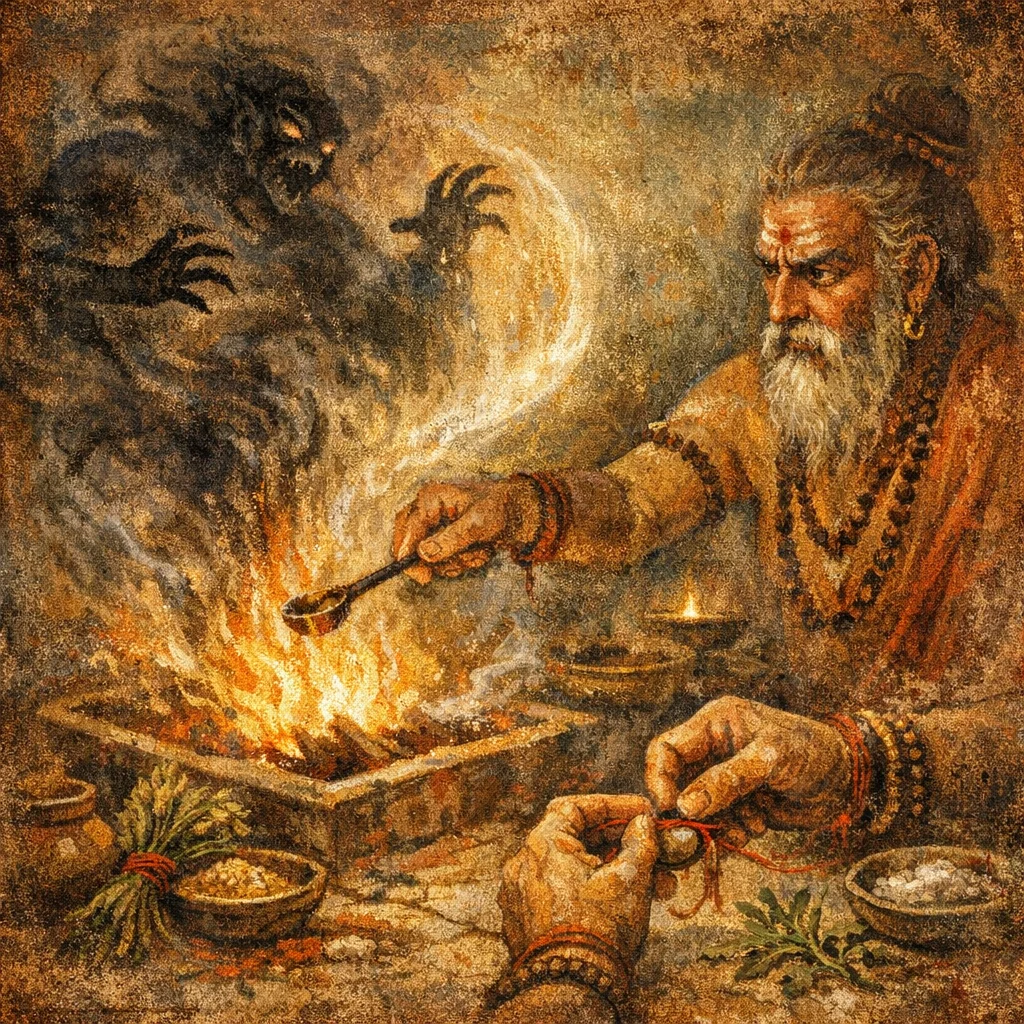
Thou art the wasting of the Piśācas; bestow on me the driving-forth of the Piśācas—svāhā.
Mantra 5
सदान्वाक्षयणमसि सदान्वाचातनं मे दाः स्वाहा
Thou art ever-following, inexhaustible; ever-following, unassailable: grant thou that to me. Svāhā.
Frequently Asked Questions
In Atharvavedic usage, bhrātṛvya is a hostile peer or rival claimant—someone competing for the same status, share, or authority. The hymn aims to diminish that rival’s strength and drive them away from the sacrificer’s sphere.
Svāhā marks the mantra as an offering-formula: the words are meant to be accompanied by an oblation into fire. It also functions as a ritual seal, transmitting the intended effect through Agni as carrier.
Its primary register is abhicārika (rival-subduing and expulsion), but it is also strongly apotropaic: it seeks to remove hostile forces from the patron and establish ongoing protection. Traditional use is framed as defense, safeguarding, and securing one’s rightful standing.