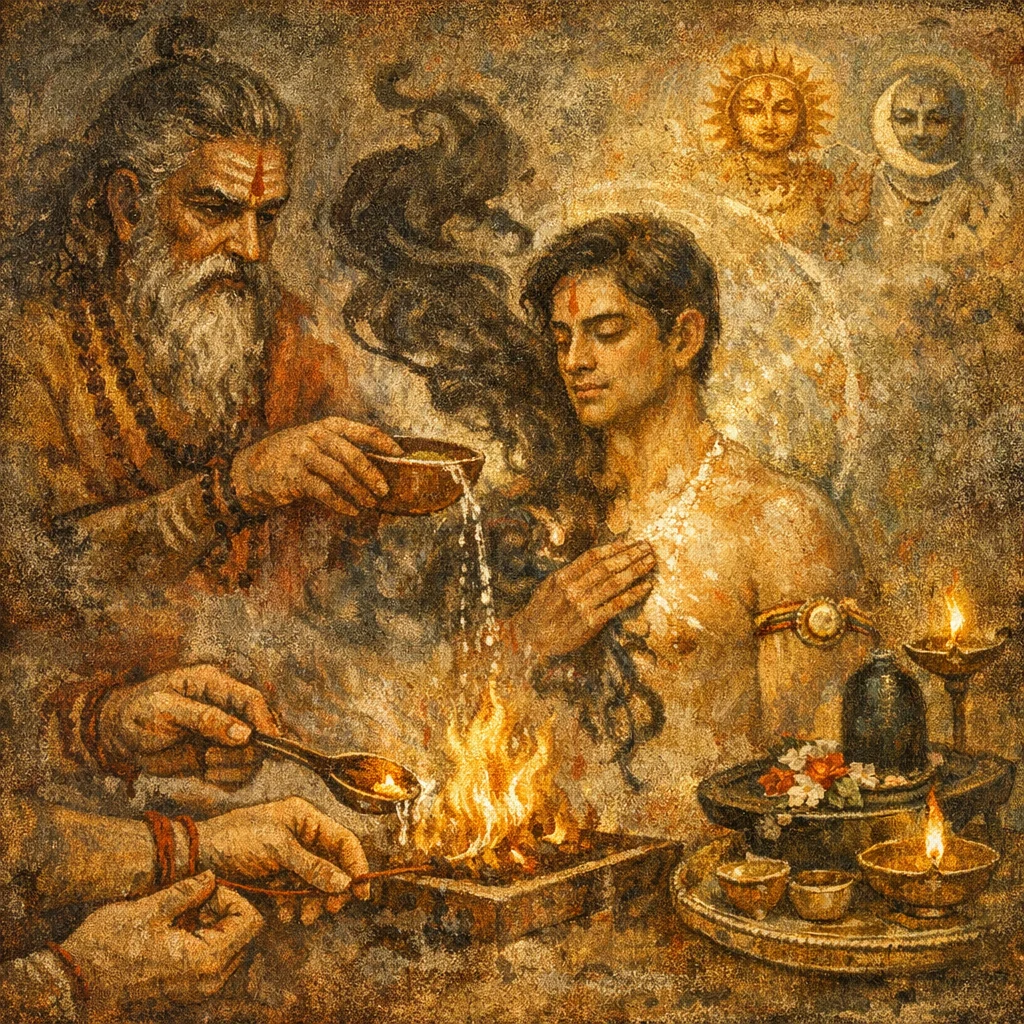
Sukta 16
Rishi: Atharvanic tradition (specific ṛṣi not securely determinable from the single mantra alone in isolation).
Devata: Prāṇa and Apāna (vital breaths) as deified life-agents; apotropaic opposition to Mṛtyu.
Chandas: Anuṣṭubh-like cadence (short protective formula; exact metrical classification is fluid for such svāhā-closures).
Mantras
Mantra 1
सुरक्षा प्राणापानौ मृत्योर्मा पातं स्वाहा
Good warding! O Prāṇa and Apāna, from Death do ye protect me. Svāhā!
Mantra 2
द्यावापृथिवी उपश्रुत्या मा पातं स्वाहा
Heaven and Earth, by your attentive hearkening, guard me: svāhā.
Mantra 3
सूर्य चक्षुषा मा पाहि स्वाहा
O Sūrya, with thine eye do thou protect me—svāhā.
Mantra 4
अग्ने वैश्वानर विश्वैर्मा देवैः पाहि स्वाहा
O Agni Vaiśvānara, with all the Gods do thou protect me: svāhā.
Mantra 5
विश्वंभर विश्वेन मा भरसा पाहि स्वाहा
O All-upholding One, with thy universal might, by thy sustaining power do thou protect me—svāhā.
Frequently Asked Questions
It is a life-protecting (āyusya) healing charm that asks Prāṇa and Apāna to guard the person from Death (Mṛtyu), then seals protection through Sūrya and Agni with svāhā.
A fire offering with ghee can be done if available, but in Atharvanic protective use, svāhā can also function as a verbal seal (mānasa-homa) when recited with focused intent.
It is used when someone is ill, weakened, fearful of danger, or facing ominous circumstances—especially where the aim is to stabilize vitality and avert premature or violent death.