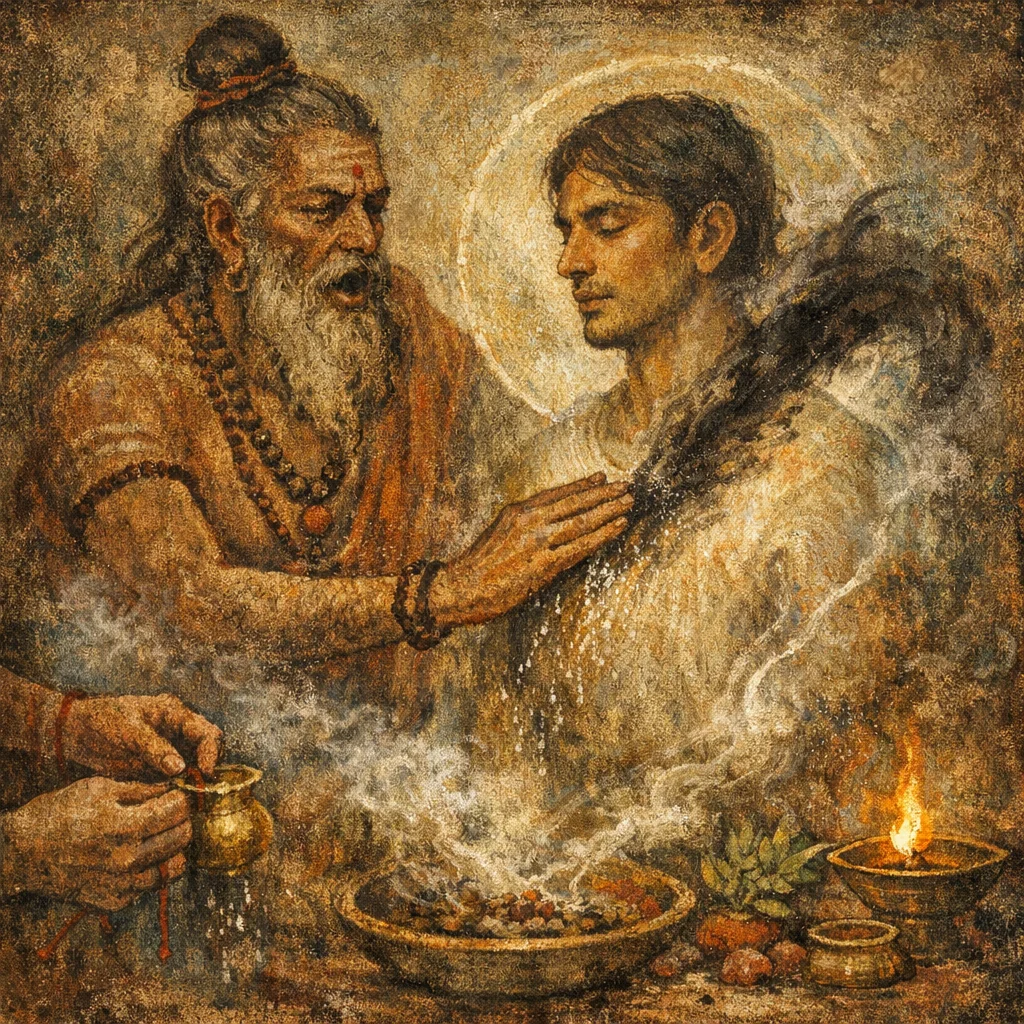
Sukta 15
Rishi: Atharvanic tradition (exact r̥ṣi attribution depends on anukramaṇī tradition for AVŚ 2.15)
Devata: Prāṇa (vital breath), with implicit support of Ahaḥ–Rātrī (Day and Night) as cosmic exemplars
Chandas: Anuṣṭubh (approx.)
Mantras
Mantra 1
अभय प्राप्तिः। यथा द्यौश्च पृथिवी च न बिभीतो न रिष्यतः । एवा मे प्राण मा बिभेः
As Heaven and Earth together fear not, nor suffer harm, even so, O Breath of life, for me—be not afraid.
Mantra 2
यथाहश्च रात्री च न बिभीतो न रिष्यतः । एवा मे प्राण मा बिभेः
As Day and Night fear not, nor come to harm, even so, O Breath of life, for me—be not afraid.
Mantra 3
यथा सूर्यश्च चन्द्रश्च न बिभीतो न रिष्यतः । एवा मे प्राण मा बिभेः
As the Sun and as the Moon fear not, nor come to harm, even so, O my Breath, do thou not fear.
Mantra 4
यथा ब्रह्म च क्षत्रं च न बिभीतो न रिष्यतः । एवा मे प्राण मा बिभेः
Even as the Brahman-power and the Kṣatra-power have not feared, nor are they harmed—so, for me, O Breath of life, be not afraid.
Mantra 5
यथा सत्यं चानृतं च न बिभीतो न रिष्यतः । एवा मे प्राण मा बिभेः
As Truth and Untruth fear not, nor suffer harm—so, O my Prāṇa, do thou not fear.
Mantra 6
यथा भूतं च भव्यं च न बिभीतो न रिष्यतः । एवा मे प्राण मा बिभेः
As one, in face of what hath been and what shall be, is not afraid and suffereth no hurt,—even so, O Breath of mine, be thou not fearful.
Frequently Asked Questions
It is used to steady and retain prāṇa (vital breath) when a person is frightened, weak, or at risk of collapse—removing fear and guarding against harm.
These are presented as stable, unharmed powers. The mantra transfers that same steadiness and inviolability to the patient’s life-breath through repeated comparison.
No substances are required by the hymn itself. It can be performed purely by recitation, with optional calming supports like sprinkling clean water if one follows local practice.