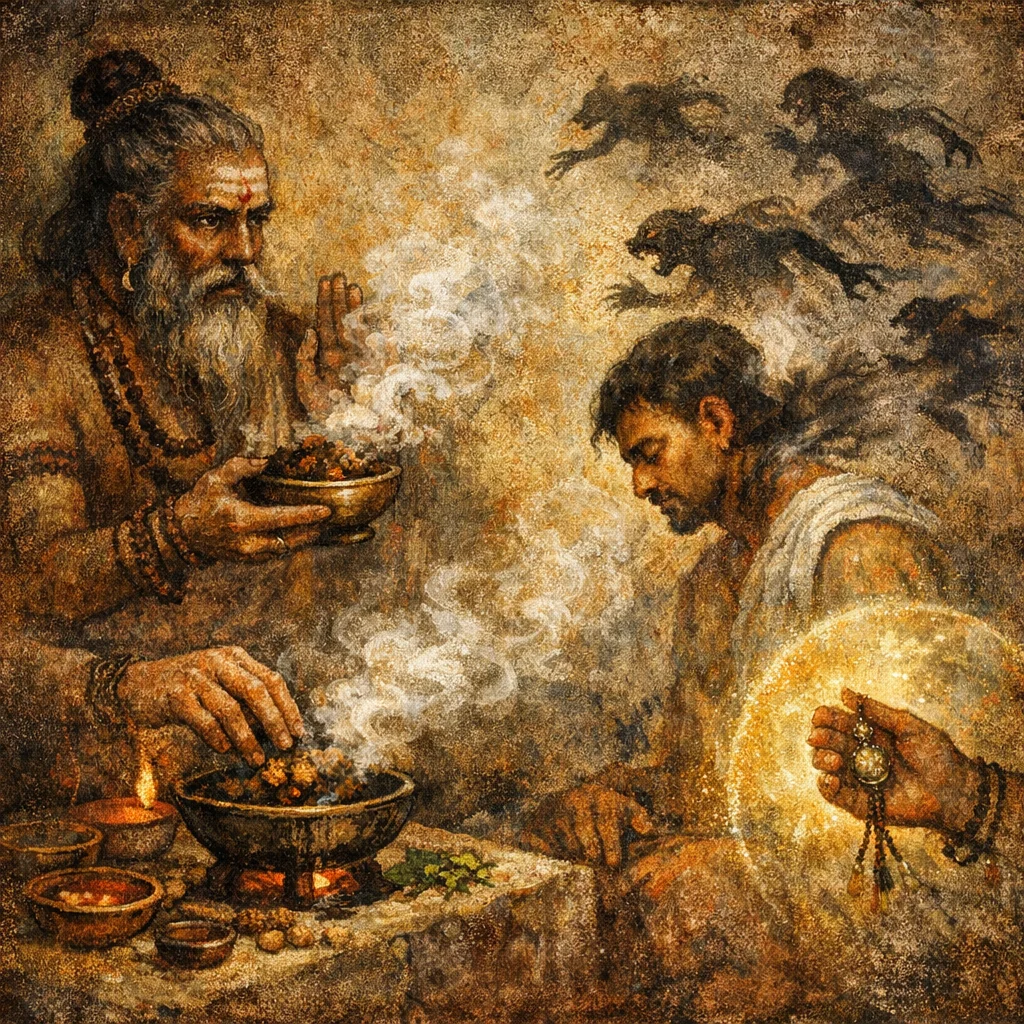
Sukta 38
Rishi: Atharvanic healer tradition (specific r̥ṣi uncertain without Anukramaṇī).
Devata: Bheṣaja (medicine) embodied in guggulu; anti-yákṣma power.
Chandas: Predominantly anuṣṭubh-like (late Atharvanic prose-verse mixture at opening).
Mantras
Mantra 1
यक्षमनाशनम्। न तं यक्ष्मा अरुन्धते नैनं शपथो अश्नुते । यं भेषजस्य गुल्गुलोः सुरभिर्गन्धो अश्नुते
A destroyer of consumption: him consumption doth not restrain, nor doth the curse overtake him—whom the fragrant odor of the medicine, of guggulu, reacheth and pervadeth.
Mantra 2
विष्वञ्चस्तस्माद् यक्ष्मा मृगा अश्वा इवेरते । यद् गुल्गुलु सैन्धवं यद् वाप्यासि समुद्रियम्
From him, on every side, consumption fleeth away, as wild beasts, as horses, rush in flight—when guggulu, Sindhu-salt, or sea-born salt thou admixest (therewith).
Mantra 3
उभयोरग्रभं नामास्मा अरिष्टतातये
Of both I have grasped the name, for him, for unimpaired safety.
Frequently Asked Questions
Yákṣma is a wasting, consumptive affliction—often understood as chronic weakening illness—treated here as something that can ‘seize’ a person unless driven off by medicine and mantra.
Guggulu is presented as bheṣaja embodied: its fragrant gandha pervades the patient and space, functioning apotropically to prevent yákṣma and even curse-effects from taking hold.
It refers to a ritual sealing act: the healer verbally fixes the remedy by naming the paired components/variants (such as the two salts, or medicine plus additive), ensuring ariṣṭatāti—unharmed safety—for the patient.