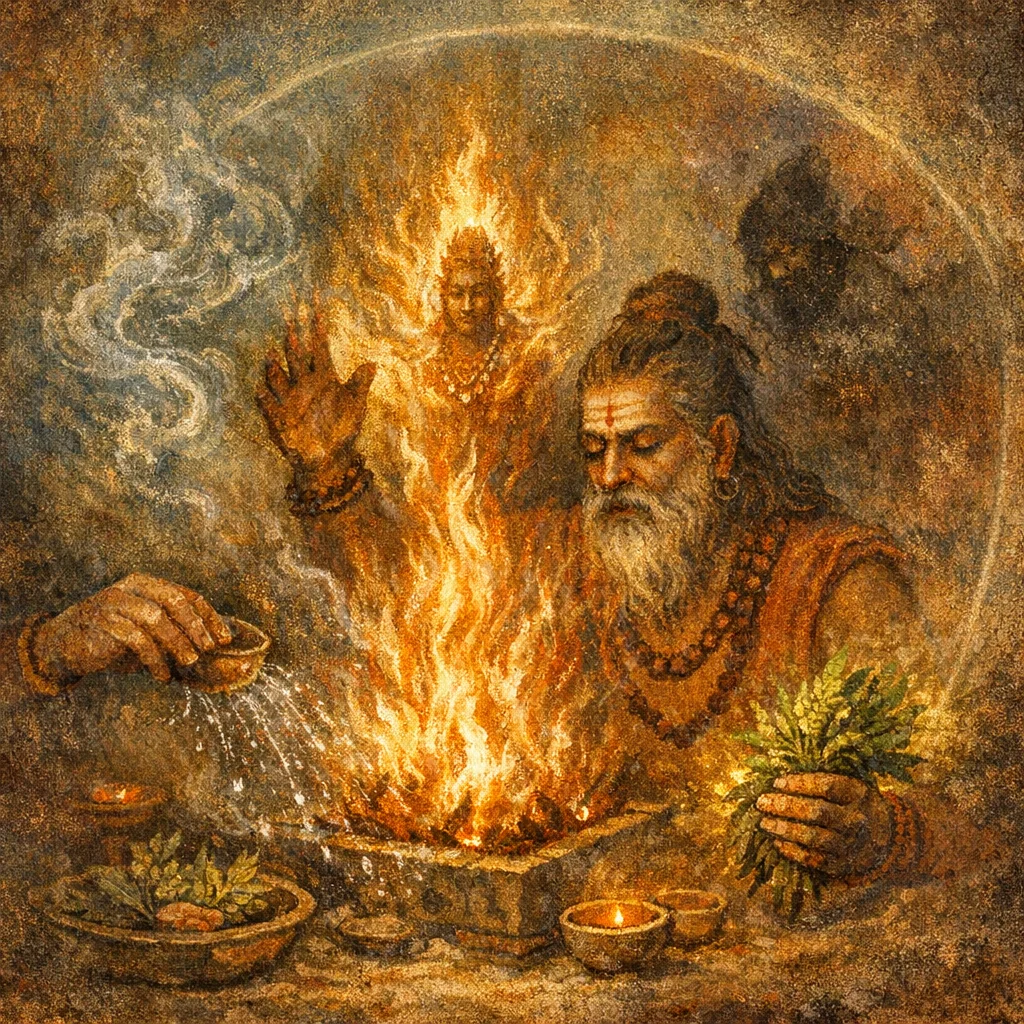
Sukta 3
Rishi: Atharvanic tradition (Agni/Jātavedas invocation cluster in AV 19)
Devata: Agni (Jātavedas)
Chandas: Triṣṭubh-like (AV often irregular; longer pādas than anuṣṭubh)
Mantras
Mantra 1
जातवेदाः। दिवस्पृथिव्याः पर्यन्तरिक्षाद् वनस्पतिभ्यो अध्योषधीभ्यः । यत्रयत्र विभृतो जातवेदास्तत स्तुतो जुषमाणो न एहि
O Jātavedas: from heaven, from earth, encompassing from the mid-air; from the forest-lords, from the herbs—wherever thou art borne abroad, thither, praised and taking pleasure, come thou unto us.
Mantra 2
यस्ते अप्सु महिमा यो वनेषु य ओषधीषु पशुष्वप्स्व१न्तः । अग्ने सर्वास्तन्वः१ सं रभस्व ताभिर्न एहि द्रविणोदा अजस्रः
What greatness of thine is in the Waters, what in the woods, what in the herbs, what in the cattle—what is within the Waters: O Agni, gather thou all thy forms together; with them come unto us, thou giver of substance, unfailing.
Mantra 3
यस्ते देवेषु महिमा स्वर्गो या ते तनूः पितृष्वाविवेश । पुष्टिर्या ते मनुष्येऽषु पप्रथेऽग्ने तया रयिमस्मासु धेहि
That greatness of thine which is among the Gods, heavenly; that form of thine which hath entered among the Fathers; that thriving which among men hath spread abroad—O Agni, with that do thou establish wealth within us.
Mantra 4
श्रुत्कर्णाय कवये वेद्याय वचोभिर्वाकैरुप यामि रातिम्। यतो भयमभयं तन्नो अस्त्वव देवानां यज हेडो अग्ने
To Śrutkarṇa, to the Sage, to the Knowing One, with holy utterances, with words of power, I draw near for a gift. From what quarter fear ariseth, let that become for us fearlessness. Do thou, O Agni, worship away the Gods’ displeasure.
Frequently Asked Questions
It is used to call Agni as Jātavedas—the power inside herbs and fire—so that remedies become effective, prosperity is stabilized, and fear or ominous pressure is calmed.
Because it treats Agni as present within vegetal life; by summoning Jātavedas from trees and herbs, the practitioner ‘awakens’ their healing potency through the ritual fire.
It means the gods’ displeasure or punitive pressure—often experienced as danger, illness, or misfortune. The hymn asks Agni to remove that displeasure through worship and purification.