Sukta 12
Rishi: Vratya dossier tradition (anukramaṇī-dependent)
Devata: Vrātya (as potent personage) / Agni (contextual)
Chandas: Prose
Mantras
Mantra 1
तद् यस्यैवं विद्वान् व्रात्य उद्धृतेष्वग्निष्वधिश्रितेऽग्निहोत्रेऽतिथिर्गृहानागच्छेत्
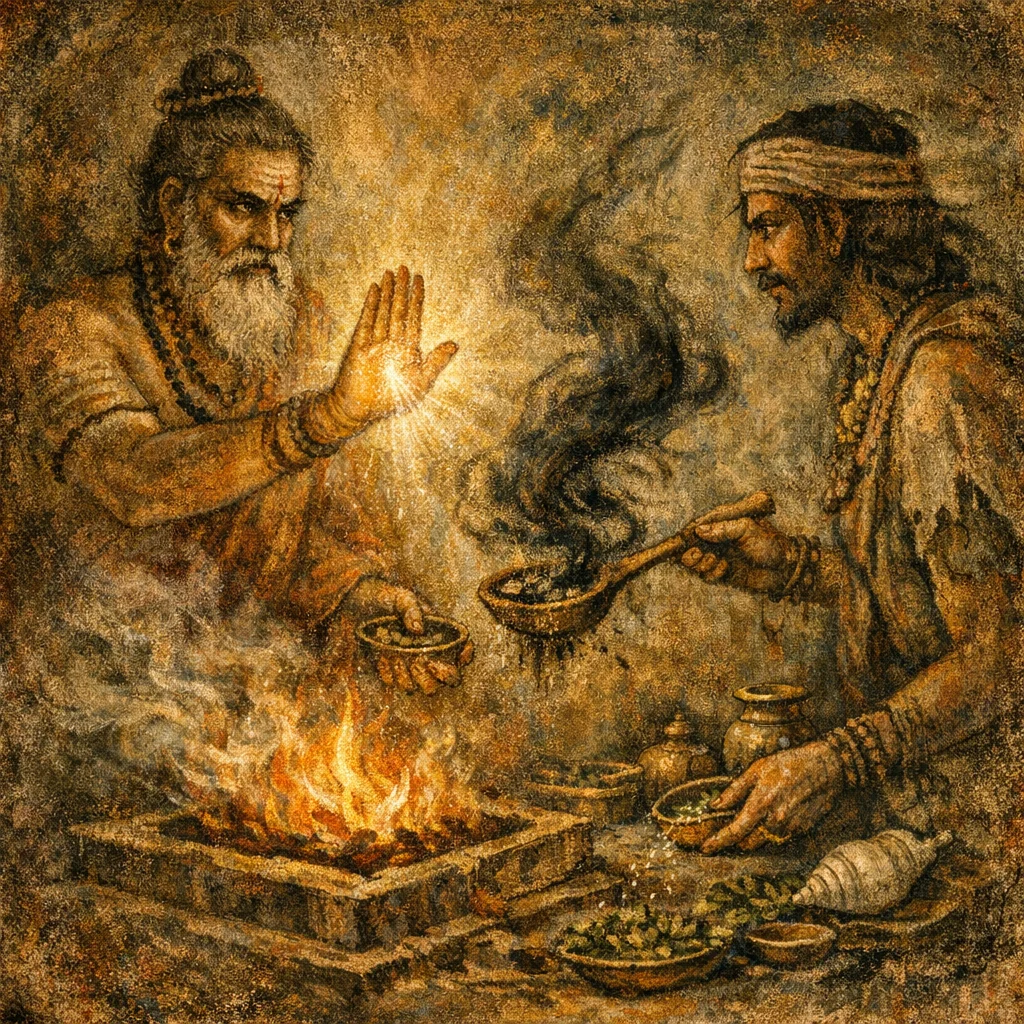
Now, if unto the house of one who thus knoweth a Vratya should come as guest, when the fires have been taken up and the Agnihotra is set in place,
Mantra 2
स्वयमेनमभ्युदेत्य ब्रूयाद् व्रात्याति सृज होष्यामीति
He should himself go forth to meet him and should say: ‘O Vratya, release me; I will make oblation.’
Mantra 3
स चातिसृजेज्जुहुयान्न चातिसृजेन्न जुहुयात्
And if he grant release, he should offer; but if he grant not release, he should not offer.
Mantra 4
स य एवं विदुषा व्रात्येनातिसृष्टो जुहोति
He who, being thus released by the knowing Vratya, maketh oblation,
Mantra 5
प्र पितृयाणं पन्थां जानाति प्र देवयानम्
Forth he discerneth the Path that leadeth to the Fathers; forth also the Path that leadeth to the Gods.
Mantra 6
न देवेष्वा वृश्चते हुतमस्य भवति
His offering is not shorn away among the Gods: his oblation truly becometh (accepted).
Mantra 7
पर्यस्यास्मिंल्लोक आयतनं शिष्यते य एवं विदुषा व्रात्येनातिसृष्टो जुहोति
Round about him, in this very world, a settled station is left secure—who, thus commissioned by a knowing Vrātya, maketh offering.
Mantra 8
अथ य एवं विदुषा व्रात्येनानतिसृष्टो जुहोति
But then—whoso, thus, not commissioned by a knowing Vrātya, maketh offering—
Mantra 9
न पितृयाणं पन्थां जानाति न देवयानम्
He knoweth not the Path that leadeth to the Fathers; he knoweth not the Path that leadeth to the Gods.
Mantra 10
आ देवेषु वृश्चते अहुतमस्य भवति
Unto the Gods it is, as it were, cut away: for him the unoffered oblation comes to be (as offered).
Mantra 11
नास्यास्मिंल्लोक आयतनं शिष्यते य एवं विदुषा व्रात्येनानतिसृष्टो जुहोति
For him, in this world, no footing is left deficient—who, thus knowing, offers, not having loosed the Vrātya against him (nor set him at enmity).
Frequently Asked Questions
Here the Vrātya is a highly charged, liminal sacred personage—an outsider-like figure whose presence can bring benefit or danger. The hymn treats him as powerful and therefore to be received with correct ritual hospitality.
Because the risky moment is when household ritual operations are already active. The sukta gives a protocol for integrating the guest without disrupting the fire-rite or creating a ritual fault.
It promises that the oblation will not be ‘cut off’ among the gods (it is accepted), and that the performer’s ‘footing’ or standing in this world is not diminished—so peace, continuity, and security are maintained.