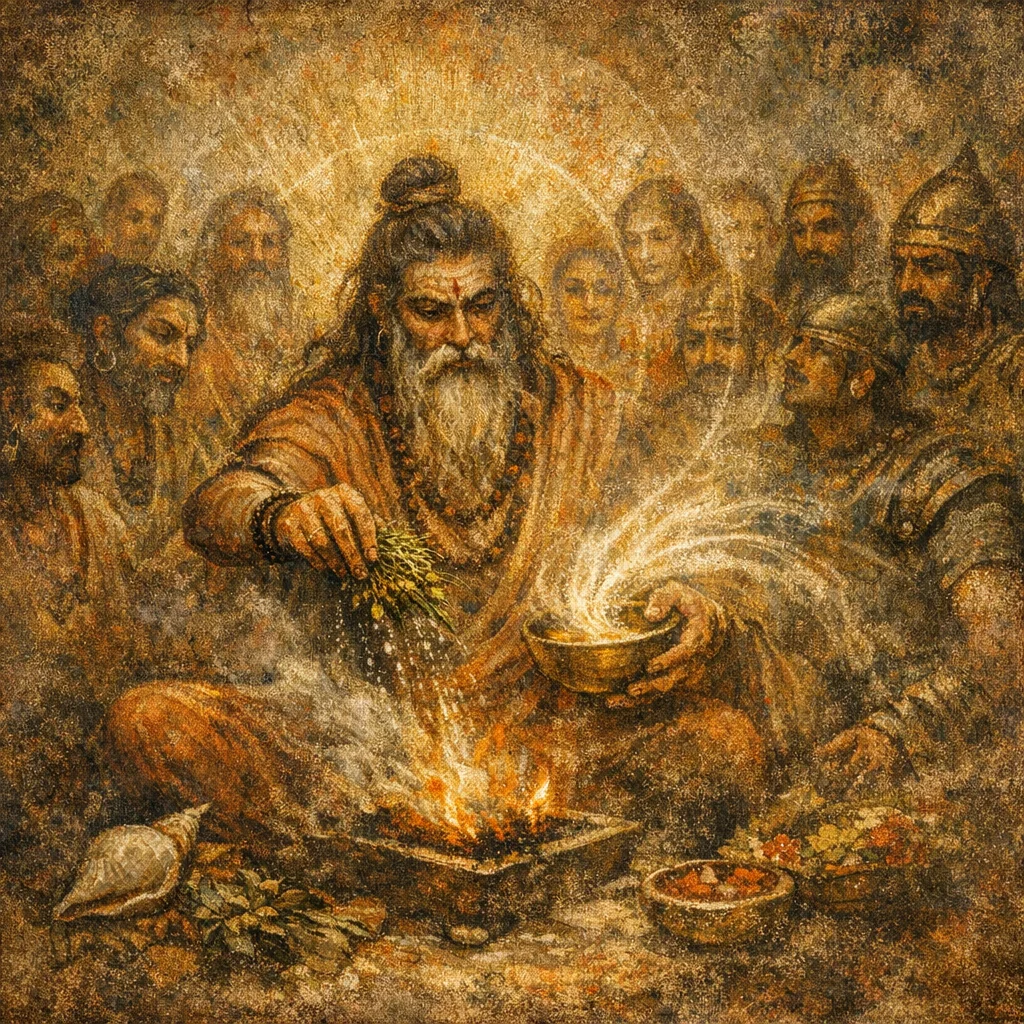
Sukta 9
Rishi: Vrātya tradition (anonymous/collective)
Devata: Viś (the people) / Vrātya as functional focus
Chandas: Prose-like / short gāyatrī-like cadence but not securely metrical
Mantras
Mantra 1
स विशोऽनु व्यऽचलत्
After him the peoples moved forth.
Mantra 2
तं सभा च समितिश्च सेना च शुरा चानुव्यऽचलन्
Him followed forth the Council and the Assembly, the host, and the heroes.
Mantra 3
सभायाश्च वै स समितेश्च सेनायाश्च सुरायाश्च प्रियं धाम भवति य एवं वेद
He verily becometh a dear and favoured seat with the Council and the Assembly, with the host and with the heroes—whoso thus knoweth.
Frequently Asked Questions
For securing followership and legitimacy—getting the people and key institutions (council, assembly, army, heroes) to align behind a leader.
They are personified civic institutions: Sabhā as the council and Samiti as the broader assembly. Invoking them means seeking formal consent and public acceptance.
It means becoming a dear, favored ‘seat’ or established standing—someone welcomed and influential within the council, assembly, and the military body.