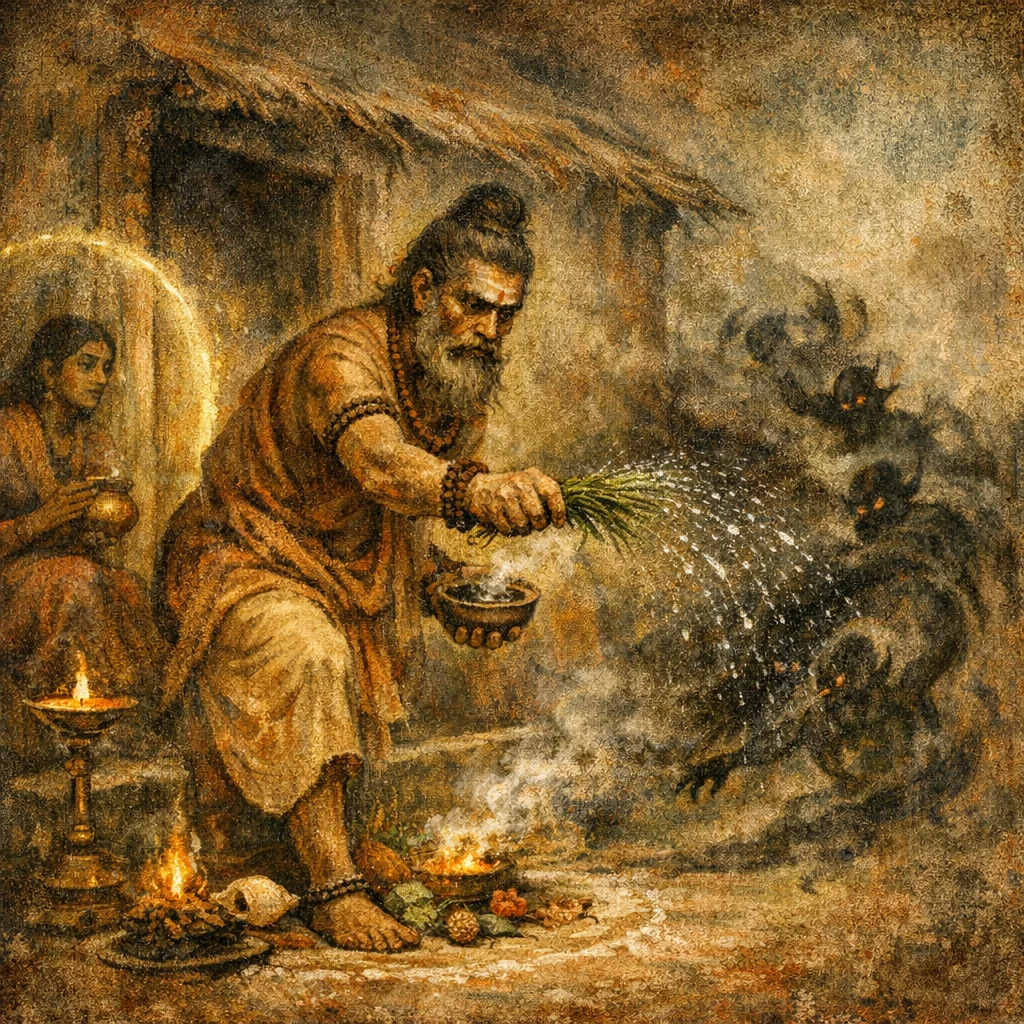
Sukta 27
Rishi: Atharvanic/Angiras-type attribution (hymn-level assignment varies by anukramaṇī tradition; verse itself is weapon-apotropaic).
Devata: Rudra/Pināka as invoked power-symbol; the operative deity is the protective, weapon-bearing force that cuts and disperses evil.
Chandas: Anuṣṭubh (probable; pāda-structure suggests the common AV anuṣṭubh cadence).
Mantras
Mantra 2
विषूच्येतु कृन्तती पिनाकमिव बिभ्रती । विष्वक् पुनर्भुवा मनोऽसमृद्धा अघायवः
Let it be scattered forth, a cutter, bearing—like Pināka—its weapon: let the mind be made again whole on every side; let the evil-wishers be left unprospered.
Mantra 3
न बहवः समशकन् नार्भका अभि दाधृषुः । वेणोरद्गा इवाभितोऽसमृद्धा अघायवः
The many could not, though banded, prevail; nor dared the petty ones to press their onset. Like Vena’s limbs, on every side, those evil-wishers—unprospered—were brought to naught.
Mantra 4
प्रेतं पादौ प्र स्फुरतं वहतं पृणतो गृहान्। इन्द्राण्येऽतु प्रथमाजीतामुषिता पुरः
Go forth! with your two feet spurn ye forth; bear ye away, while ye fill the houses. Let Indrāṇī come—foremost, unconquered—dwelling before (us), in the van.
Frequently Asked Questions
For protection: it cuts and disperses hostile intent or sorcery, drives out inauspicious presence from the home, and restores steadiness of mind.
Pināka functions as a power-symbol of decisive apotropaic force—the mantra is imagined as a weapon that ‘hews’ through and scatters harm so it cannot consolidate.
Indrāṇī is invoked as ‘foremost, unconquered’ and asked to dwell at the front (threshold), acting like a stationed guardian so what is expelled does not return and the house remains filled with welfare.