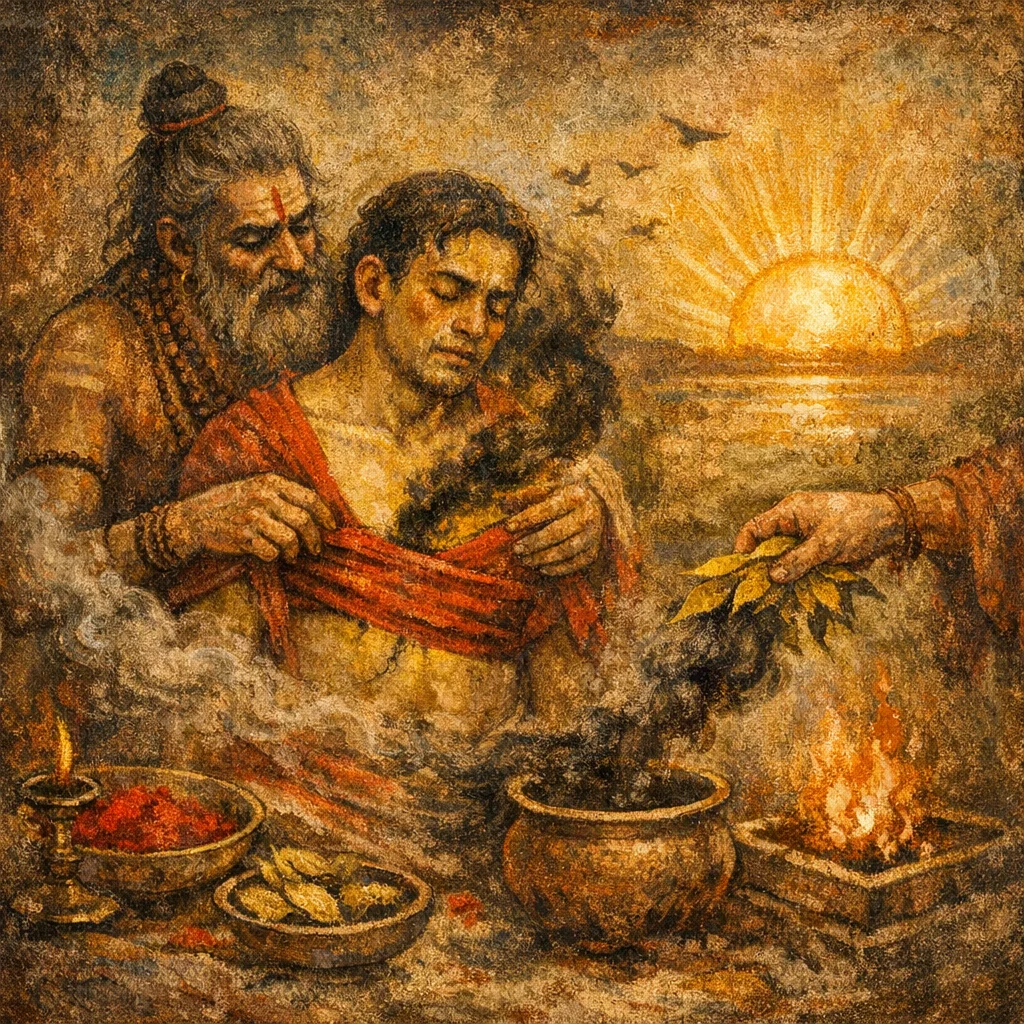
Sukta 22
Rishi: Atharvanic tradition (attributed within the Atharvan corpus; specific r̥ṣi assignment varies by anukramaṇī tradition for this hymn).
Devata: Āyus (Long Life) / Varṇa (healthy complexion) as functional ‘deities’; implicitly the healing power resident in the charm.
Chandas: Anuṣṭubh (predominant Atharvanic śloka-meter style)
Mantras
Mantra 1
हृद्रोग-कामिला-नाशनम्। अनु सूर्यमुदयतां हृद्दयोतो हरिमा च ते । गो रोहितस्य वर्णेन तेन त्वा परि दध्मसि
After the Sun let it arise: from thy heart let the yellowing go forth. With the hue of the red cow—with that same (hue) we encompass and bestow it upon thee.
Mantra 2
परि त्वा रोहितैर्वर्णैर्दीर्घायुत्वाय दध्मसि । यथायमरपा असदथो अहरितो भुवत्
Around thee with ruddy hues we set (this charm), for long-livedness; so may this man be unhurt, and moreover may he be not pale (nor yellowed).
Mantra 3
या रोहिणीर्देवत्या३ गावो या उत रोहिणीः । रूपंरूपं वयोवयस्ताभिष्ट्वा परि दध्मसि
What Rohiṇī cows are god-possessed, and what cows moreover are Rohiṇīs—form upon form, age upon age—with these we set thee round about.
Mantra 4
शुकेषु ते हरिमाणं रोपणाकासु दध्मसि । अथो हारिद्रवेषु ते हरिमाणं नि दध्मसि
In the śuká-plants for thee we set the Yellowness; in the ropāṇakā-growths we implant it. And, moreover, in the turmeric-yellow vestures for thee we lay the Yellowness down and away.
Frequently Asked Questions
It targets harimā́—‘yellowness’ associated with jaundice/weakness and inauspicious pallor—and seeks to restore a stable, healthy complexion and long life.
Yellow is treated as the disease-sign to be transferred out, while red (rohitá) is installed as the counter-sign of health and vitality, ritually ‘encircling’ the patient as protection.
The hymn uses transference: the practitioner symbolically deposits the patient’s harimā́ into plant receptacles and turmeric-yellow media, so the affliction leaves the body and is ‘laid down and away’ elsewhere.