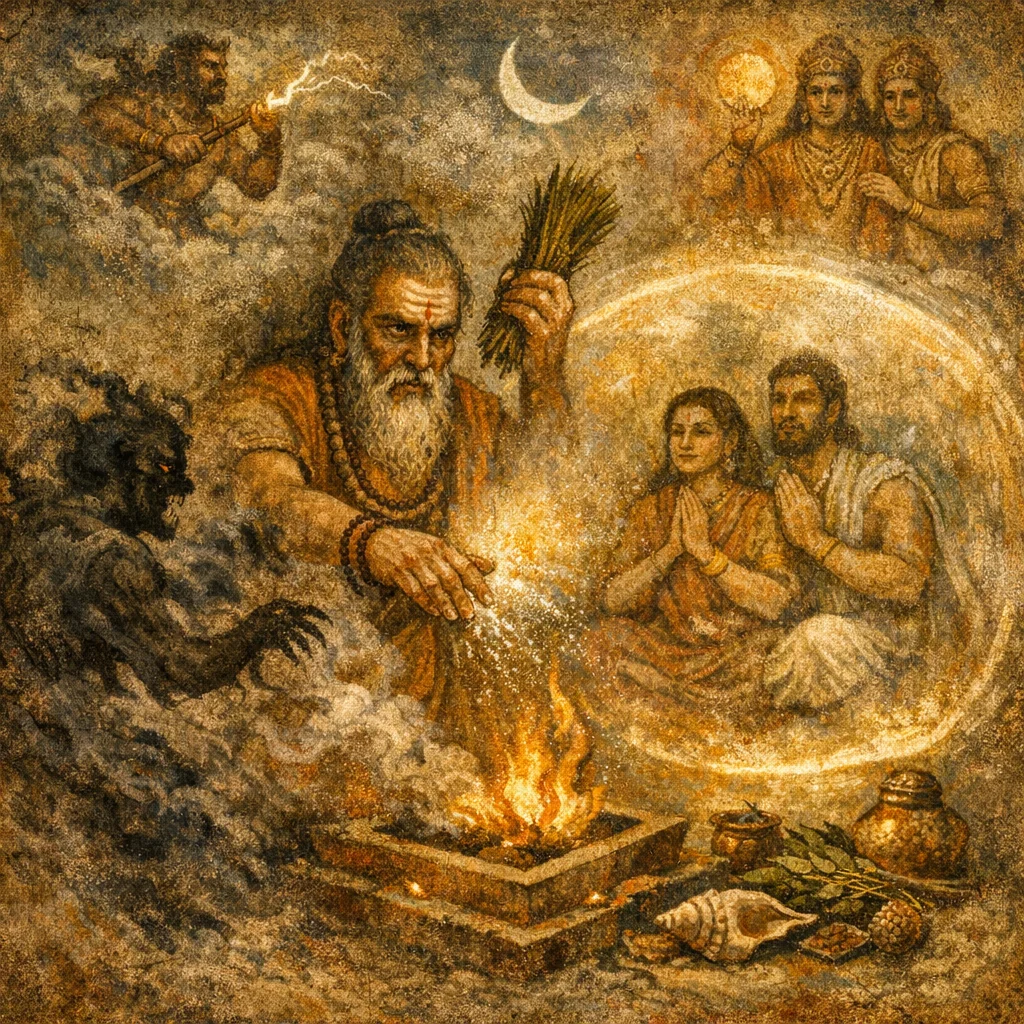
Sukta 20
Rishi: Atharvanic tradition (hymn addressed to Mitra–Varuṇa; specific r̥ṣi attribution varies by anukramaṇī traditions for early AV hymns)
Devata: Mitra–Varuṇa
Chandas: Anuṣṭubh (4 pādas implied; this verse corresponds to two pādas as transmitted here)
Mantras
Mantra 1
शत्रुनिवारणम्। अदारसृद् भवतु देव सोमास्मिन् यज्ञे मरुतो मृडता नः । मा नो विददभिभा मो अशस्तिर्मा नो विदद् वृजिना द्वेष्या या
Unhindered in its course be thou, O god Soma, in this our sacrifice; and ye, O Maruts, be gracious unto us. Let not overpowering oppression find us; nor, indeed, let evil repute find us; let not the hateful mischief, the wrong, find us.
Mantra 2
यो अद्य सेन्यो वधोऽघायूनामुदीरते । युवं तं मित्रावरुणावस्मद्यावयतं परि
What warlike slaughter, raised up to-day by men of evil will, is set in motion—do ye, O Mitra and Varuṇa, drive that away from us, wholly afar.
Mantra 3
इतश्च यदमुतश्च यद् वधं वरुण यावय । वि महच्छर्म यच्छ वरीयो यावया वधम्
What deadly harm is from hence, and what from yonder—O Varuṇa, drive thou it away. Bestow abroad a mighty shelter, a better refuge; drive away the deadly harm.
Mantra 4
शास इत्था महाँ अस्यमित्रसाहो अस्तृतः । न यस्य हन्यते सखा न जीयते कदा चन
Thus is the Chastiser great: this foe-subduer is uninjured. Whose comrade is not slain, he is not conquered—no, not at any time whatsoever.
Frequently Asked Questions
It is used to repel lethal danger and hostile aggression—whether seen as enemy action or malign intent—and to establish a strong protective shelter around the person and household.
As Ādityas they represent high sovereign protection: Mitra stabilizes alliances and order, while Varuṇa powerfully restrains and drives away threats, granting a wide refuge (śárman).
No specific substances are required in the transmitted verses; the practice is primarily recitation with a protective intention, optionally reinforced by boundary-focused gestures or circumambulation.