Sukta 19
Rishi: Atharvanic tradition (often transmitted under Atharvan/Āṅgirasa provenance for protective charms; specific r̥ṣi attribution varies by anukramaṇī tradition).
Devata: Indra (as protector and deflector of weapons); secondarily the ‘missiles’ as the object being controlled.
Chandas: Anuṣṭubh (probable; short protective verses in AV Book 1 are predominantly anuṣṭubh—confirmable against padapāṭha/anukramaṇī tables).
Mantras
Mantra 1
शत्रुनिवारणम्। मा नो विदन् विव्याधिनो मो अभिव्याधिनो विदन्। आराच्छरव्या ऽ अस्मद्विषूचीरिन्द्र पातय
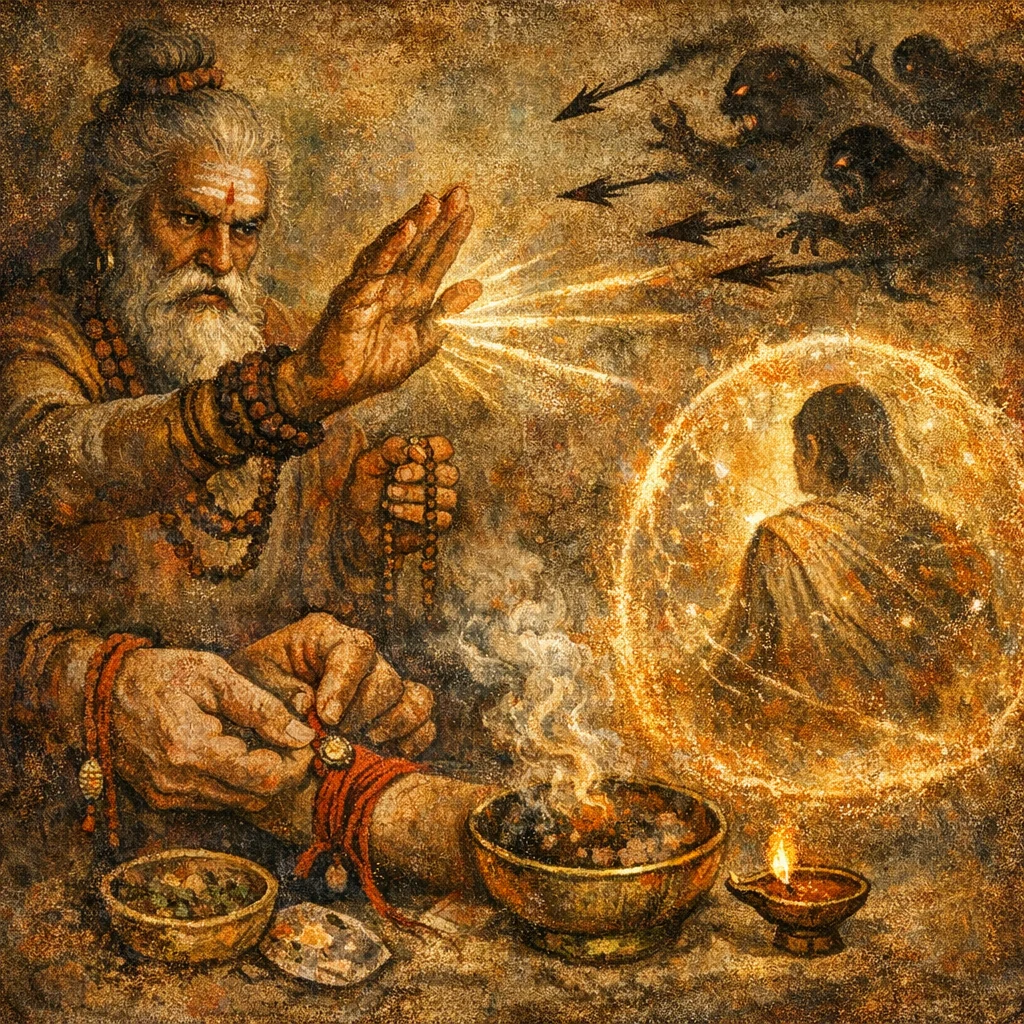
Let not the piercers find us; let not the over-piercers find us. Far away—those arrow-missiles—make them, O Indra, to swerve aside from us, and cast them down.
Mantra 2
विष्वञ्चो अस्मच्छरवः पतन्तु ये अस्ता ये चास्याः । दैवीर्मनुष्येषवो ममामित्रान् वि विध्यत
Let the arrows, turned every way, fly off from us—those that are shot, and those that are (aimed) at her. Ye divine and human shafts, pierce, pierce through my enemies.
Mantra 3
यो नः स्वो यो अरणः सजात उत निष्ट्यो यो अस्माँ अभिदासति । रुद्रः शरव्य ऽ यैतान् ममामित्रान् वि विध्यतु
Whether he be our own, whether a stranger, whether a clansman, yea, whether one within the house—whoever assaileth us with malice: let Rudra, the arrow-bearing, pierce through and through these my foes.
Mantra 4
यः सपत्नो योऽसपत्नो यश्च द्विषन् छपाति नः । देवास्तं सर्वे धूर्वन्तु ब्रह्म वर्म ममान्तरम्
Whoso is rival, or whoso is no rival yet, and whoso, hating, curseth us,—him may all the Gods together crush away: within me is the Brahman, as an armour.
Frequently Asked Questions
It is used as a protective charm to prevent attackers and their weapons (literal or symbolic) from finding or striking the person, and to divert the harm away.
Indra is the primary protector who makes missiles swerve and fall; Rudra appears as the archer-power who can pierce hostile forces, completing the ‘deflect and reverse’ logic of the charm.
No specific herb or offering is required in the text; the hymn works primarily through recitation and protective intention, though some traditions add a simple rakṣā-thread or boundary-marking as a support.