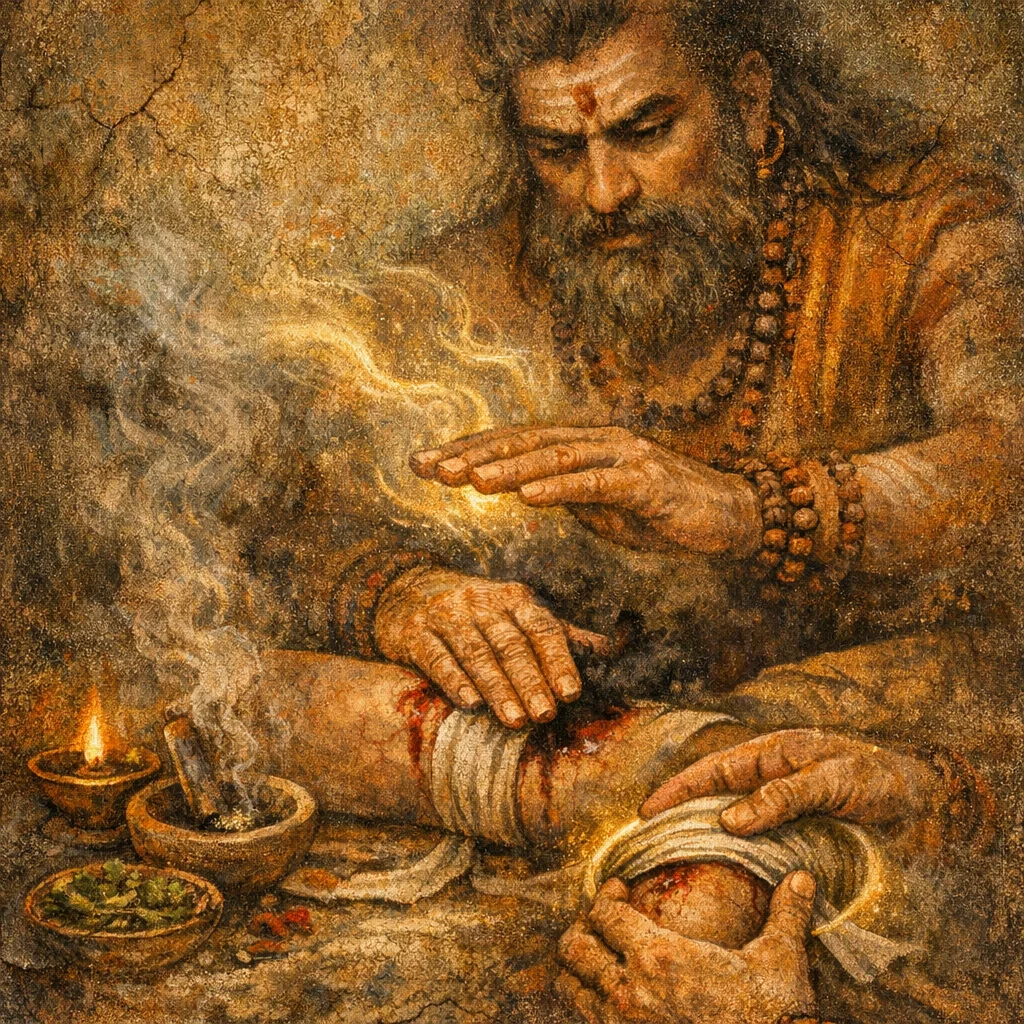
Sukta 17
Rishi: Atharvanic tradition (specific ṛṣi attribution varies by anukramaṇī; commonly Atharvan/Angiras-type for protective hymns).
Devata: Protective power personified as Sikātāvatī and the Bow (Dhanuḥ), with Bṛhatī as magnified might.
Chandas: Likely Anuṣṭubh/related short meter; ‘bṛhatī’ here is primarily adjectival/personified (meter-identification requires padic count confirmation from a critical text).
Mantras
Mantra 1
रुधिरस्रावनिवृत्तये धमनीबन्धनम्। अमूर्या यन्ति योषितो हिरा लोहितवाससः । अभ्रातर इव जामयस्तिष्ठन्तु हतवर्चसः
Joyless they go—the Women, tawny-hued, in raiment red as blood. Like brotherless kin by marriage, let them stand fast, their glory smitten down.
Mantra 2
तिष्ठावरे तिष्ठ पर उत त्वं तिष्ठ मध्यमे । कनिष्ठिका च तिष्ठति तिष्ठादिद्धमनिर्मही
Stand in the lower place; stand in the farther; and thou, stand in the middle. The little finger too stands fast: yea, let her stand—surely—unshaken, unmoved.
Mantra 3
शतस्य धमनीनां सहस्रस्य हिराणाम्। अस्थुरिन्मध्यमा इमाः साकमन्ता अरंसत
Of a hundred are the channels, of a thousand the golden (threads): these, bone-bearing, the middle members—together with the ends—have duly set themselves in order.
Mantra 4
परि वः सिकतावती धनूर्बृहत्यऽक्रमीत्।तिष्ठतेलयता सु कम्
Round about you hath Sand-bearing (Power) advanced—the lofty Bow hath stepped forth; it standeth fast: dissolve not; (bring) fair welfare.
Frequently Asked Questions
It is used to establish a firm, all-around protective boundary and to stabilize what feels loosened or unsettled—both in a person (limbs/channels) and in a protected space (home, threshold, travel).
Sikātāvatī is a personified protective force associated with sand/grit—imagery of hardening and sealing a perimeter—advancing ‘all around’ to prevent intrusion and undoing.
Traditionally the imagery is enacted with a sand/earth ring and a bow (or symbol) as a repellent sign, but the core function is the spoken installation—‘stand fast’—which can be performed with minimal materials such as a cord/amulet and a marked boundary.