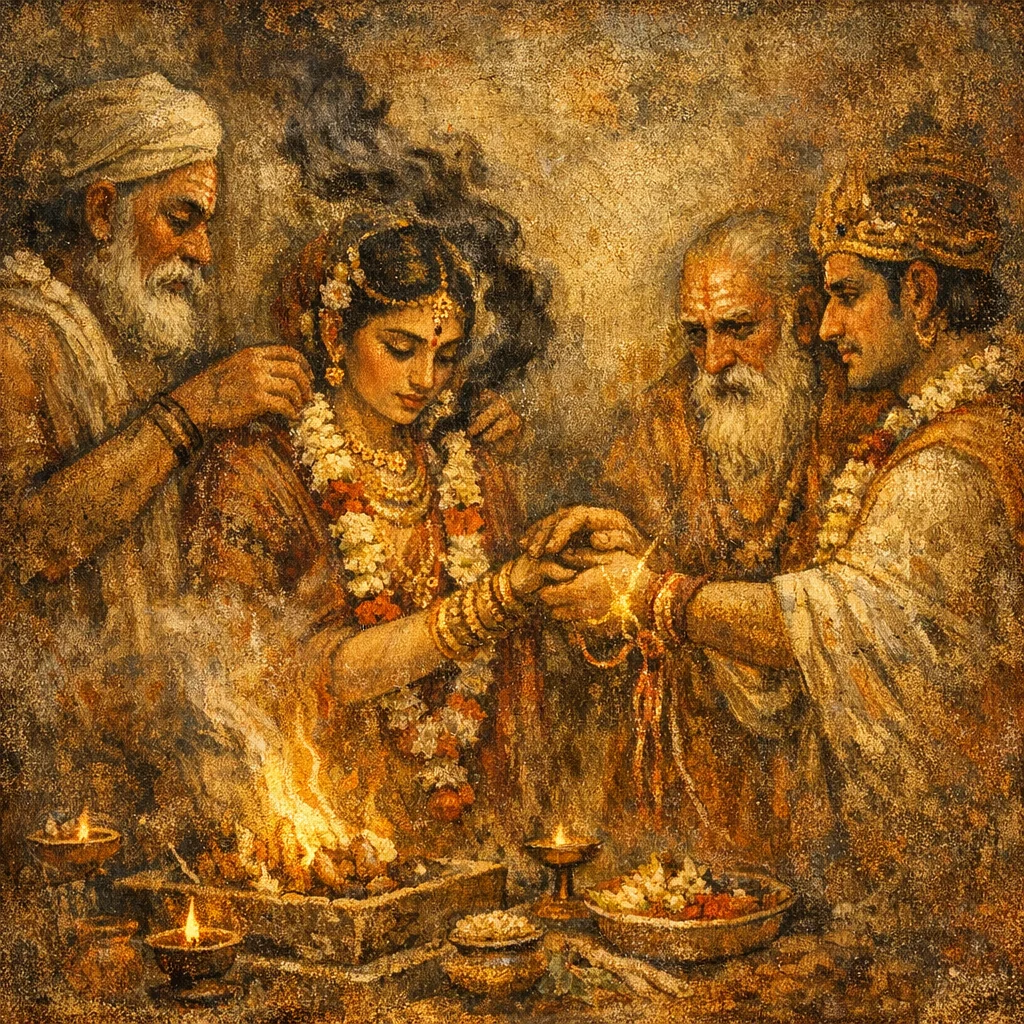
Sukta 14
Rishi: Atharvanic tradition (exact ṛṣi attribution varies by anukramaṇī; commonly treated as an Atharvan/Angiras-type domestic benediction).
Devata: Bhaga (as distributor of fortune) with the operative power of Várchas (splendour).
Chandas: Mixed/irregular; predominantly anuṣṭubh-like cadence with Atharvanic flexibility.
Mantras
Mantra 1
कुलपा कन्या भगमस्या वर्च आदिष्यधि वृक्षादिव स्रजम्। महाबुध्न इव पर्वतो ज्योक् पितृष्वास्ताम्
A maiden, guardian of the clan—do thou, O Bhaga, assign unto her splendour, as (one lays) a garland from a tree upon (the head). Like a mountain of mighty base, may she stand for long, rich in fathers (and ancestral support).
Mantra 2
एषा ते राजन् कन्या वधूर्नि धूयतां यम । सा मातुर्बध्यतां गृहेऽथो भ्रातुरथो पितुः
This maiden-bride, O King, is for thee: let her be wafted down, O Yama. Let her be bound within the house—away from her mother, and also from her brother, and also from her father.
Mantra 3
एषा ते कुलपा राजन् तामु ते परि दद्मसि । ज्योक् पितृष्वासाता आ शीर्ष्णः समोप्यात्
This, O King, is thy Clan-Protector: her, even her, we set about thee. Long time, with the Fathers’ sisters, may she come hither and cleave upon thy head.
Mantra 4
असितस्य ते ब्रह्मणा कश्यपस्य गयस्य च । अन्तःकोशमिव जामयोऽपि नह्यामि ते भगम्
With the spell of Asita, of Kaśyapa, and of Gaya, I bind fast for thee thy Bhaga (thy fortunate portion), as though within an inner sheath, as kinsmen clasp one another close.
Frequently Asked Questions
It is used to bless a maiden/bride with varcas (radiant attractiveness and prestige) and Bhaga’s good fortune, and to ritually secure her safe transfer into the husband’s household.
Here Yama appears as a kingly regulator of passage and settlement at a liminal moment, helping neutralize inauspicious associations and ensuring the bride is firmly established in the new home.
A fresh garland (sraj) from a tree is central, along with a symbolic binding cord (bandhana); optionally a small token or knot-thread charm can represent kulapā, the clan-protecting power.