Sukta 4
Rishi: Atharvanic tradition (specific r̥ṣi attribution varies by anukramaṇī; commonly within early Atharvan strata tied to solar protective formulae)
Devata: Sūrya (with attendant Amūryāḥ powers)
Chandas: Anuṣṭubh (pragmatically treated as anuṣṭubh-like; pāda division suggests a compact charm-meter)
Mantras
Mantra 1
अपां भेषजम्। अम्बयो यन्त्यध्वभिर्जामयो अध्वरीयताम्। पृञ्चतीर्मधुना पयः
The Waters’ remedy. The Mother-waters go by their paths; the sister-waters—let them be made serviceable for the sacrifice—mingling with honey, (mingling) milk.
Mantra 2
अमूर्या उप सूर्ये याभिर्वा सूर्यः सह। ता नो हिन्वन्त्वध्वरम्
The Amūryā Powers, attendant on the Sun—wherewith, indeed, the Sun is joined—may they impel for us the rite (adhvara) to its due accomplishment.
Mantra 3
अपो देवीरुप ह्वये यत्र गावः पिबन्ति नः । सिन्धुभ्यः कर्त्वं हविः
The Waters, Goddesses, I call hitherward—there where our kine are wont to drink. From the rivers be the offering’s portion duly fashioned.
Mantra 4
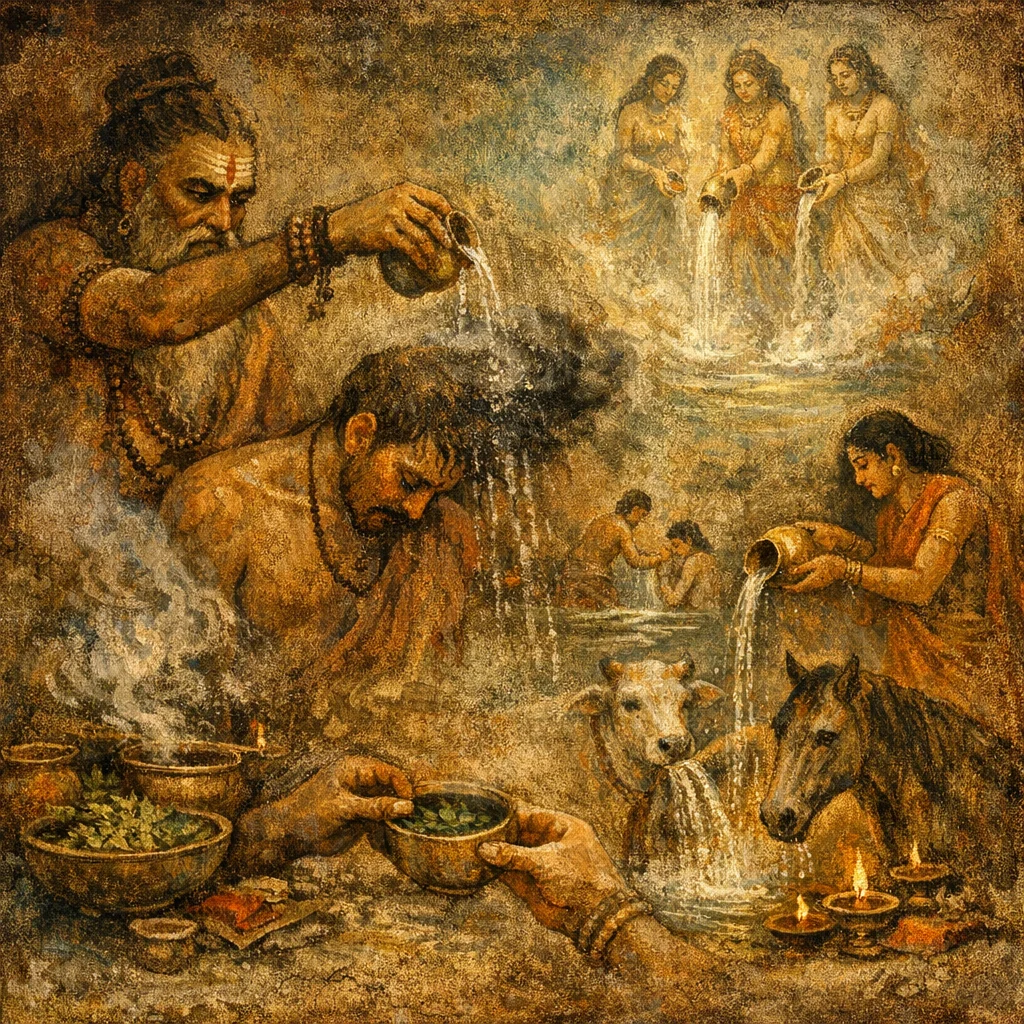
अप्स्व१न्तरमृतमप्सु भेषजम्। अपामुत प्रशस्तिभिरश्वा भवथ वाजिनो गावो भवथ वाजिनीः
Within the waters is ambrosia; within the waters is the remedy. By the waters’—yea, by their benedictions—be ye horses full of winning strength; be ye cows full of winning strength.
Frequently Asked Questions
It treats water as the foremost remedy, declaring that amṛta and medicine dwell within the waters, and it uses solar-protective power to ensure the healing rite succeeds without obstruction.
They ritually “enrich” the water—honey and milk symbolize sweetness, nourishment, and restoration—so the consecrated water becomes both purifying and strengthening.
No. It explicitly extends the benefit to prosperity and strength for horses and cattle, making it suitable for household welfare and livestock protection as well as personal purification.