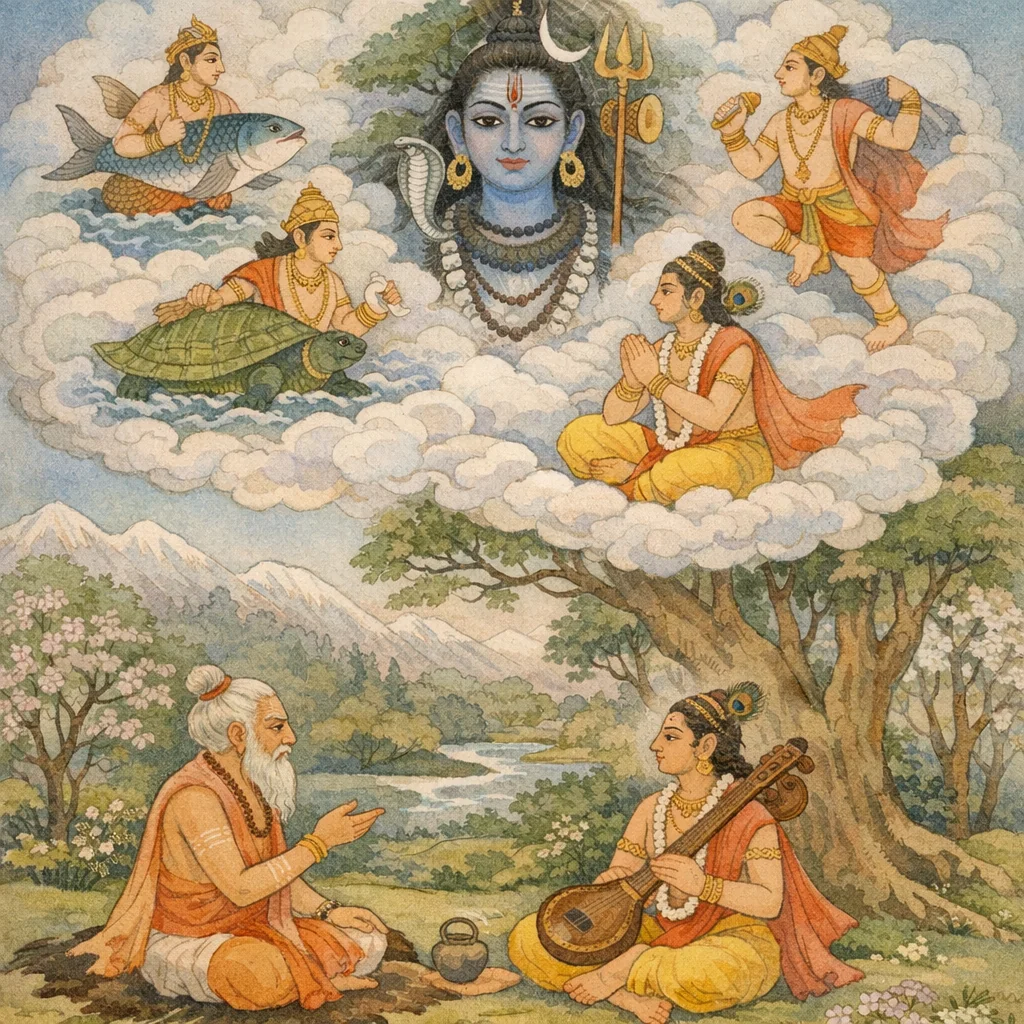
Adhyaya 61: The Second Sin-Destroying Hymn (Pāpaśamana Stava) and Syncretic Praise of Hari-Hara
द्वितीय-पापशमन-स्तवः (Dvitīya-Pāpaśamana-Stavaḥ)
Syncretic Praise of Hari-Hara
વામનપુરાણના અધ્યાય ૬૧માં પુલસ્ત્ય ઋષિ નારદને ‘દ્વિતીય પાપશમન-સ્તવ’નું ઉપદેશ આપે છે અને કહે છે કે તેનું સમ્યક્ અધ્યયન તથા જપ પાપનો નાશ કરે છે। આ અધ્યાય મુખ્યત્વે નમસ્કારોની સ્તુતિમાળા છે, જેમાં વૈષ્ણવ અને શૈવ બંને પ્રતિમાત્મક પરંપરાઓ સહજ રીતે જોડાય છે—મત્સ્ય, કૂર્મ, હયગ્રીવ, ત્રિવિક્રમ, નારાયણ, ગરુડાસન સાથે શ્રીકંઠ/નીલકંઠ, કપર્દી, ત્રિનયન, કાલાગ્નિ, રુદ્રદેવેશ વગેરે શિવનામો પણ આવે છે। અંતે નિરાકાર, નિરંજન જેવા નિર્ગુણ વિશેષણોથી સ્તુત્ય દેવતા સંપ્રદાયની સીમા પાર સર્વવ્યાપી રૂપે પ્રતિપાદિત થાય છે। ઉપસંહારમાં સંકીર્તન, સ્મરણ અને શ્રવણને બહુ-પાપ-નાશક, ઉદ્ધારક સાધનાઓ તરીકે મહિમાવંત કરાય છે; તીર્થવર્ણન ઓછું અને હરિહર-સંગત ભક્તિ-વ્યાકરણ વધુ પ્રધાન છે।
Divine Beings
Mortal & Asura Figures
Key Content Points
- Pulastya-to-Nārada transmission: the sage presents a second “sin-destroying hymn,” asserting that proper study and recitation lead to pāpa-nāśa.
- Iconographic catalog as syncretic theology: a continuous sequence of namas-kāras spans Vaiṣṇava avatāras (Matsya, Kūrma, Trivikrama, Hayagrīva) and Śaiva forms/epithets (Trinayana, Kapardin, Kālāgni, Rudradeveśa), implying Hari-Hara concord.
- Soteriology of sound and memory: the closing verse elevates saṃkīrtana (chanting), smaraṇa (remembering), and śravaṇa (hearing) as purificatory practices with ‘bahu-pāpa-nāśana’ efficacy.
Shlokas in Adhyaya 61
Verse 1
इति श्रीवामनपुराणे षष्ठितमो ऽध्यायः पुलस्त्य उवाच द्वितीयं पापशमनं स्तवं वक्ष्यामि ते मुने येन सम्यगधीतेन पापं नाशं तु गच्चति
આ રીતે શ્રી વામનપુરાણનો સાઠમો અધ્યાય સમાપ્ત. પુલસ્ત્ય બોલ્યા—હે મુને, હું તને પાપશમન કરનાર બીજો સ્તવ કહું છું; જેને યોગ્ય રીતે અધ્યયન/પાઠ કરવાથી પાપ નિશ્ચયે નાશ પામે છે।
Verse 2
मत्स्यं नमस्ये देवेशं कूर्मं गोविन्दमेव च हयशीर्षं नमस्ते ऽहं भवं विष्णुं त्रिविक्रमम्
{"bali_present": false, "generosity_display": null, "daana_type": null, "shukracharya_interaction": null, "devotion_quality": null, "patala_reference": false}
Verse 4
ऊर्ध्वकेशं नृसिहं च रुपधारं कुरुध्वजम् कामपालमखण्डं च नमस्ये ब्राह्मणप्रियम्
{"bhagavata_parallel": null, "vishnu_purana_parallel": null, "ramayana_connection": null, "mahabharata_echo": "Vana-parvan tīrtha-yātrā passages mention Māhiṣmatī and Narmadā-region sanctity; Agni worship at specific sites is a recurring epic motif.", "other_puranas": ["Skanda Purana (Arbuda-khaṇḍa / Mt. Abu sanctity traditions)", "Shiva Purana (Trinayana epithet and kṣetra worship)", "Agni Purana (Agni as Hutāśana and ritual centrality)"], "vedic_reference": "Agni as Hutāśana is deeply Vedic (Agni hymns throughout RV; Agni as 'hutāśana' in later Vedic/Smṛti usage)."}
Verse 7
नमस्ये च गदापाणिं नमस्ये च कुशोशयम् अर्धनारीश्वरं देवं नमस्ये पापनाशनम्
હું ગદાપાણિને નમસ્કાર કરું છું; કુશ પર શયન કરનારને નમસ્કાર કરું છું; અર્ધનારીશ્વર દેવને નમસ્કાર કરું છું; પાપનાશકને વંદન કરું છું.
Verse 8
गोपालं च सैवकुण्ठं नमस्ये चापराजितम् नमस्ये विश्वरूपं च सौगन्धिं सर्वदाशिवम्
હું ગોપાલને, સૈવકુંઠને અને અપરાજિતને નમસ્કાર કરું છું; વિશ્વરૂપને, સૌગંધીને તથા સર્વદાશિવને પણ વંદન કરું છું.
Verse 63
पाञ्चालिकं हयग्रीवं स्वयम्भुवममरेश्वरम् नमस्ये पुष्कराक्षं च पयोगन्धिं च केशवम्
{"primary_rasa": "adbhuta", "secondary_rasa": "shanta", "intensity": 5, "emotional_arc": "A steady, matter-of-fact listing of diverse sacred forms builds cumulative wonder at the breadth of Viṣṇu/Śiva epithets across regions, ending in the serene supremacy of Puruṣottama.", "mood_keywords": ["catalogue", "regional-sanctity", "mystic-epithets", "devotional-geography", "quiet-awe"]}
Verse "
नमस्ये पद्मकिरणं नमस्ये वडवामुखम् कार्त्तिकेयं नमस्ये ऽहं बाह्लीकं शिखिनं तथा
{"frame_active": false, "narrator": null, "listener": null, "embedded_story": "Tīrtha-mahātmya style enumeration of regional divine forms.", "frame_transition": null, "question_asked": null}
Verse No rivers, lakes, forests, or tīrthas are named in this verse
59
যাঁকে ব্রাহ্মণগণ যজ্ঞের দ্বারা পূজা করেন—যিনি যজ্ঞের অধীশ্বর এবং যজ্ঞকে সিদ্ধ করেন—সেই সনাতন যজ্ঞপুরুষ বিষ্ণুকে আমি প্রণাম করি।
Verse 19
श्रीकण्ठं वासुदेवं नीलकण्ठं सदण्डिनम् नमस्ये सर्वमनघं गौरीशं नकुलीस्वरम्
{"recitation_mood": "devotional itinerary, gently uplifting", "suggested_raga": "Kalyani", "pace": "medium", "voice_tone": "bright, articulate", "sound_elements": ["soft conch at 'Upendra'", "ocean surf ambience", "temple bell", "flower-offering rustle"]}
Verse 25
अगस्तयं गरुडं विष्णुं कपिलं ब्रह्मवाङ्मयम् सनातनं च ब्रह्माणं नमस्ये ब्रह्मतत्परम्
હું અગસ્ત્ય, ગરુડ, વિષ્ણુ અને કપિલને નમસ્કાર કરું છું—જે બ્રહ્મવાઙ્મય, પવિત્ર વાણીરૂપ બ્રહ્મ છે. તેમજ પરબ્રહ્મમાં તત્પર સનાતન બ્રહ્માને પણ પ્રણામ કરું છું.
Verse 26
अप्रतर्क्यं चतुर्बाहुं सहस्रांशुं तपोमयम् नमस्ये धर्मराजानं देवं गरुडवाहनम्
હું ધર્મરાજ દેવને નમસ્કાર કરું છું—જે તર્કથી અગમ્ય, ચતુર્ભુજ, સહસ્ર કિરણોથી તેજસ્વી, તપોમય છે; અને જેમનું વાહન ગરુડ છે.
Verse 27
सर्वबूतगतं शान्तं निर्मलं सर्वलक्षणम् महायोगिनमव्यक्तं नमस्ये पापनाशनम्
{"recitation_mood": "reverent descriptive", "suggested_raga": "Hamsadhwani", "pace": "medium", "voice_tone": "clear, didactic, uplifted", "sound_elements": ["tanpura drone", "light cymbals (tāḷa)", "soft flute phrases", "ambient temple bell at transitions"]}
Frequently Asked Questions
By structuring a single continuous stava that alternates and interweaves Vaiṣṇava avatāra-names (e.g., Matsya, Kūrma, Trivikrama, Keśava) with explicitly Śaiva epithets (e.g., Trinayana, Kapardin, Rudradeveśa, Kālāgni), the chapter models a Harihara-compatible devotional practice: multiple sectarian iconographies are treated as valid manifestations within one purificatory address.
This chapter contains no explicit tīrtha catalogue or Kurukṣetra/Sarasvatī-basin topography; its sanctifying force is primarily liturgical rather than locational, grounding purification in recitation (saṃkīrtana), remembrance (smaraṇa), and hearing (śravaṇa) of the stava.
Pulastya emphasizes correct learning/study (samyag-adhyayana) of the hymn, and the concluding verse explicitly adds saṃkīrtana, smaraṇa, and śravaṇa as efficacious modes—treating the stava as a portable ritual instrument of purification independent of pilgrimage setting.