Adhyaya 8
द्रौपद्याः सैरन्ध्रीवेषधारणं सुदेष्णासंवादश्च | Draupadī assumes the Sairandhrī guise and dialogues with Sudeshnā
Upa-parva: Virāṭa-niveśana (Draupadī as Sairandhrī in the royal household)
Vaiśaṃpāyana narrates Draupadī’s tactical transformation: she gathers and conceals her hair, dons a single soiled dark garment, and moves about appearing distressed to match the sairandhrī role. Palace women and men question her identity and purpose; she claims she has come as a sairandhrī seeking service. Her refined speech and extraordinary beauty trigger disbelief, prompting Queen Sudeshnā to summon and interrogate her. Sudeshnā describes Draupadī’s features in hyperbolic courtly terms and suggests she resembles a celestial being rather than a servant, enumerating possible divine or apsarā identities. Draupadī denies divinity and reiterates her occupational skills—hair-care, cosmetics preparation, and garland-making—while stating she previously served Satyabhāmā and “Kṛṣṇā, the Pandavas’ wife,” using third-person self-reference as a concealment technique. Sudeshnā expresses willingness to house her but warns that the king’s attention could become dangerous. Draupadī establishes a deterrent boundary: five youthful Gandharva husbands protect her and will punish any man who approaches her with improper desire; she also stipulates that she will not handle leftovers or wash feet. Sudeshnā agrees to these terms, and the narrator closes by noting that no one else recognizes Draupadī’s true identity.
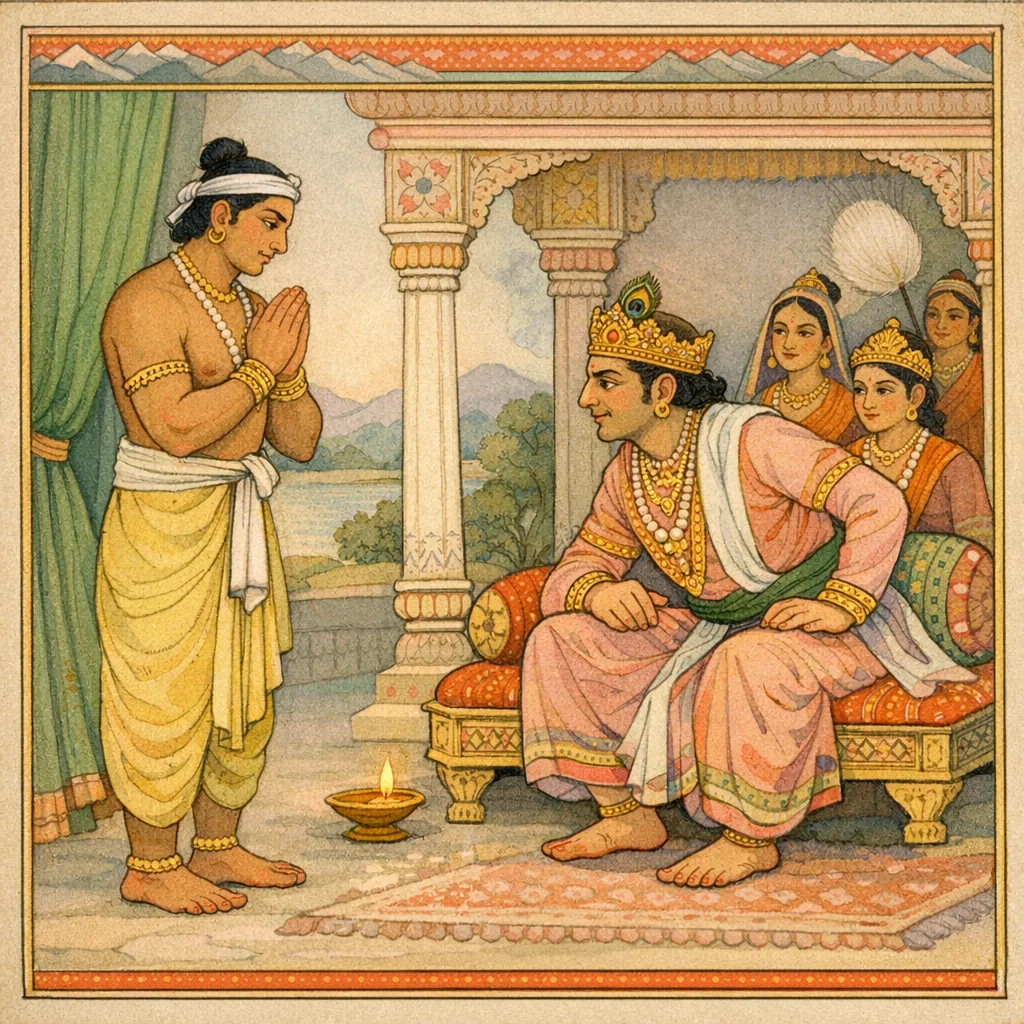
Chapter Arc: युधिष्ठिर के प्रवेश के बाद अज्ञातवास का दूसरा बड़ा कदम उठता है—भीमसेन ‘सूद’ (रसोइये) के वेश में विराट के दरबार में आता है, पर उसका तेज सूर्य-सा दमकता है। → भीम के सिंह-स्कंध, असाधारण रूप और प्रभा को देखकर विराट और सभाजन चकित हो उठते हैं; राजा के मन में शंका जागती है—यह कोई गन्धर्वराज है या इन्द्र (पुरंदर) स्वयं? पहचान खुल जाने का भय भीतर-भीतर बढ़ता है। → राजा के पूछने पर भीम निर्भीक होकर अपना वेश-धर्म निभाता है—‘मैं बलल्लव नाम का सूद-परिचारक हूँ; सूप-विद्या में निपुण हूँ; मुझे व्यंजनकार (महानसाध्यक्ष) बना दीजिए।’ → विराट उसकी योग्यता और व्यक्तित्व से प्रसन्न होकर उसे रसोई का प्रधान नियुक्त करता है; भीम राज-आश्रय में स्थापित हो जाता है और नगर में कोई उसे पाण्डव के रूप में नहीं पहचान पाता। → असाधारण बल और तेज वाला यह ‘रसोइया’ अब विराट के भीतर ही रहेगा—क्या उसकी शक्ति किसी आने वाले संकट में अनायास प्रकट हो जाएगी?
Shlokas
Verse 1
इस प्रकार श्रीमह्याभारत विराटपर्वके अन्तर्गत पाण्डवप्रवेशपर्वनें युधिष्टिपप्रवेशविषयक सातवाँ अध्याय पूरा हुआ ॥/ ७ ॥। (दाक्षिणात्य अधिक पाठके १२ श्लोक मिलाकर कुल ३० श्लोक हैं।) हि न (हुक है आम अष्टमो> ध्याय: भीमसेनका राजा विराटकी सभामें प्रवेश और राजाके द्वारा आश्वासन पाना वैशम्पायन उवाच अथापरो भीमबल: श्रियाज्वल- न्रुपाययौ सिंहविलासविक्रम: । खजां च दर्बी च करेण धारय- त्रसिं च कालाड्रमकोशमव्रणम्
Vaiśampāyana dijo: Entonces el siguiente de los Pāṇḍavas—Bhīma, de fuerza terrible—se encaminó hacia el rey. Con el paso seguro y la pujanza de un león, parecía arder con un esplendor innato. En la mano llevaba una espada, un cucharón y un afilado cuchillo negro para cortar verduras—sin quebradura y sin funda—señal de que estaba dispuesto a asumir un servicio humilde sin renunciar a su poder interior ni a su dignidad.
Verse 2
स सूदरूप: परमेण वर्चसा रविर्यथा लोकमिमं प्रकाशयन् । स कृष्णवासा गिरिराजसारवां- स््तं मत्स्यराजं समुपेत्य तस्थिवान्
Vaiśampāyana dijo: Aunque había asumido el disfraz de un auriga, resplandecía con suprema radiancia, como el sol que ilumina este mundo. Vestido con ropas oscuras y de cuerpo firme como el rey de las montañas, se acercó a Virāṭa, rey de los Matsyas, y se detuvo ante él.
Verse 3
त॑ प्रेक्ष्य राजा रमयन्नुपागतं ततोड<ब्रवीज्जानपदान् समागतान् | सिंहोन्नतांसो5यमतीव रूपवान् प्रदृश्यते को नु नरर्षभो युवा
Al ver acercarse a Bhīmasena, el rey Virāṭa—deseoso de complacerlo y darle la bienvenida—se dirigió a los reunidos de su reino: “Este joven que aparece ante nosotros es de hermosura extraordinaria, con hombros alzados como los de un león y la presencia del mejor entre los hombres. ¿Quién es?”
Verse 4
अदृष्टपूर्व: पुरुषो रविर्यथा वितर्कयन् नास्थ लभामि निश्चयम् । तथास्य चित्त हापि संवितर्कयन् नरर्षभस्यास्य न यामि तत्त्वत:
Vaiśampāyana dijo: “Nunca antes he visto a este hombre; fulge como el sol. Por más que reflexione una y otra vez, no alcanzo certeza alguna sobre él. Incluso tras ponderar su intención al venir aquí—el propósito íntimo de este toro entre los hombres—todavía no logro asir la verdad tal como es.”
Verse 5
दृष्टवैव चैनं तु विचारयाम्यहं गन्धर्वराजो यदि वा पुरंदर: । जानीत को<यं मम दर्शने स्थितो यदीप्सितं तल्लभतां च मा चिरम्
“Al verlo, pensé de inmediato: ‘¿Será el rey de los Gandharvas, o Purandara (Indra) en persona?’ Averiguad quién es este joven que está ante mis ojos. Y cuanto desee, que lo obtenga—sin demora.”
Verse 6
विराटवाक्येन च तेन चोदिता नरा विराटस्य सुशीघ्रगामिन: । उपेत्य कौन्तेयमथाब्रुवंस्तदा यथा स राजावदताच्युतानुजम्
Impulsados por las palabras del rey Virāṭa, sus hombres—rápidos en sus movimientos—fueron de inmediato al hijo de Kuntī. Al acercarse, le hablaron entonces exactamente como el rey les había ordenado, pidiéndole su identificación y sus señas, con la debida corrección propia de la corte.
Verse 7
ततो विराट समुपेत्य पाण्डव- स्त्वदीनरूपं वचन महामना: । उवाच सूदो<स्मि नरेन्द्र बलल्लवो भजस्व मां व्यज्जनकारमुत्तमम्
Entonces el Pāṇḍava, el magnánimo, se acercó al rey Virāṭa y, hablando sin rastro de abatimiento, dijo: “Oh rey, soy cocinero. Mi nombre es Ballava. Preparo platos excelentes. Te ruego que me emplees aquí como tu mejor hacedor de manjares.”
Verse 8
विराट उवाच न सूदतां बलल्लव श्रद्धधामि ते सहस्रनेत्रप्रतिमो विराजसे । श्रिया च रूपेण च विक्रमेण च प्रभाससे त्वं नृवरो नरेष्विव
Virāṭa dijo: “Ballava, no creo que seas tan solo un cocinero. Resplandeces como Indra, el de los mil ojos. Por tu esplendor, tu figura y tu valor, pareces entre los hombres un héroe preeminente—más aún, como un rey.”
Verse 9
भीम उवाच नरेन्द्र सूद: परिचारको 5स्मि ते जानामि सूपान् प्रथमं च केवलान् । आस्वादिता ये नृपते पुराभवन् युधिष्ठटिरेणापि नृपेण सर्वश:
Bhīma dijo: “Oh rey, soy tu cocinero, un servidor de tu casa. Sé preparar sopas y platos escogidos—preparaciones especiales que solo yo conozco. Oh soberano, en tiempos pasados incluso el rey Yudhiṣṭhira probó todos esos manjares por completo.”
Verse 10
बलेन तुल्यश्न न विद्यते मया नियुद्धशीलश्च सदैव पार्थिव । गजैश्न सिंहैश्न॒ समेयिवानहं सदा करिष्यामि तवानघ प्रियम्
Bhīma dijo: “En fuerza corporal no hay nadie igual a mí. Oh rey, siempre estoy entregado al combate y a la lucha; incluso me he enfrentado a elefantes y leones. Oh intachable, haré siempre lo que te sea grato.”
Verse 11
विराट उवाच ददामि ते हन्त वरान् महानसे तथा च कुर्या: कुशलं प्रभाषसे । विराटके यहाँ पाण्डव न चैव मन्ये तव कर्म यत् सम॑ समुद्रनेमिं पृथिवीं त्वमहसि
Dijo Virāṭa: «Ven, pues: te concedo los dones que deseas, oh gran cocinero. Puesto que afirmas ser diestro, quédate aquí en mi cocina real y cumple ese oficio. Sin embargo, oh Pāṇḍava, no creo que tal tarea sea digna de ti. Eres merecedor de gobernar toda la tierra, ceñida por el océano».
Verse 12
तथा हि कामो भवतस्तथा कृतं महानसे त्वं भव मे पुरस्कृत: । नराश्ष ये तत्र समाहिता: पुरा भवांश्व तेषामधिपो मया कृत:
«Tal como es tu deseo, así lo he hecho. Permanece en mi cocina como el principal. A cuantos estaban allí destinados desde antes, te he puesto por señor de todos ellos.»
Verse 13
वैशम्पायन उवाच तथा स भीमो विहितो महानसे विराटराज्ञों दयितो5भवद्ू दृढम् | उवास राज्ये न च तं पृथग् जनो बुबोध तत्रानुचराश्ष केचन
Dijo Vaiśampāyana: «Oh Janamejaya, así Bhīma, destinado a la cocina real, quedó firmemente establecido como favorito especial del rey Virāṭa. Sin embargo, en aquel reino nadie descubrió su secreto; ni siquiera algunos sirvientes de allí pudieron reconocer quién era en verdad.»
Frequently Asked Questions
Draupadī must conceal her identity (a controlled untruth) while preventing harm and maintaining personal boundaries; the chapter frames this as higher-duty preservation of vow and safety within a volatile court setting.
In constrained environments, ethical self-protection can be achieved through clear conditions, credible deterrence, and role-appropriate conduct—minimizing escalation while safeguarding dignity.
No formal phalaśruti appears here; the closing meta-note instead functions as narrative validation: Vaiśaṃpāyana emphasizes the success of concealment by stating that no one else knew Draupadī’s identity.
Read Mahabharata in the Vedapath app
Scan the QR code to open this directly in the app, with audio, word-by-word meanings, and more.