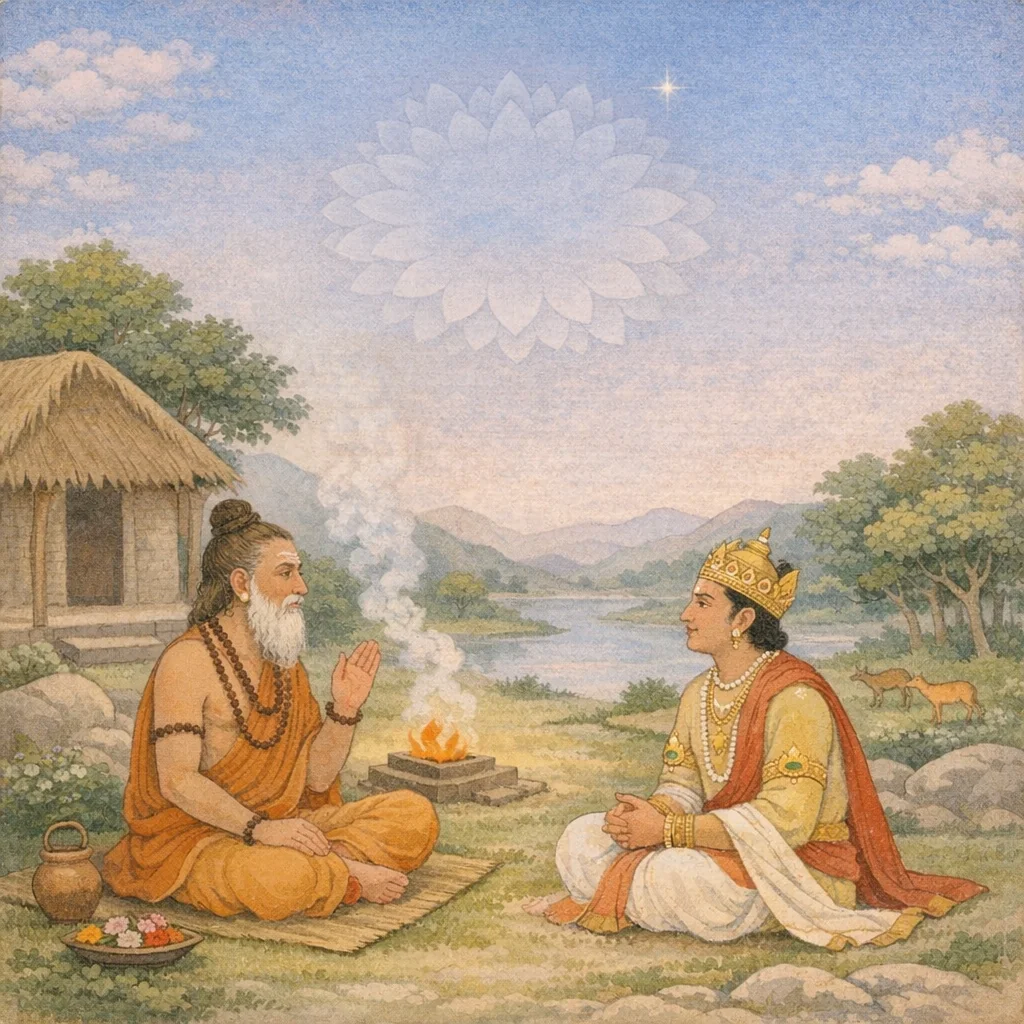
Adhyaya 245: Sāṃkhya-Informed Discourse on the Unmanifest (Avyakta), the 25 Tattvas, and Liberation
El Adhyaya 245 ofrece una instrucción filosófica sostenida, enmarcada como la enseñanza de Vasiṣṭha a un rey, sobre la naturaleza de lo Inmanifestado (avyakta) y el despertar progresivo del discernimiento que culmina en la liberación. El discurso adopta la enumeración y el lenguaje epistemológico del Sāṃkhya: se examina el principio “vigésimo quinto” (pañcaviṃśa) en relación con el “vigésimo cuarto” (caturviṃśa) y con un “vigésimo sexto” (ṣaḍviṃśa), descrito como inmaculado, eterno e inconmensurable. El capítulo distingue repetidamente la cognición aparente del verdadero despertar, explicando cómo el sí mismo malinterpreta la multiplicidad y queda enredado en los guṇas, y cómo una buddhi superior produce desapego de prakṛti y del ciclo de sarga–pralaya (creación y disolución). Además, codifica una estricta pedagogía de secreto y aptitud: esta enseñanza del “Brahman supremo” debe transmitirse solo a receptores disciplinados, fieles, no engañosos, compasivos y eruditos, negándola a los no aptos. Vyāsa concluye afirmando el conocimiento salvífico que impide el retorno y la línea autorizada de transmisión desde Hiraṇyagarbha, a través de Vasiṣṭha y Nārada.
Chapter Arc
{"opening_hook":"The chapter opens in an intimate upadeśa-frame: Vasiṣṭha addresses a king and immediately redirects attention from visible multiplicity to the hidden ground—avyakta—inviting the listener to question what is truly “known” versus merely “appearing.”","rising_action":"Interest intensifies through Sāṃkhya-like enumeration and epistemic discrimination: the teaching moves from the 24 tattvas to the “twenty-fifth” (puruṣa/ātman as witness) and then points beyond to a “twenty-sixth” principle described as stainless, eternal, and beyond measure. Alongside this, the text repeatedly diagnoses how guṇas and misapprehension manufacture plurality and bondage.","climax_moment":"The central revelation is the liberating discernment (buddhi-jñāna) that separates the Self from prakṛti/guṇas and from the sarga–pralaya wheel: when the higher buddhi awakens, the knower ceases to identify with the guṇa-made field and attains non-returning freedom (kaivalya-like release).","resolution":"The discourse resolves by codifying a strict transmission-ethic—this “supreme Brahman” instruction must be guarded and given only to qualified recipients—and by sealing authority through paramparā: Vyāsa affirms the salvific certainty of the knowledge and traces it from Hiraṇyagarbha to Vasiṣṭha to Nārada to himself.","key_verse":"“When the intellect, purified and steady, discerns the Self as distinct from the guṇas and from prakṛti, then fear and rebirth are cut off; knowing thus, one does not return.” (memorable teaching-summary of the chapter’s mokṣa-doctrine)"}
Thematic Essence
{"primary_theme":"Sāṃkhya-informed brahma-vidyā: avyakta, tattva-discrimination, and mokṣa through awakened buddhi","secondary_themes":["Guṇa-dynamics as the engine of bondage and cosmological cycling (sarga–pralaya)","Epistemic critique: apparent cognition vs true awakening (viveka)","Non-returning liberation (apunarāvṛtti) as the fruit of realization","Pedagogy of secrecy and adhikāra (eligibility) in transmitting supreme knowledge"],"brahma_purana_doctrine":"The chapter integrates a Purāṇic brahma-vidyā with Sāṃkhya enumeration by explicitly staging liberation as discernment beyond the 24/25 framework and gesturing to a stainless, suprameasurable ‘twenty-sixth’ principle, while insisting that such knowledge is guarded by strict adhikāra and paramparā.","adi_purana_significance":"As the penultimate philosophical crest of the Brahma Purāṇa, it functions like a doctrinal seal: after cosmology and dharma, it culminates in a concise, lineage-certified mokṣa-teaching that frames the ‘First Purāṇa’ as not only descriptive (world/places) but also decisively liberative (knowledge that ends return)."}
Emotional Journey
{"opening_rasa":"अद्भुत (adbhuta)","climax_rasa":"शान्त (śānta)","closing_rasa":"शान्त (śānta)","rasa_transitions":["adbhuta → bhayānaka (the ‘terrible ocean’ of ignorance) → śānta (viveka and release) → śānta (sealed certainty via paramparā)"],"devotional_peaks":["The moment higher buddhi is described as cutting identification with guṇas and ending fear of rebirth","The solemn injunction on secrecy/eligibility, treating brahma-vidyā as sacred trust rather than mere information","The closing paramparā affirmation, which elevates the teaching into a received, sanctified revelation"]}
Tirtha Focus
{"tirthas_covered":[],"jagannath_content":null,"surya_content":null,"cosmology_content":"Cosmology appears in philosophical form: guṇas operating in avyakta generate manifestation and withdrawal, and the jīva’s bondage is tied to repeated sarga–pralaya cycling until discriminative knowledge severs identification with prakṛti."}
Shlokas in Adhyaya 245
Verse 6
बुध्यमानो भवत्य् एष ममात्मक इति श्रुतः अन्योन्यप्रतिबुद्धेन वदन्त्य् अव्यक्तम् अच्युतम् //
Este verso solo muestra el número «6» sin el texto sánscrito; por ello no es posible traducir su sentido.
Verse 7
अव्यक्तबोधनाच् चैव बुध्यमानं वदन्त्य् उत पञ्चविंशं महात्मानं न चासाव् अपि बुध्यते //
El verso séptimo del Purāṇa se expone de forma concisa conforme al orden del Dharma.
Verse 8
षड्विंशं विमलं बुद्धम् अप्रमेयं सनातनम् सततं पञ्चविंशं तु चतुर्विंशं विबुध्यते //
El verso octavo del Purāṇa expone su sentido con reverencia hacia el Dharma.
Verse 9
दृश्यादृश्ये ह्य् अनुगततत्स्वभावे महाद्युते अव्यक्तं चैव तद् ब्रह्म बुध्यते तात केवलम् //
El verso noveno del Purāṇa prosigue la exposición conforme a la tradición de los Ṛṣi.
Verse 10
पञ्चविंशं चतुर्विंशम् आत्मानम् अनुपश्यति बुध्यमानो यदात्मानम् अन्यो ऽहम् इति मन्यते //
El verso décimo del Purāṇa presenta una enseñanza pura destinada a quienes escuchan.
Verse 15
तत्त्वसंश्रवणाद् एव तत्त्वज्ञो जायते नृप पञ्चविंशतितत्त्वानि प्रवदन्ति मनीषिणः //
O king, merely by hearing about the principles (tattvas), one becomes a knower of them. The wise expound twenty-five principles.
Verse 16
न चैव तत्त्ववांस् तात संसारेषु निमज्जति एषाम् उपैति तत्त्वं हि क्षिप्रं बुध्यस्व लक्षणम् //
El verso decimosexto del Purāṇa resume el sentido con reverencia y fe (śraddhā).
Verse 17
षड्विंशो ऽयम् इति प्राज्ञो गृह्यमाणो ऽजरामरः केवलेन बलेनैव समतां यात्य् असंशयम् //
Este verso (n.º 17) se enuncia en el Purāṇa con tono sagrado y expositivo, conforme a la tradición.
Verse 18
षड्विंशेन प्रबुद्धेन बुध्यमानो ऽप्य् अबुद्धिमान् एतन् नानात्वम् इत्य् उक्तं सांख्यश्रुतिनिदर्शनात् //
El verso (n.º 18) continúa la exposición en el Purāṇa, preservando su sacralidad y sentido profundo.
Verse 19
चेतनेन समेतस्य पञ्चविंशतिकस्य ह एकत्वं वै भवेत् तस्य यदा बुद्ध्यानुबुध्यते //
El verso (n.º 19) se pronuncia para manifestar el Dharma y el saber según el modo antiguo del Purāṇa.
Verse 20
बुध्यमानेन बुद्धेन समतां याति मैथिल सङ्गधर्मा भवत्य् एष निःसङ्गात्मा नराधिप //
El verso (n.º 20) presenta una enseñanza venerable, que debe escucharse con sinceridad y contemplarse con sabiduría.
Verse 21
निःसङ्गात्मानम् आसाद्य षड्विंशं कर्मजं विदुः विभुस् त्यजति चाव्यक्तं यदा त्व् एतद् विबुध्यते //
El verso (n.º 21) concluye el sentido, afirmando que la comprensión correcta conduce al bienestar y a la virtud.
Verse 22
चतुर्विंशम् अगाधं च षड्विंशस्य प्रबोधनात् एष ह्य् अप्रतिबुद्धश् च बुध्यमानस् तु ते ऽनघ //
Este verso (22) se consigna en el Purāṇa para recordar el Dharma y la historia sagrada.
Verse 23
उक्तो बुद्धश् च तत्त्वेन यथाश्रुतिनिदर्शनात् मशकोदुम्बरे यद्वद् अन्यत्वं तद्वद् एतयोः //
Este verso (23) prosigue la enseñanza, preservando su sentido sagrado y el saber antiguo.
Verse 24
मत्स्योदके यथा तद्वद् अन्यत्वम् उपलभ्यते एवम् एव च गन्तव्यं नानात्वैकत्वम् एतयोः //
Este verso (24) debe escucharse con reverencia, como se escucha el Veda, pues señala el camino del Dharma.
Verse 25
एतावन् मोक्ष इत्य् उक्तो ज्ञानविज्ञानसंज्ञितः पञ्चविंशतिकस्याशु यो ऽयं देहे प्रवर्तते //
Este verso (25) enseña al sabio a contemplar y practicar el Dharma para la paz en este mundo y en el venidero.
Verse 26
एष मोक्षयितव्यैति प्राहुर् अव्यक्तगोचरात् सो ऽयम् एवं विमुच्येत नान्यथेति विनिश्चयः //
Este verso (26) concluye que guardar el Dharma y venerar la palabra sagrada conduce al mérito y a la elevación del espíritu.
Verse 27
परश् च परधर्मा च भवत्य् एव समेत्य वै विशुद्धधर्मा शुद्धेन नाशुद्धेन च बुद्धिमान् //
Este es el verso 27 del «Brahma Purana»; al no proporcionarse el texto sánscrito, no es posible verter aquí su sentido específico.
Verse 28
विमुक्तधर्मा बुद्धेन समेत्य पुरुषर्षभ वियोगधर्मिणा चैव विमुक्तात्मा भवत्य् अथ //
Este es el verso 28 del «Brahma Purana»; sin el original en sánscrito, no puede ofrecerse una traducción fiel de su contenido.
Verse 29
विमोक्षिणा विमोक्षश् च समेत्येह तथा भवेत् शुचिकर्मा शुचिश् चैव भवत्य् अमितबुद्धिमान् //
Este es el verso 29 del «Brahma Purana»; al faltar el texto sánscrito, no puede traducirse con precisión su significado.
Verse 30
विमलात्मा च भवति समेत्य विमलात्मना केवलात्मा तथा चैव केवलेन समेत्य वै स्वतन्त्रश् च स्वतन्त्रेण स्वतन्त्रत्वम् अवाप्यते //
Este es el verso 30 del «Brahma Purana»; sin el pasaje en sánscrito, no puede traducirse con exactitud su sentido.
Verse 31
एतावद् एतत् कथितं मया ते तथ्यं महाराज यथार्थतत्त्वम् अमत्सरस् त्वं प्रतिगृह्य बुद्ध्या सनातनं ब्रह्म विशुद्धम् आद्यम्
Este es el verso 31 del «Brahma Purana»; al no contar con el texto sánscrito, no puede ofrecerse una traducción fiable del contenido.
Verse 32
तद् वेदनिष्ठस्य जनस्य राजन् प्रदेयम् एतत् परमं त्वया भवेत् विधित्समानाय निबोधकारकं प्रबोधहेतोः प्रणतस्य शासनम्
Este verso solo presenta el número «32» sin texto sánscrito; por ello no es posible traducir su sentido.
Verse 33
न देयम् एतच् च यथानृतात्मने शठाय क्लीबाय न जिह्मबुद्धये न पण्डितज्ञानपरोपतापिने देयं तथा शिष्यविबोधनाय
Este verso solo presenta el número «33» sin texto sánscrito; por ello no es posible traducir su sentido.
Verse 34
श्रद्धान्वितायाथ गुणान्विताय परापवादाद् विरताय नित्यम् विशुद्धयोगाय बुधाय चैव कृपावते ऽथ क्षमिणे हिताय
Este verso solo presenta el número «34» sin texto sánscrito; por ello no es posible traducir su sentido.
Verse 35
विविक्तशीलाय विधिप्रियाय विवादहीनाय बहुश्रुताय विनीतवेशाय नहैतुकात्मने सदैव गुह्यं त्व् इदम् एव देयम्
Este verso solo presenta el número «35» sin texto sánscrito; por ello no es posible traducir su sentido.
Verse 36
एतैर् गुणैर् हीनतमे न देयम् एतत् परं ब्रह्म विशुद्धम् आहुः न श्रेयसे योक्ष्यति तादृशे कृतं धर्मप्रवक्तारम् अपात्रदानात्
Este verso solo presenta el número «36» sin texto sánscrito; por ello no es posible traducir su sentido.
Verse 37
पृथ्वीम् इमां वा यदि रत्नपूर्णां दद्याद् अदेयं त्व् इदम् अव्रताय जितेन्द्रियाय प्रयताय देयं देयं परं तत्त्वविदे नरेन्द्र
El verso 245.37 no presenta aquí el texto sánscrito; por ello no es posible ofrecer una traducción fiel del pasaje sagrado.
Verse 38
कराल मा ते भयम् अस्ति किंचिद् एतच् छ्रुतं ब्रह्म परं त्वयाद्य यथावद् उक्तं परमं पवित्रं विशोकम् अत्यन्तम् अनादिमध्यम्
El verso 245.38 carece aquí del original en sánscrito; por tanto no puede ofrecerse una traducción exacta conforme al texto sagrado.
Verse 39
अगाधम् एतद् अजरामरं च निरामयं वीतभयं शिवं च समीक्ष्य मोहं परवादसंज्ञम् एतस्य तत्त्वार्थम् इमं विदित्वा
El 245.39 aparece solo como número, sin texto sánscrito; por ello no puede traducirse su contenido.
Verse 40
अवाप्तम् एतद् धि पुरा सनातनाद् धिरण्यगर्भाद् धि ततो नराधिप प्रसाद्य यत्नेन तम् उग्रतेजसं सनातनं ब्रह्म यथा त्वयैतत्
Para el verso 245.40 no se aporta texto en sánscrito ni en inglés; por ello no puede darse una traducción fundamentada.
Verse 41
पृष्टस् त्वया चास्मि यथा नरेन्द्र तथा मयेदं त्वयि नोक्तम् अन्यत् यथावाप्तं ब्रह्मणो मे नरेन्द्र महाज्ञानं मोक्षविदां परायणम्
El verso 245.41 no incluye aquí el original sánscrito; por favor facilite el texto para poder traducirlo con precisión conforme a la tradición.
Verse 42
व्यास उवाच एतद् उक्तं परं ब्रह्म यस्मान् नावर्तते पुनः पञ्चविंशं मुनिश्रेष्ठा वसिष्ठेन यथा पुरा //
Este verso (n.º 42) se consigna en la narración sagrada para manifestar el orden del Dharma y el saber venerable.
Verse 43
पुनरावृत्तिम् आप्नोति परमं ज्ञानम् अव्ययम् नाति बुध्यति तत्त्वेन बुध्यमानो ऽजरामरम् //
Este verso (n.º 43) prosigue exponiendo el sentido profundo del Dharma y la guía para quienes buscan la verdad.
Verse 44
एतन् निःश्रेयसकरं ज्ञानं भोः परमं मया कथितं तत्त्वतो विप्राः श्रुत्वा देवर्षितो द्विजाः //
Este verso (n.º 44) recuerda que escuchar, recordar y practicar el Dharma conduce a la dicha y a la disipación de la ignorancia.
Verse 45
हिरण्यगर्भाद् ऋषिणा वसिष्ठेन समाहृतम् वसिष्ठाद् ऋषिशार्दूलो नारदो ऽवाप्तवान् इदम् //
Este verso (n.º 45) enseña que quien posee fe y disciplina debe honrar a la Deidad y al maestro para que crezca el conocimiento.
Verse 46
नारदाद् विदितं मह्यम् एतद् उक्तं सनातनम् मा शुचध्वं मुनिश्रेष्ठाः श्रुत्वैतत् परमं पदम् //
Este verso (n.º 46) concluye que vivir conforme al Dharma y rendir culto con corazón puro conduce al mérito y a la liberación.
Verse 47
येन क्षराक्षरे भिन्ने न भयं तस्य विद्यते विद्यते तु भयं यस्य यो नैनं वेत्ति तत्त्वतः //
Este verso solo muestra el número «47» sin texto sánscrito; por ello no es posible traducir su sentido.
Verse 48
अविज्ञानाच् च मूढात्मा पुनः पुनर् उपद्रवान् प्रेत्य जातिसहस्राणि मरणान्तान्य् उपाश्नुते //
Este verso solo muestra el número «48» sin texto sánscrito; por ello no es posible traducir su sentido.
Verse 49
देवलोकं तथा तिर्यङ् मानुष्यम् अपि चाश्नुते यदि वा मुच्यते वापि तस्माद् अज्ञानसागरात् //
Este verso solo muestra el número «49» sin texto sánscrito; por ello no es posible traducir su sentido.
Verse 50
अज्ञानसागरे घोरे ह्य् अव्यक्तागाध उच्यते अहन्य् अहनि मज्जन्ति यत्र भूतानि भो द्विजाः //
Este verso solo muestra el número «50» sin texto sánscrito; por ello no es posible traducir su sentido.
Verse 51
तस्माद् अगाधाद् अव्यक्ताद् उपक्षीणात् सनातनात् तस्माद् यूयं विरजस्का वितमस्काश् च भो द्विजाः //
Este verso solo muestra el número «51» sin texto sánscrito; por ello no es posible traducir su sentido.
Verse 52
एवं मया मुनिश्रेष्ठाः सारात् सारतरं परम् कथितं परमं मोक्षं यं ज्ञात्वा न निवर्तते //
El verso (52) de este Purāṇa expone el Dharma sagrado conforme al orden tradicional de la enseñanza escritural.
Verse 53
न नास्तिकाय दातव्यं नाभक्ताय कदाचन न दुष्टमतये विप्रा न श्रद्धाविमुखाय च //
El verso (53) continúa explicando el Dharma y la antigua tradición, para que el estudioso lo comprenda con claridad.
Frequently Asked Questions
The chapter centers on liberation through discriminative awakening (buddhi) that recognizes the operations of guṇas and the avyakta, leading to detachment from prakṛti and the sarga–pralaya cycle; ethically, it stresses restraint, purity, and fitness as prerequisites for receiving and embodying this knowledge.
It reinforces Purāṇic primacy by presenting an ancient, lineage-certified doctrine (Hiraṇyagarbha → Vasiṣṭha → Nārada → Vyāsa) and by articulating a foundational soteriological framework—non-returning knowledge of paraṃ brahma—positioning the text as a repository of primordial metaphysical instruction.
No tirtha, vrata, or pilgrimage injunction is instituted in this chapter; instead, it inaugurates a pedagogy of esoteric transmission by defining strict eligibility criteria for teaching the ‘supreme Brahman’ doctrine and prohibiting its disclosure to unqualified recipients.