Adhyaya 12
ज्यामघ-शैब्या-प्रसङ्गः (Jyāmagha and Śaibyā: Kingship, Fear, and Lineage Tension)
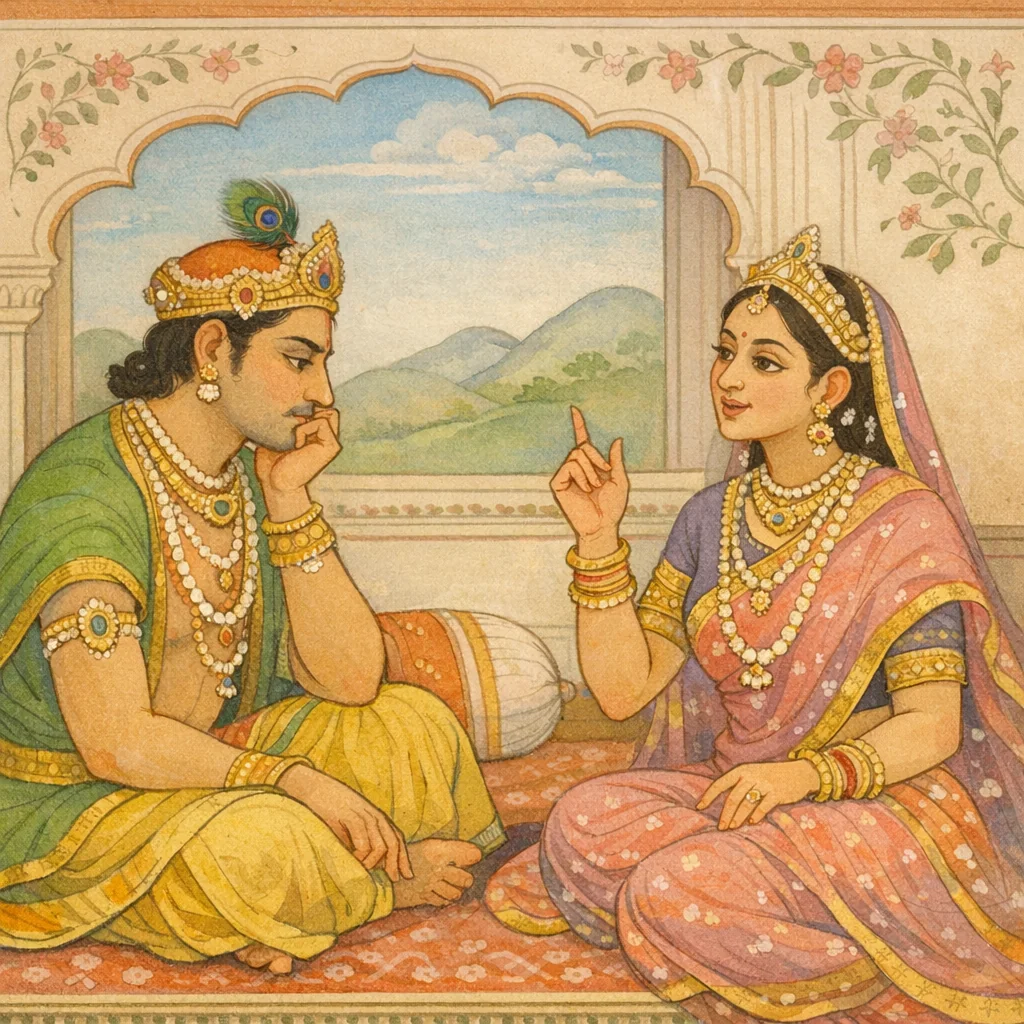
Parāśara tells Maitreya of kings said to be “ruled by their wives” (bhāryā-vaśya), naming Jyāmagha, husband of Śaibyā, as foremost among them. Śaibyā remains aputrā (without a son), and Jyāmagha, though longing for offspring, does not take another wife out of fear—of household disorder, political instability, or the dharmic consequences of crossing relational bounds. A striking exchange follows, where a woman challenges a claimed daughter-in-law status: with no son born and no other wife, through which son could such a bond be established? The episode highlights that lineage (vaṁśa) rests on dharma, social legitimacy, and speech that defines kinship, while reminding that human hopes for continuity unfold under Viṣṇu’s karmic governance.
Shlokas
Verse 4
भार्यावश्यास् तु ये केचिद् भविष्यन्त्य् अथ वा मृताः तेषां तु ज्यामघः श्रेष्ठः शैब्यापतिर् अभून् नृपः
Among those kings—whether yet to come or already departed—who were ruled by their wives, the foremost was Jyāmagha: that sovereign became the husband of Śaibyā.
Verse 5
अपुत्रा तस्य सा पत्नी शैब्या नाम तथाप्य् असौ अपत्यकामो ऽपि भयान् नान्यां भार्याम् अविन्दत
His wife, named Śaibyā, remained without a son. Yet though he longed for offspring, out of fear he did not take another wife.
Verse 12
नाहं प्रसूता पुत्रेण नान्या पत्न्य् अभवत् तव स्नुषासंबन्धता ह्य् एषा कतमेन सुतेन ते
“I have borne you no son, nor has any other woman become your wife. This bond of mine as your daughter-in-law—through which of your sons, then, could it possibly be?”
Frequently Asked Questions
It is a moral-psychological classification used in dynastic narration: Parāśara highlights how domestic influence can shape political decisions, especially in matters of succession and social order, without presenting it as mere gossip—rather as a dharma-relevant factor in vaṁśa history.
The verse states he is restrained by fear (bhaya), implying concern for disorder—household conflict, legitimacy disputes, or destabilization of dharmic and political equilibrium.
She argues that snūṣā-sambandha (daughter-in-law status) presupposes a son through whom the relation is established; if there is no son and no co-wife, the claim becomes incoherent, exposing a tension between social designation and genealogical fact.