Adhyaya 92
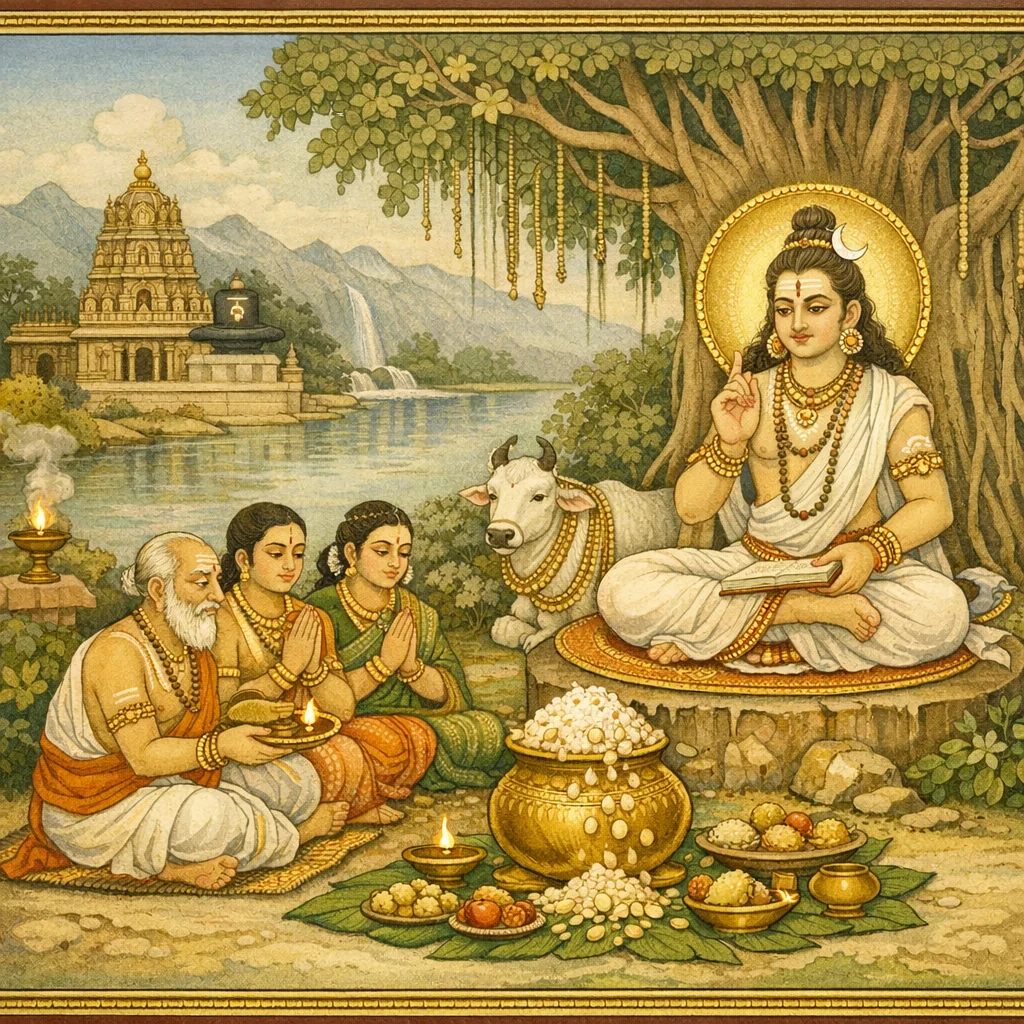
Chapter 92 records Īśvara’s concise theological and ritual account of Aghoreśvara, hailed as the “sixth liṅga,” with Bhairava as its ‘face’ (vaktra). The shrine is placed near Tryambakeśvara and praised as a merit-bestowing center that removes the defilements of the Kali age. A graded path of devotion is taught: bathing and worship performed with bhakti yield fruits equal to great gifts such as Meru-dāna. Offerings made there in the manner of Dakṣiṇāmūrti are declared akṣaya—becoming inexhaustible in merit. The chapter further elevates ancestral rites: śrāddha performed to the south of Aghoreśvara grants long-lasting satisfaction to forebears and is extolled above the famed rites of Gayā and even the Aśvamedha. It also praises yātrā-dāna, even a minute gift of gold, and prescribes the Brahmakūrcha observance on Somāṣṭamī near Aghoreśvara as a powerful expiation (prāyaścitta). It concludes that hearing this māhātmya destroys sins and accomplishes one’s aims.
Shlokas
Verse 1
ईश्वर उवाच । ततो गच्छेन्महादेवि अघोरेश्वरमुत्तमम् । षष्ठं लिंगं समाख्यातं तद्वक्त्रं भैरवं स्मृतम्
Īśvara said: Then, O Great Goddess, one should go to the excellent Aghoreśvara. It is proclaimed as the sixth liṅga, and its divine “face” is remembered as Bhairava.
Verse 2
त्र्यंबकेश्वरवायव्ये धनुषां पंचके स्थितम् । सर्वकामप्रदं पुण्यं कलिकल्मषनाशनम्
Situated five bows’ length to the northwest of Tryaṃbakeśvara, it is a holy place that grants all desired aims and destroys the defilements of the Kali age.
Verse 3
यस्तं पूजयते भक्त्या स्नानपूजादिभिः क्रमात् । मेरुदानस्य कृत्स्नस्य स लभेन्मनुजः फलम्
Whoever worships that liṅga with devotion—performing bathing, worship, and the other rites in due order—obtains the full fruit of the great gift called Meru-dāna.
Verse 4
दक्षिणामूर्तिमास्थाय यत्किंचित्तत्र दीयते । अघोरेश्वरदेवस्य तत्सर्वं चाक्षयं भवेत्
Whatever is given there, taking refuge in the Lord as Dakṣiṇāmūrti, becomes wholly imperishable—an offering to Lord Aghoreśvara.
Verse 5
यः श्राद्धं कुरुते तत्र अघोरेश्वरदक्षिणे । आकल्पं तृप्तिमायांति पितरस्तस्य तर्पिताः
Whoever performs śrāddha there, to the south of Aghoreśvara—his ancestors, thus satisfied by tarpaṇa, attain contentment for an entire kalpa.
Verse 6
किं श्राद्धेन गयातीर्थे वाजिमेधेन किं प्रिये । तत्र श्राद्धेन तत्सर्वं फलमभ्यधिकं लभेत्
What need is there of śrāddha at Gayā-tīrtha, and what need of the Aśvamedha, O beloved? By performing śrāddha there, one gains all those fruits—indeed, in even greater measure.
Verse 7
त्रुटिमात्र मपि स्वर्णं यात्रायां यः प्रयच्छति । स सर्वं फलमाप्नोति महादानस्य भूरिशः
Even if one offers but a minute measure of gold during the pilgrimage, one attains in full the fruit of great gifts—abundantly.
Verse 8
ब्रह्मकूर्चं चरेद्यस्तु सोमाष्टम्यां विधानतः । अघोरेश्वरसांनिध्ये अघोरेणाभिमंत्रितम् । षडब्दस्य महत्तेन प्रायश्चित्तं कृतं भवेत्
Whoever, in due manner, performs the Brahmakūrcha observance on Somāṣṭamī, in the presence of Aghoreśvara, consecrated with the Aghora mantra—by its greatness, expiation for six years is accomplished.
Verse 9
इति संक्षेपतः प्रोक्तमघोरेशमहोदयम् । माहात्म्यं सर्वपापघ्नं श्रुतं सर्वार्थसाधकम्
Thus, in brief, the glorious greatness of Aghoreśvara has been declared—a māhātmya that destroys all sins; and when heard, it becomes a means to the fulfillment of all worthy aims of life.
Verse 92
इति श्रीस्कान्दे महापुराण एकाशीतिसाहस्र्यां संहितायां सप्तमे प्रभासखण्डे प्रथमे प्रभासक्षेत्रमाहात्म्य एकादश रुद्रमाहात्म्येऽघोरेश्वरमाहात्म्यवर्णनंनाम द्विनवतितमोऽध्यायः
Thus ends the ninety-second chapter, entitled “The Description of the Greatness of Aghoreśvara,” in the Prabhāsa Khaṇḍa—within the Prabhāsa-kṣetra Māhātmya, in the Eleventh Rudra Māhātmya—of the holy Skanda Mahāpurāṇa, in the Saṃhitā of eighty-one thousand verses.